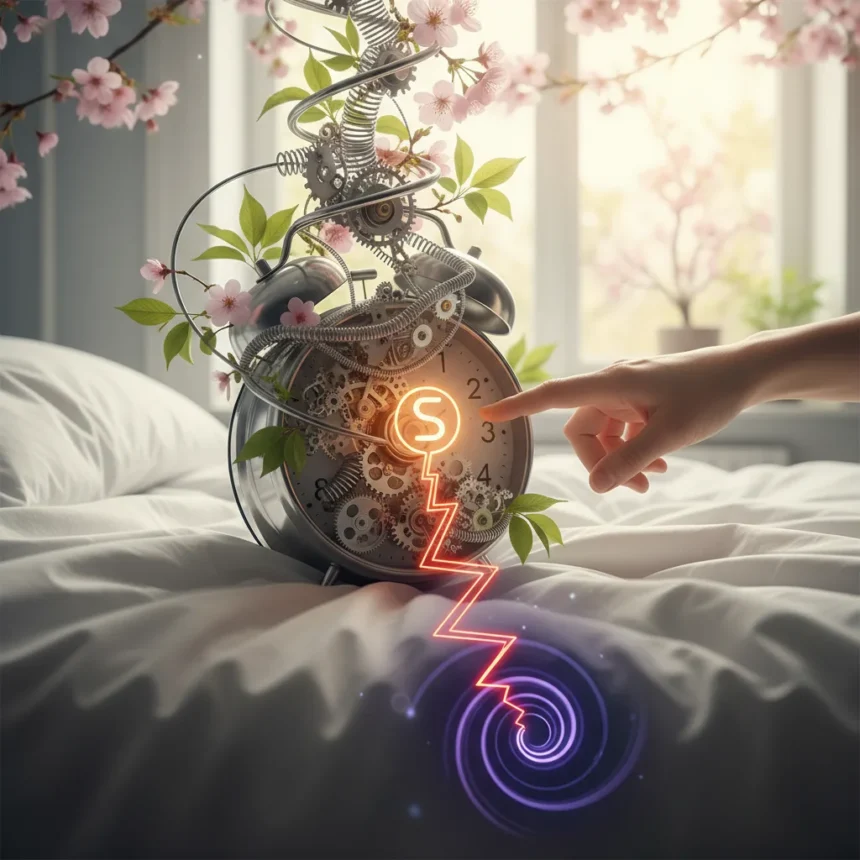
Spring sleep disruption is real. As daylight hours lengthen and seasonal rhythms shift, even reliable early risers find themselves hammering the snooze button repeatedly—a pattern that sabotages sleep quality and drains energy throughout the day.
Key Takeaways
- Spring’s light changes disrupt circadian rhythms, turning consistent early risers into chronic snoozers.
- Hitting snooze eliminates REM sleep, the critical stage for brain health, emotion processing, and memory.
- Over half of all sleep sessions end with snooze alarm use, with women hitting snooze more frequently than men.
- The optimal fix: set your alarm for the final wake time and commit to rising immediately.
- Spring sleep disruption is temporary but requires deliberate realignment of light exposure and sleep routines.
Spring Sleep Disruption: Why Your Internal Clock Is Failing You
Spring sleep disruption occurs because seasonal light changes throw your circadian rhythm—your body’s internal 24-hour clock—completely off balance. As days lengthen and sunrise times shift earlier, your body’s natural sleep-wake signals become misaligned with your actual schedule. The result: you wake earlier than intended, feel groggy, and reach for the snooze button as a band-aid solution. This seasonal shift is not laziness. It is your nervous system struggling to recalibrate to new light patterns, and the snooze button becomes an easy escape from the discomfort of waking before your body is ready.
The irony is that snoozing feels like it gives you extra rest. It does not. When you hit snooze, you are not gaining quality sleep—you are fragmenting what remains of your sleep cycle at the worst possible moment.
Why the Snooze Button Destroys REM Sleep
REM sleep is critical for brain health, processing emotions and memory. Most of this vital stage occurs during early morning hours, precisely when your first alarm sounds. What that first alarm does is interrupt some of the best stages of sleep. When you snooze and drift back off, you enter a shallow, fractured sleep that lacks the restorative power of a complete REM cycle. Chronic snoozing does not recover lost sleep—it compounds the damage by preventing your brain from completing the deep cognitive work it needs.


The data backs this up. More than half of all sleep sessions end with the snooze alarm, making it one of the most common sleep sabotage behaviors. Yet most people who snooze chronically report feeling more tired, not more rested. That exhaustion is not coincidence. It is the direct result of interrupted REM sleep, which leaves your emotional regulation, memory consolidation, and mental clarity all compromised.
Who Snoozes Most—And Why It Matters
Women hit snooze more than men, possibly due to multifactorial reasons including higher responsibilities like childcare. This gender gap is significant because it suggests that spring sleep disruption does not affect everyone equally. Those juggling caregiving, work, and household management may be especially vulnerable to the snooze trap during seasonal transitions, when their already-fragmented sleep becomes even more unstable. Understanding this pattern matters because it reveals that snoozing is not purely a willpower problem—it is often a symptom of accumulated sleep debt and competing demands that spring’s circadian disruption makes worse.


How to Reclaim Your Energy: The Expert Fix
The best solution is simple but requires discipline. Set your alarm for the last possible time you need to wake up—not earlier. This eliminates the temptation to snooze by removing the false cushion of extra time. Pair this with a commitment to getting out of bed immediately when that alarm sounds. Yes, it is challenging. Your body will resist. But this approach preserves sleep cycles instead of fragmenting them, and you will feel the difference within days.
Beyond the alarm strategy, reclaiming energy requires deliberate realignment of your circadian rhythm. Simple tweaks like adjusting light exposure and routines help reset your internal clock as spring progresses. Morning sunlight exposure signals your body to wake; consistent sleep and wake times reinforce the rhythm. These are not quick fixes, but they address the root cause of spring sleep disruption rather than masking it with snooze cycles.
Does the snooze button ever make sense?
No. The snooze button is designed to feel helpful but actively harms sleep quality by fragmenting REM cycles. Even if you feel like you need those extra minutes, you are getting worse sleep, not better. A single alarm at your actual wake time is always superior.
How long does spring sleep disruption last?
Spring sleep disruption is temporary and typically resolves as your circadian rhythm adapts to the new light schedule over weeks. However, the adaptation is faster if you actively manage light exposure and maintain consistent sleep times rather than relying on snooze cycles to compensate.



Can light therapy help reset my circadian rhythm during spring?
Morning light exposure is one of the most powerful circadian reset tools available. Getting bright light shortly after waking signals your body to shift its internal clock earlier, which helps you align naturally with spring’s earlier sunrise. This reduces the grogginess that makes snoozing tempting in the first place.
Spring sleep disruption is not a personal failing—it is a biological response to seasonal change. But you are not powerless. By abandoning the snooze button, setting realistic wake times, and deliberately managing light exposure, you can reclaim the energy and consistency that spring’s shifting rhythms temporarily steal. The early bird routine you built over months does not vanish overnight. It just needs a deliberate reset to match the new season.
Where to Buy
Hatch Restore 2 | Lumie Bodyclock Shine 300 | JALL Wake Up Light Sunrise Alarm Clock | Homelabs Sunrise Alarm Clock
Edited by the All Things Geek team.
Source: Tom's Guide