






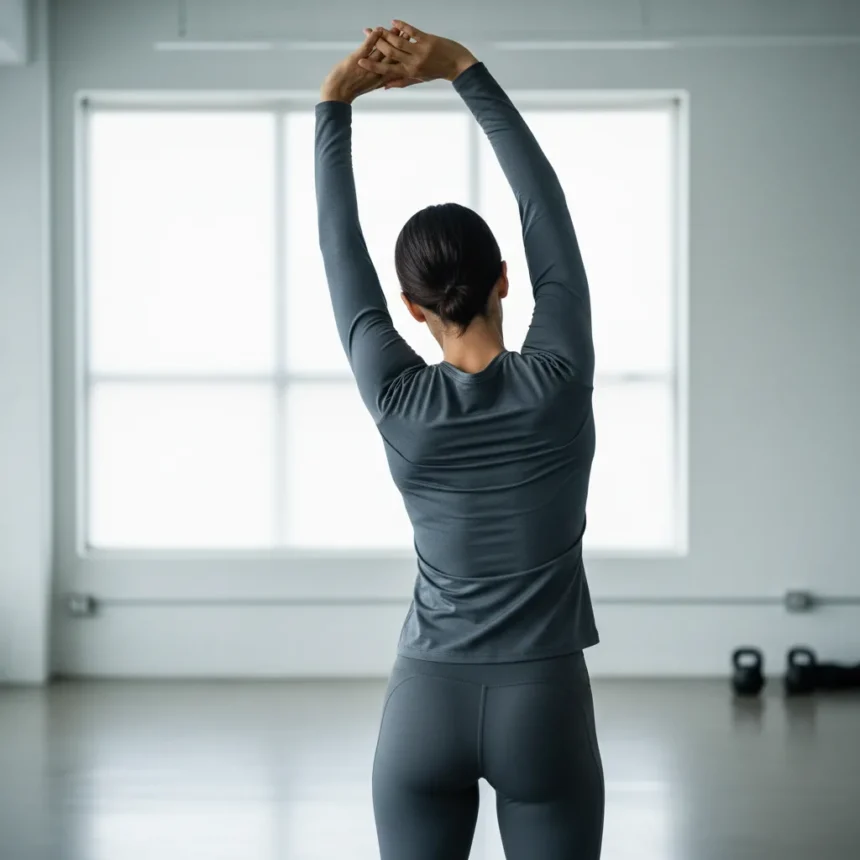
The best upper-body stretch is a supported fish pose variation that opens your chest, shoulders, and spine while releasing tension—according to a personal trainer who would choose this single move if limited to only one upper-body stretch.
Key Takeaways
- Supported fish targets chest, shoulders, and spine in one efficient stretch.
- The pose requires minimal equipment: a yoga mat and optional yoga block or bolster.
- Benefits include improved posture, enhanced range of motion, and prevention of shoulder joint injury.
- Hold time aligns with standard trainer recommendations of around one minute.
- Modifications available for beginners or those with tight upper-body muscles.
Why This Upper-Body Stretch Stands Out
Most people cycle through dozens of stretches without targeting the right muscles. This supported fish variation attacks the real problem: tight chest and shoulder muscles that pull your posture forward and restrict movement. The stretch engages your pecs, anterior deltoids, triceps, and the muscles supporting your spine, making it a compound stretch that handles multiple tension points simultaneously.
The key advantage over standard chest openers is the spinal component. While laying shoulder stretches target pecs and deltoids in isolation, the supported fish pose adds a gentle spinal twist and release, engaging your torso and the muscles along your spine. This combination addresses post-desk tension—the accumulated tightness from sitting hunched over a keyboard—in one move.
How to Perform the Supported Fish Pose
Start by lying flat on your back on a yoga mat. Place a yoga block or bolster under your upper back and shoulders to elevate your chest and support the stretch. Your head should rest neutrally or drop gently back, depending on your comfort level. The support underneath is what distinguishes this variation from a basic backbend—it removes strain from your lower back while maximizing the opening across your chest and shoulders.


Extend your arms wide or overhead to deepen the chest and shoulder opening. Breathe deeply into the stretch, allowing your body to relax into the supported position. Hold this pose for approximately one minute, letting the tension melt away from your upper body. The extended hold time allows your nervous system to signal the muscles to release, rather than fighting against the stretch.
Keep your neck relaxed throughout. If you feel strain in your neck, reduce how far back your head tilts or place a small pillow under it. The goal is opening your chest and shoulders, not forcing your cervical spine into an uncomfortable position.



Modifications for Different Fitness Levels
If you’re returning from an injury or have particularly tight chest and shoulder muscles, you may need preparation work before attempting the full supported fish pose. Start with a lower block or bolster that provides less elevation, allowing your body to adapt gradually to the chest opening. You can also reduce your hold time to 30 seconds and build up to one minute as your flexibility improves.
For beginners, using props is not optional—it’s essential. A high-quality yoga mat prevents discomfort against hard floors, while a block or bolster ensures you’re supporting your upper back safely rather than putting all your weight on your spine. These tools transform the stretch from a risky backbend into a controlled, effective mobility move.
Why One Stretch Beats a Routine
The efficiency argument is compelling for busy people. Rather than spending 10 minutes cycling through cat-cow, child’s pose, and various shoulder stretches, the supported fish pose delivers chest, shoulder, and spinal benefits in a single move. It’s not that other stretches lack value—it’s that this one handles the most common tension points simultaneously.
The pose also prevents shoulder joint injury and instability caused by tight chest and shoulder muscles that pull your shoulders forward. Tight pecs and anterior deltoids restrict your range of motion, forcing your shoulder joint to compensate in ways that invite injury during strength training. Regular practice of this upper-body stretch maintains the mobility needed for safe, effective exercise.



Frequently Asked Questions
What equipment do I need for the supported fish pose?
You need a yoga mat for comfort and a yoga block or bolster for support. These are optional but strongly recommended—the support is what makes this variation safer and more effective than a basic backbend. A quality yoga mat typically costs $20–$50 and is widely available online and at retail stores.
How long should I hold the supported fish stretch?
Hold the pose for approximately one minute. This duration allows your nervous system to signal the muscles to release rather than contracting against the stretch. If you’re new to the pose, start with 30 seconds and build up gradually.
Is the supported fish pose safe for people with tight shoulders?
Yes, but modifications are important. Start with a lower block or bolster that provides less elevation, reduce your hold time initially, and keep your neck relaxed. If you feel sharp pain—rather than the gentle stretch sensation—stop and consult a qualified professional before continuing, especially if you’re returning from injury or dealing with existing shoulder issues.
The supported fish pose delivers what most stretching routines promise but rarely achieve: a single, efficient move that addresses chest, shoulder, and spinal tension simultaneously. For anyone short on time or frustrated with endless mobility routines, this upper-body stretch is worth trying.
This article was written with AI assistance and editorially reviewed.
Source: Tom's Guide