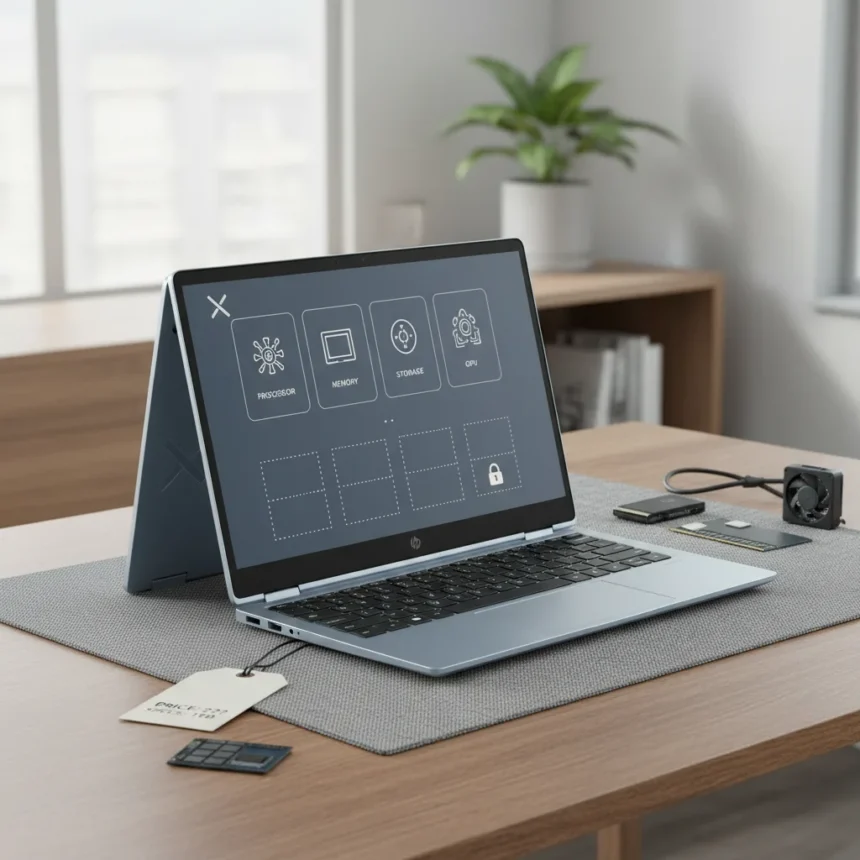
The HP OmniBook X Flip 14 is positioned as a versatile Windows convertible laptop built around customizable configuration options—a “pick’n’mix” approach to PC building that aims to let buyers assemble their ideal machine rather than accept fixed configurations. Yet despite the promise of flexibility, the device remains shrouded in vague marketing language and missing technical specifications that would help buyers actually understand what they are choosing.
Key Takeaways
- HP OmniBook X Flip 14 emphasizes customizable “pick’n’mix” configuration options for Windows users.
- Critical specifications, pricing, and availability details are not publicly disclosed in accessible sources.
- The convertible form factor targets users seeking both laptop and tablet functionality in one device.
- Customizable PC options represent a departure from traditional fixed-configuration laptop sales models.
- Lack of transparent specs makes direct comparison with competing convertible laptops difficult.
What Makes the HP OmniBook X Flip 14 Different
The HP OmniBook X Flip 14 attempts to differentiate itself through a modular approach to laptop customization. Rather than forcing buyers to choose from a handful of pre-built configurations, the device allows users to mix and match components—a strategy that echoes the “pick’n’mix” philosophy more commonly associated with candy stores than computer hardware. This flexibility could theoretically appeal to users who want specific processor power paired with particular storage options, RAM configurations, or display choices that traditional manufacturers do not offer as standard bundles.
Convertible laptops, which pivot between traditional clamshell and tablet modes, occupy a niche between ultraportable notebooks and detachable hybrids. The 14-inch form factor suggests a balance between screen real estate and portability. However, without access to the device’s actual specifications—display resolution, processor options, RAM tiers, storage capacities, weight, or battery life—it is impossible to assess whether the HP OmniBook X Flip 14 genuinely delivers on this promise or simply repackages familiar components under a customization banner.
The Customization Promise vs. Market Reality
Customizable PCs are not new. Dell, Lenovo, and other manufacturers have long offered configuration options at checkout. What distinguishes the “pick’n’mix” approach is the implication that buyers gain granular control over every component—processor, memory, storage, display, and potentially even chassis materials or connectivity ports. If executed well, this could deliver genuine value to power users, creators, and professionals who have specific, non-standard needs.


The problem is transparency. A buyer cannot evaluate whether customization truly saves money, improves performance for their use case, or simply creates decision paralysis through too many options. Without published specifications for each configurable element—processor tiers, GPU options, storage speeds, display brightness and color accuracy—the “pick’n’mix” model becomes marketing theater rather than a practical purchasing advantage. Competitors like Lenovo’s ThinkPad X series and Microsoft’s Surface Laptop lineup offer clearer configuration breakdowns and transparent pricing, making it easier for buyers to understand what they are actually getting.
Why Specifications Matter More Than Ever
In an era where laptop performance has plateaued for everyday users—most people do not need the raw power of a high-end processor for email, browsing, and office work—differentiation comes from specifics. What is the display quality? How long does the battery last under real-world use? What are the thermal characteristics under load? Does the convertible hinge feel robust, or does it wobble? Which ports are included, and are they positioned conveniently?



The HP OmniBook X Flip 14’s marketing emphasizes flexibility, but flexibility without clarity becomes a liability. A potential buyer cannot determine whether the device suits their needs, whether the customization options actually address their pain points, or whether the final configured price represents fair value. This is particularly problematic for convertible laptops, where build quality, hinge durability, and screen responsiveness in tablet mode are critical factors that no amount of component selection can overcome if the fundamentals are weak.
Convertible Laptops: A Niche That Demands Honesty
Convertible laptops occupy a unique market position. They are heavier than traditional ultrabooks, less versatile than true 2-in-1 detachables, and more expensive than comparable clamshell notebooks. Buyers who choose this form factor have a specific reason: they want both laptop functionality and tablet capability in a single device. This is a legitimate need for artists, note-takers, and professionals who sketch or annotate documents regularly.
However, the convertible category is also where vague marketing flourishes. Manufacturers tout “premium build quality” without specifying materials. They claim “responsive touch” without publishing touch latency measurements. They promise “all-day battery” without defining screen brightness or usage patterns. The HP OmniBook X Flip 14 risks falling into this trap—emphasizing customization as a headline feature while leaving the actual product specifications in shadow.
The Bigger Picture: What Buyers Really Need
Whether a laptop is customizable or not, buyers need the same information: processor model and generation, RAM amount and type, storage capacity and speed, display resolution and panel technology, weight, battery capacity, port selection, and thermal performance. They need to know the warranty, return policy, and upgrade options. They need honest assessments of build quality, hinge durability, and real-world performance.



The “pick’n’mix” concept is appealing in theory. In practice, it only delivers value if accompanied by complete transparency about what each option entails, how options interact with one another, and what the final configured price will be. A laptop that hides these details behind customization marketing is not empowering buyers—it is obscuring information they need to make an informed decision.
Is the HP OmniBook X Flip 14 Worth Considering?
Without access to verified specifications, pricing, and availability, it is impossible to recommend the HP OmniBook X Flip 14 with confidence. The customization angle is interesting, but it does not substitute for transparent product information. If you are considering a convertible laptop, demand clear specifications from any manufacturer. Compare actual processor performance, display quality, battery life, and build durability across devices. Do not let the promise of customization distract you from the fundamentals that determine whether a laptop will actually meet your needs.
What specifications should I prioritize when choosing a convertible laptop?
Focus on display quality (brightness, color accuracy, touch responsiveness), processor performance for your specific workload, battery life under realistic use, hinge durability and build materials, port selection for your peripherals, and weight if you carry it regularly. Customization options are secondary to these core factors.
How does the HP OmniBook X Flip 14 compare to other convertible laptops?
Direct comparison is difficult without published specifications for the HP OmniBook X Flip 14. Other convertible options like Lenovo’s ThinkPad X1 Fold, Microsoft Surface Laptop Studio, and ASUS ZenBook Flip series offer clearer specifications and transparent pricing, making it easier to evaluate their suitability for your needs.
Should I buy a customizable laptop or a standard configuration?
Customizable laptops make sense if you have specific, non-standard needs that standard configurations do not address. If your requirements align with typical configurations, you often save time and potentially money by choosing a pre-built model with clear specifications and established reviews.
The HP OmniBook X Flip 14 represents an interesting approach to laptop sales, but customization without clarity is a red flag. Before considering this device, demand transparent specifications, realistic pricing, and honest assessments of build quality and performance. In a crowded convertible laptop market, transparency is not a luxury—it is the minimum requirement for a purchase recommendation.
Where to Buy
Edited by the All Things Geek team.
Source: T3