




iRobot home robotics has returned from the edge of collapse, and this time the company looks structurally different in ways that actually matter. iRobot refers to the pioneering consumer robotics brand behind the Roomba, which completed a court-supervised Chapter 11 bankruptcy process and emerged as a privately held company in January 2026, now wholly owned by Picea, its primary contract manufacturer. The transition is not just a financial reshuffling — it marks a genuine reset of how iRobot intends to operate.
TL;DR: iRobot exited bankruptcy in January 2026 under new private ownership by Picea, launched a dedicated data protection subsidiary called iRobot Safe, and released the Roomba Mini Robot Vacuum and Mop with AutoEmpty Dock in the UK and Europe in March 2026 at €399 and £379. The comeback is real and structurally grounded.
What iRobot’s bankruptcy exit actually means
iRobot completing its Chapter 11 process in January 2026 is not the end of a cautionary tale — it is the start of a more focused company. Emerging under Picea’s full ownership strips away the shareholder pressures and acquisition drama that defined iRobot’s turbulent recent years, giving the brand room to build products rather than manage headlines.
Picea’s role as iRobot‘s primary contract manufacturer before the acquisition means the new ownership structure is not a hostile takeover by an unrelated financial player. Picea knows the supply chain, the hardware, and the production realities. That operational familiarity is a genuine advantage — one that pure private equity ownership rarely delivers. Whether it translates to better products or just leaner margins remains to be seen, but the foundation is more coherent than it was twelve months ago.


iRobot Safe: the privacy move that changes the conversation
iRobot’s establishment of iRobot Safe, an independent U.S. subsidiary focused on data protection and governance, is the most strategically interesting development in this comeback. Robot vacuums map your home. That is not a metaphor — they build spatial models of your living space, and the data those models contain is sensitive in ways that most consumers have not fully reckoned with.
By creating a dedicated, independent subsidiary for data governance rather than burying privacy commitments in a terms-of-service update, iRobot is signalling that it understands the trust problem at the core of the home robotics category. Competitors in the robot vacuum space have faced scrutiny over data practices, and a structurally separate privacy entity is a more credible response than a press release. It is also a differentiator that is genuinely hard to copy quickly.


The Roomba Mini launch: iRobot home robotics gets practical
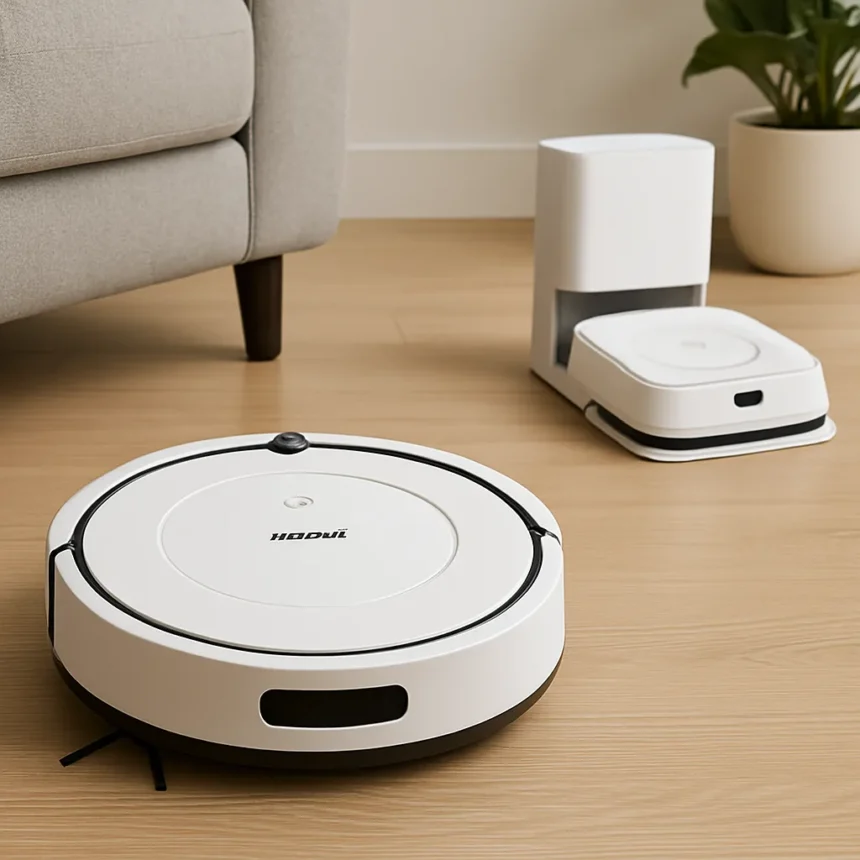
The Roomba Mini Robot Vacuum and Mop with AutoEmpty Dock launched in the UK and Europe on March 10, 2026, priced at €399 and £379. This is the product that puts iRobot’s comeback story in front of actual consumers, and the combination of vacuuming, mopping, and automatic emptying in a single unit positions it squarely against the increasingly capable mid-range offerings from Chinese competitors that have dominated European shelves in recent years.
The pricing sits in a competitive bracket. Comparable combo units from rival brands have pushed hard on value in the European market, and iRobot will need the Roomba Mini to justify its cost through reliability, software quality, and — critically — the trust signal that iRobot Safe is meant to provide. The brand still carries recognition weight in the UK and Europe that newer entrants lack, but recognition alone does not close sales in a category where consumers have more options than ever.
Can iRobot actually define a new era in home robotics?
The claim that iRobot intends to define a new era in iRobot home robotics is ambitious, but the structural moves behind it are not empty marketing. Private ownership under an operationally aligned partner, a dedicated data governance subsidiary, and a product launch timed to a post-bankruptcy confidence signal — these are coordinated steps, not coincidences.
The honest answer is that defining an era requires more than one product and a restructuring. It requires sustained execution over multiple product cycles, and iRobot has not yet demonstrated that the new structure produces better hardware faster. The Roomba Mini launch is a proof point, not a proof. But compared to where the company was heading eighteen months ago, the direction has genuinely changed.


Is iRobot still a good brand to buy from in 2026?
Yes, with caveats. iRobot emerged from bankruptcy with a cleaner ownership structure, a new data protection subsidiary, and an active product roadmap. The Roomba Mini launched in the UK and Europe in March 2026, showing the company is shipping rather than just announcing. The main caveat is that long-term software support commitments are still worth scrutinising before purchase.
What is iRobot Safe and why does it matter?
iRobot Safe is an independent U.S. subsidiary established specifically for data protection and governance. Robot vacuums collect spatial data about your home, and a structurally separate entity for managing that data is more credible than a policy update. It matters because data trust is now a real purchase consideration in the smart home category, not just a regulatory checkbox.
How does the Roomba Mini compare to rival robot vacuums?
The Roomba Mini Robot Vacuum and Mop with AutoEmpty Dock launched at €399 and £379 in Europe and the UK. It competes against combo vacuum-mop units from Chinese brands that have aggressively priced their way into the European market. iRobot’s advantages are brand recognition and the iRobot Safe data governance structure — factors that matter to privacy-conscious buyers more than raw spec comparisons.
iRobot’s 2026 story is not a triumphant return so much as a credible one. The company has done the structural work — new ownership, a privacy subsidiary, an active product launch — that earns it a second look. Whether it can sustain that momentum across multiple product cycles is the only question that actually matters now, and the Roomba Mini is the first real test of the answer.
This article was written with AI assistance and editorially reviewed.
Source: TechRadar