






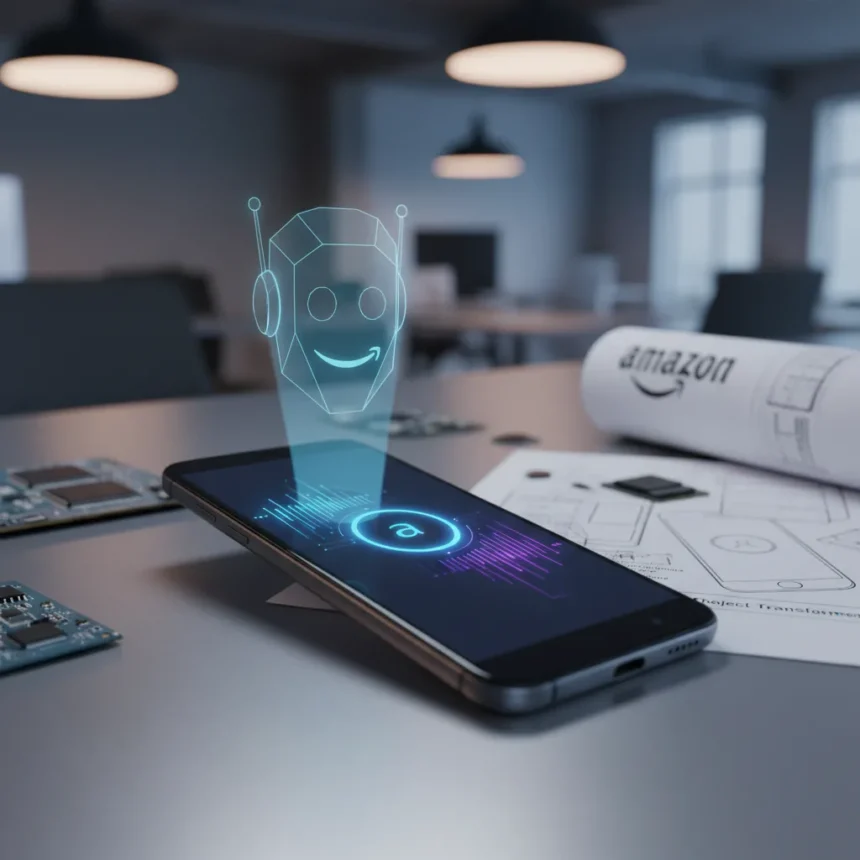
Amazon is developing an Alexa smartphone codenamed Transformer, marking the company’s return to mobile hardware more than a decade after the Fire Phone collapsed spectacularly in 2014. The project sits within Amazon’s devices and services division under a new group called ZeroOne, tasked with building breakthrough gadgets that could reshape how customers interact with Amazon’s ecosystem.
Key Takeaways
- Amazon’s Fire Phone launched in 2014 and was discontinued after just 14 months due to poor market reception.
- The new Transformer smartphone aims to deeply integrate Alexa to drive e-commerce, Prime Video, Prime Music, and food delivery orders.
- Amazon has sold over 600 million Alexa-powered devices worldwide, but the smartphone faces an uphill battle against Apple and Samsung.
- No confirmed launch date, pricing, or technical specifications have been announced for the Alexa smartphone.
- The project could be scrapped due to strategy shifts or financial concerns, according to reports.
Why Amazon thinks it can win the smartphone market this time
The Alexa smartphone represents Jeff Bezos’ long-held vision of a ubiquitous voice-driven computing assistant that permeates daily life. Unlike the Fire Phone, which tried to sell itself on gimmicky features like dynamic perspective and heavy Amazon integration, the Transformer is being positioned as a personalized mobile device that syncs tightly with Alexa to facilitate shopping, streaming, and food orders from partners like Grubhub. The bet is straightforward: make Alexa so integral to the phone’s function that switching becomes friction-free for Amazon’s existing customer base.
Amazon’s confidence rests partly on the success of its broader Alexa ecosystem. The company has deployed over 600 million Alexa-powered devices globally, creating a network effect that a smartphone could theoretically amplify. If the phone becomes the central hub for voice commands across a user’s smart home, car, and personal devices, it could justify the hardware investment in ways the Fire Phone never did.
The competitive reality Amazon is ignoring
Here’s the problem: Apple and Samsung have spent years perfecting smartphone integration with their own voice assistants. Siri and Google Assistant are deeply woven into iOS and Android, respectively, and billions of users already depend on them. For Amazon to convince someone to switch phones, it would need to offer something so compelling that losing access to years of habit, app compatibility, and ecosystem lock-in feels worth it. That is a formidable ask, especially when Alexa has struggled to differentiate itself against ChatGPT, Google Gemini, and other AI chatbots in broader consumer consciousness.

Amazon’s recent strategy of expanding Alexa to third-party devices—Samsung smart TVs, BMW vehicles, Bosch coffee machines, Oura health rings—suggests the company has already hedged its bets on owning the hardware layer. Why launch a flagship phone when you can embed Alexa everywhere else and collect the same user data? That contradiction undermines the urgency of the Transformer project.
What we actually know about the Alexa smartphone
Almost nothing concrete. No launch date has been confirmed. No pricing structure exists. No technical specifications beyond Alexa integration have been disclosed. The project is described as early-stage, and Amazon has explicitly acknowledged it could be scrapped due to strategy shifts or financial pressures. This is not a phone on the horizon—it is a concept with institutional backing and a codename.



The timing is worth noting. Reports of the Transformer project emerged in March 2026, coinciding with Amazon’s CES announcements expanding Alexa+ to the web, vehicles, and third-party devices. The company is clearly in an Alexa offensive mode, but whether that offensive includes a flagship phone remains genuinely uncertain.
Does the Fire Phone’s failure haunt this project?
The Fire Phone launched in 2014 with heavy Amazon integration and a focus on shopping, but it was discontinued after just 14 months due to being a high-profile flop. The device felt like a phone designed to serve Amazon’s business model rather than users’ actual needs. Early reviews criticized it for being underpowered, overpriced, and redundant—why buy a phone locked into Amazon’s ecosystem when you could buy an iPhone or Android device with far more flexibility?
The Transformer risks repeating that mistake. If the phone is primarily a vehicle for Alexa commands and Amazon purchases, it will feel like a tool, not a device people want to own. The Fire Phone’s core flaw was that it asked customers to compromise on hardware quality and software flexibility for the privilege of easier shopping. Nothing in the available information suggests the Transformer has solved that fundamental tension.
Could the Alexa smartphone actually succeed?
Yes, but only if Amazon commits to making it a genuinely competitive phone first and an Alexa device second. That means flagship-grade processors, a robust app ecosystem, thoughtful industrial design, and pricing that does not require subsidies to move units. It means treating the phone as a product for humans, not as a data collection device for Amazon’s retail business.



The company has the resources and the Alexa installed base to pull this off. But the Fire Phone’s failure suggests Amazon struggles with the discipline required to build hardware that users actually want, rather than hardware that serves corporate strategy. Until Amazon demonstrates it has learned that lesson, the Transformer remains a risky bet on a company with a track record of smartphone failure.
Is Amazon actually serious about releasing an Alexa smartphone?
The project exists and is being developed within Amazon’s devices unit, but no firm launch commitment has been made. Amazon has explicitly stated the Transformer could be scrapped due to strategy shifts or financial concerns, suggesting the company is treating it as a long-term exploration rather than a near-term product. The lack of any announced timeline, specs, or pricing reinforces that this is still in early development.
How does Amazon’s Alexa smartphone differ from the Fire Phone?
The Fire Phone was a 2014 device focused on shopping and Amazon content with proprietary features like dynamic perspective. The Transformer is being designed as a personalized mobile device with deep Alexa integration to facilitate shopping, Prime Video, Prime Music, and food delivery orders. The core difference is architectural: the Transformer aims to make Alexa the central interface, rather than making Amazon shopping the central feature. Whether that distinction matters in practice remains unproven.
What would the Alexa smartphone need to compete with iPhone and Android?
It would need to offer hardware and software quality that matches or exceeds what Apple and Samsung deliver, combined with a genuine advantage in voice-driven computing that justifies switching. Right now, neither condition is met. The project has no confirmed specs, no launch date, and no clear value proposition beyond Alexa integration. Without those fundamentals, the Transformer risks becoming another footnote in Amazon’s hardware graveyard.
Amazon has the cash, the ecosystem, and the Alexa user base to make a competitive smartphone. What remains unclear is whether the company has the will to build a device that serves users first, rather than Amazon’s bottom line. The Fire Phone’s failure should be a cautionary tale, not a template to repeat with better branding.
This article was written with AI assistance and editorially reviewed.
Source: Tom's Guide