






Modern cassette players are staging a quiet rebellion against the streaming era, and it is not just nostalgia driving the resurgence. Something shifted in how people want to listen to music. Streaming gave everyone access to everything, and somewhere in that abundance, the experience got thinner. You stopped owning albums. You stopped reading liner notes or staring at cover art while the opening track played. That is not sentimentality talking. It is a design problem, and one the cassette era solved without knowing it was solving anything.
Key Takeaways
- Modern cassette players combine analog warmth with Bluetooth 5.3 and USB-C charging for contemporary use
- 2026 models feature upgraded components like Cirrus Logic DAC chips and aluminium builds replacing cheap plastic
- Ownership and tactile controls address streaming’s loss of album experience and liner notes
- Products range from entry-level portables to high-end double decks and all-in-one systems
- Brands like FiiO and We Are Rewind are leading a slow but steady cassette resurgence
Why modern cassette players are solving a real problem
The appeal of modern cassette players goes beyond aesthetic revival. They restore something streaming platforms deliberately removed: the act of owning and experiencing music as a physical object. Streaming services optimized for infinite choice and algorithmic discovery, but they eliminated the ritual. You no longer curate a collection. You no longer hold something in your hands that represents your taste.
Modern cassette players reintroduce friction in a good way. You choose a tape. You insert it. You listen to side A, then flip it. The experience demands attention. It is not background noise piped through a smartphone app. This tactile engagement is why younger listeners, particularly Gen Z, are buying cassette players in 2026 despite having grown up entirely in the streaming era. The design philosophy is not retro for retro’s sake—it is functional minimalism that streaming abandoned.
The technical evolution behind 2026 cassette players
Modern cassette players are not your parents’ Walkmans. 2026 models incorporate upgraded components, better battery life, and cleaner construction while retaining cassette-era warmth. The FiiO Echo Mini exemplifies this blend: it features Bluetooth 5.3, a microSD slot, and dual Cirrus Logic CS43131 DAC chips, earning Hi-Res certification from the Japan Audio Society. The device references the design language of classic Sony and Aiwa portables but executes it with contemporary engineering.

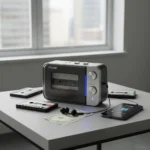
The FiiO CP-81 offers a different approach, adding recording capability via line-in mic jack and powering itself with either 2x AA batteries or USB-C. The We Are Rewind player uses an aluminium build available in grey, blue, and orange, weighs 404 grams, includes Bluetooth 5.2, and charges via USB 5.0V DC. These are not novelty items. They are functional audio devices built to last, with tactile controls and rechargeable batteries that address the portability demands of 2026 listeners.
Entry-level options exist for casual users. The Muse M-152 serves listeners who want occasional cassette playback without premium pricing. For those seeking maximum capability, the Teac W-1200-B is a high-end double deck offering one-touch dubbing, variable pitch control, and A-B repeat functionality, allowing simultaneous recording on two tapes. The Denver MCR-50 takes an all-in-one approach, playing cassettes, vinyl, and CDs while converting audio to MP3 via USB.


How modern cassette players compare to streaming’s limitations
Streaming services solved the access problem but created a new one: ownership became a myth. You do not own your playlists. You do not own your listening history if the service shuts down or changes its terms. You do not own the albums you have heard a thousand times. Modern cassette players restore this fundamental relationship between listener and music.
The comparison extends to hardware design. Streaming optimized for convenience and algorithm-driven discovery, which meant audio hardware became generic. Phones and earbuds are interchangeable. A Spotify listener on an iPhone experiences the same interface as a listener on Android. Modern cassette players reject this homogeneity. The FiiO Echo Mini looks and feels different from the We Are Rewind. The Denver MCR-50 is a statement piece. Design variation returned because the medium itself encourages it.
A Bluetooth-enabled cassette tape accessory demonstrates how modern designers are bridging eras: it converts older players—car boomboxes, boom boxes in dormitories—into Bluetooth receivers, weighing 713 grams with Bluetooth 5.0, powered by 4x AA batteries and two 5W speakers. This is not replacement. It is augmentation. It lets people keep what they love while adding modern connectivity.
The broader trend: Why brands are investing in cassette players
The cassette resurgence is slow but measurable. FiiO, We Are Rewind, and other manufacturers would not be releasing 2026 models if demand were purely nostalgic. Brands like these are making it easier to find quality cassette players in a market that abandoned them two decades ago. WIRED and Forbes have covered a 104-watt boombox shaped like a real mixtape, priced at $49, signaling mainstream media attention. This is not underground enthusiasm. It is a visible market shift.


What makes this resurgence distinct is that it is not driven by older listeners trying to recapture youth. Gen Z, the demographic that never owned a cassette player as children, is buying them as adults. They are choosing cassettes after experiencing streaming their entire lives. That choice is the story. It suggests that abundance without ownership, infinite choice without curation, and seamless convenience without physicality left a gap.
Are modern cassette players practical for everyday listening?
Modern cassette players are practical if you accept their constraints as features, not bugs. Battery life has improved significantly compared to vintage models. Bluetooth connectivity means you can listen to cassettes through wireless headphones or speakers. USB-C charging aligns with contemporary device ecosystems. The FiiO CP-81 and We Are Rewind both address portability and charging in ways vintage cassette players could not.
The limitation is tape availability. Cassettes are manufactured again, but selection is limited compared to streaming’s infinite catalogue. If you want to listen to obscure B-sides or deep cuts from unsigned artists, cassettes will not serve you. Modern cassette players work best as a curated listening experience—a deliberate choice to engage with albums you have already decided matter to you.
Should I buy a modern cassette player?
Buy one if you value ownership, tactile controls, and the ritual of intentional listening over convenience and infinite choice. Modern cassette players are not faster or more efficient than streaming. They are the opposite. They are slower by design. If that appeals to you, the FiiO Echo Mini and We Are Rewind offer premium builds. If you want an all-in-one system, the Denver MCR-50 handles cassettes, vinyl, and CDs. If you are experimenting, the Muse M-152 is entry-level.
What is the difference between modern cassette players and vintage ones?
Modern cassette players use upgraded components like Cirrus Logic DAC chips instead of basic amplifiers, offer Bluetooth and USB-C instead of battery-only operation, and feature aluminium construction instead of cheap plastic. Vintage players are heavier, consume batteries faster, and lack modern connectivity. 2026 models preserve cassette-era warmth while solving the practical problems that made people abandon cassettes in the first place.
Can I use modern cassette players with wireless headphones?
Yes. Models like the We Are Rewind and FiiO Echo Mini include Bluetooth 5.2 and 5.3 respectively, allowing wireless connection to headphones and speakers. This bridges the gap between cassette’s analog warmth and modern wireless convenience, letting you experience the medium without being tethered to a device.
Modern cassette players are not a return to the past. They are a rejection of a specific present: one where music became infinitely available but personally meaningless. By restoring ownership, physicality, and intentionality to listening, they solve a design problem that streaming created. Whether that resonates depends on what you value more—access or experience.
Where to Buy
We Are Rewind Portable Cassette Player: | FiiO Cp13 Cassette Player (transparent): | FiiO Echo Mini Hifi Bluetooth Mp3 Player: | Crosley Cr3047a-Ln Mini Retro 80's Portable Bluetooth Speaker: | Crosley Cr3045bk-Cs Cassette Tape Portable Speaker:
This article was written with AI assistance and editorially reviewed.
Source: Creativebloq


