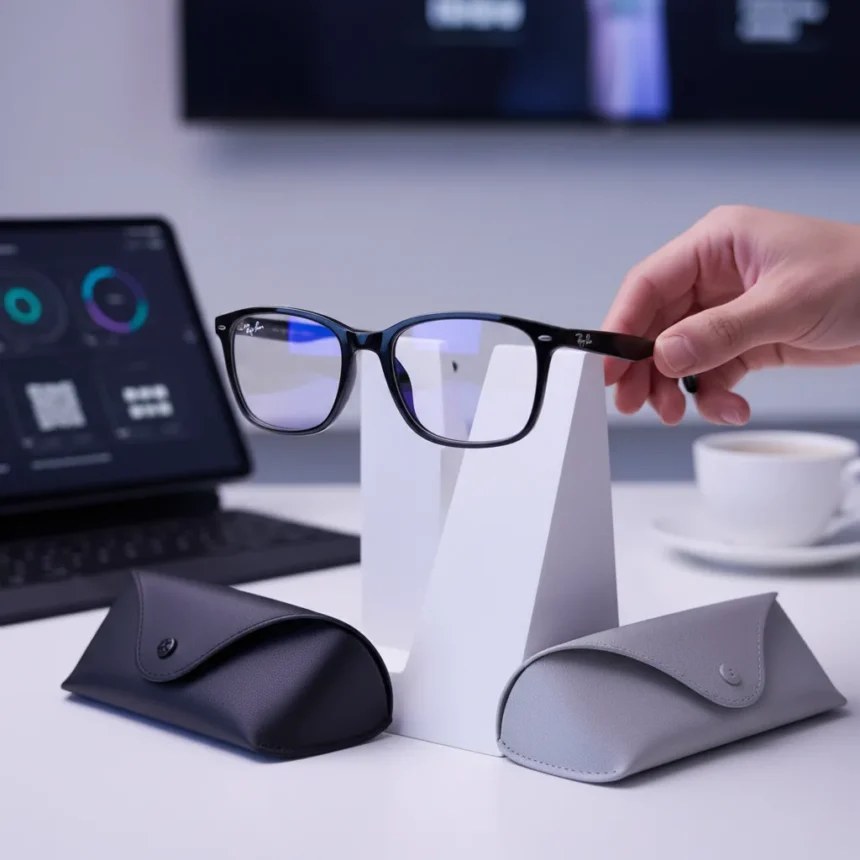
Meta Ray-Ban prescription lenses are finally a practical reality, and they change the calculus for anyone who has been eyeing these AI smart glasses but assumed contacts were a prerequisite. The Ray-Ban Meta glasses are a line of AI-powered smart glasses made by Meta in partnership with Ray-Ban, starting at $299 USD for standard models, with prescription support available through official retailers and third-party providers alike.
Key Takeaways
- Standard Ray-Ban Meta glasses support prescription lenses via a simple lens swap costing $25–$100 through third-party providers.
- The Ray-Ban Meta Display model requires prescription bonding at the time of purchase, adding $200 to the price for a $1,000 total.
- Eligible prescriptions range from -6.00 to +4.00 total power; single vision and progressive options are available.
- Ray-Ban.com currently offers 50% off prescription lenses with Meta frames, and Target Optical offers 40% off prescription glasses online.
- HSA and FSA funds can be used toward prescription lens costs.
How Meta Ray-Ban prescription lenses actually work
For the standard (non-display) Ray-Ban Meta glasses, adding a prescription is genuinely straightforward. Pop out the original lenses — a process that takes seconds — and swap in prescription lenses sourced from an official or third-party provider. The total cost runs between $25 and $100 depending on your prescription complexity, making this one of the more affordable smart wearable upgrades available.
Official channels include Ray-Ban.com, LensCrafters, and Target Optical. Third-party services like VR-Wave and UseMyFrame offer user-replaceable lenses for both Gen 1 and Gen 2 Ray-Ban Meta frames, as well as Oakley Meta. The VR-Wave process involves uploading your prescription details via dropdown menus on their site, selecting lens type — single vision, progressive, or transitioning — and swapping the lenses yourself once they arrive. It’s a consumer-friendly process that doesn’t require a visit to an optician.
The eligible prescription range covers -6.00 to +4.00 total power, which accommodates a broad slice of wearers. If your prescription falls outside that range, these glasses aren’t an option yet — but most people with mild to moderate correction will find themselves covered.



The Meta Ray-Ban Display model changes everything — and complicates it
The Display version of the Ray-Ban Meta glasses is a different beast. It features a HUD waveguide built into the right lens, and that waveguide cannot be swapped out after purchase. Prescription support for the Display model requires custom bonding at the manufacturing stage, which means you must order it with your prescription from the outset.
That process starts with an in-store demo appointment at a certified physical retailer. During the demo, staff fit temporary prescription inserts so you can test how the HUD looks with your correction — but those inserts introduce visual artifacts and bulk, and they are not available for purchase or permanent use. Think of them as a proof-of-concept, not a finished product. After placing your order, expect a delivery window of five to eight weeks.



The prescription bonding adds $200 to the Display model’s base price, bringing the total to $1,000 including the wristband. That’s a significant commitment, and the locked-in nature of the prescription means you can’t simply swap lenses if your vision changes. For anyone whose prescription shifts regularly, that’s a real risk worth weighing carefully.
Where to get Meta Ray-Ban prescription lenses and what promotions exist
The official route offers some compelling deals right now. Ray-Ban.com is running 50% off prescription lenses when purchased with Meta frames, plus an additional 10% off lenses specifically on Ray-Ban Meta. Target Optical is offering 40% off prescription glasses or 20% off frames online — though insurance is excluded from that promotion. Both are worth checking before defaulting to a third party, depending on your prescription complexity.
Third-party providers like VR-Wave and UseMyFrame remain the most affordable option for standard frames, with costs in the $25–$100 range. One caveat: using non-certified optical providers may affect your warranty coverage, so it’s worth reading the fine print before ordering. HSA and FSA funds are eligible for these lens costs, which softens the financial impact for those with health spending accounts.
How do Meta Ray-Ban glasses compare to other prescription smart wearable options?
The Meta Quest VR headsets use a similar snap-on prescription insert system, also priced in the $25–$100 range, making the approach consistent across Meta’s wearable ecosystem. The Oakley Meta frames, a sportier alternative to the Ray-Ban styling, also support third-party prescription lenses through providers like VR-Wave. What Meta Ray-Ban prescription lenses offer that most competitors don’t is genuine daily-wear practicality — these are fashion-forward frames that don’t announce themselves as tech products, combined with AI audio features that work whether or not you need vision correction.



Is the Display model worth buying with a prescription?
The Display model’s prescription bonding is permanent, which is a genuine drawback compared to the swappable lenses on standard frames. If your prescription is stable and you want the HUD experience, the $1,000 price point is defensible. If your vision changes frequently, or if you simply want to try AI smart glasses without a major commitment, the standard Ray-Ban Meta frames with a $25–$100 third-party prescription lens swap are a far more sensible entry point.
Can I use my HSA or FSA to pay for Meta Ray-Ban prescription lenses?
Yes. Prescription lenses for Ray-Ban Meta glasses are HSA and FSA eligible, which means you can use pre-tax health spending funds to cover the lens cost. This applies to both official and third-party prescription options, though it’s worth confirming eligibility with your specific plan administrator before ordering.
What prescriptions are compatible with Ray-Ban Meta glasses?
The eligible range for Ray-Ban Meta prescription lenses runs from -6.00 to +4.00 total power. Single vision and progressive lenses are available through third-party providers, giving wearers with reading or distance correction meaningful options. If your prescription falls outside this range, the current generation of frames won’t accommodate it.
The prescription story for Meta Ray-Ban glasses has quietly become one of the more compelling reasons to consider them. For the standard frames, the barrier is low — a lens swap costing less than a dinner out. For the Display model, the commitment is steeper and the flexibility is limited. Either way, the excuse that smart glasses don’t work for people who need vision correction is no longer valid.
Edited by the All Things Geek team.
Source: Android Central