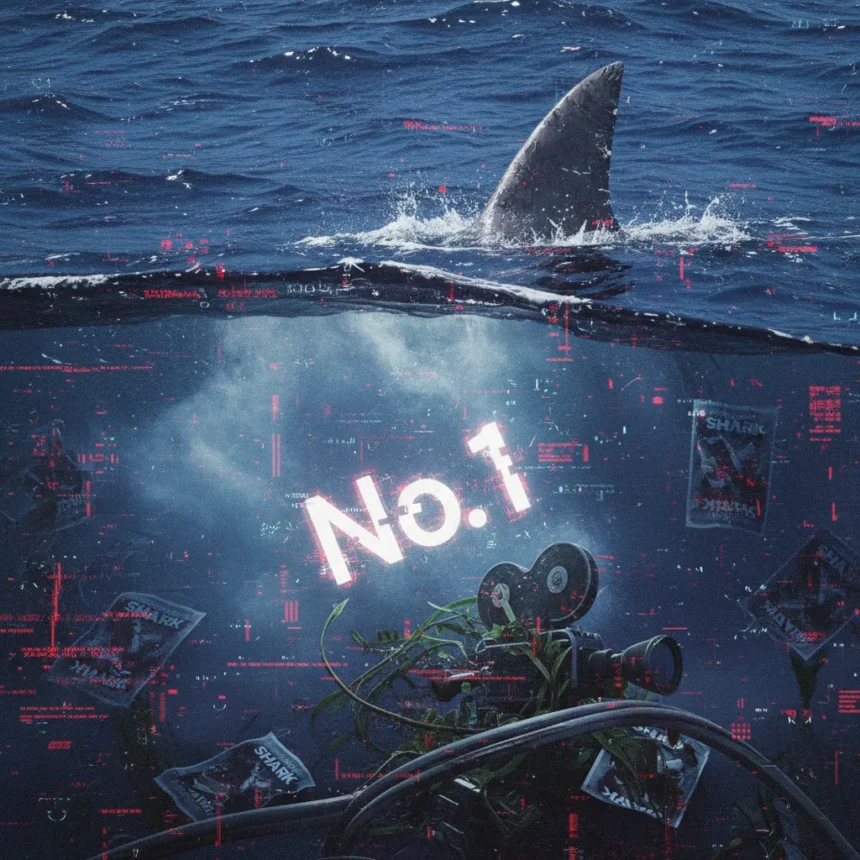
Netflix’s new shark movie Thrash has become the streamer’s No. 1 film within days of its April 10 release, yet the survival thriller is precisely what its title suggests: trash masquerading as entertainment. Directed by Tommy Wirkola and produced by Adam McKay (the filmmaker behind Don’t Look Up), Thrash follows a Category 5 hurricane that decimates a coastal American town, unleashing hungry bull sharks on trapped residents. The premise is absurd. The execution is uninspired. Yet viewers cannot stop watching.
Key Takeaways
- Thrash became Netflix’s No. 1 movie within days despite a 2/5-star review from Tom’s Guide.
- The film stars Phoebe Dynevor (Bridgerton) and Djimon Hounsou in a hurricane-shark survival thriller.
- Critics call it unmemorable but audiences remain obsessed with the shark-movie genre regardless of quality.
- Unlike Sharknado, Thrash takes itself seriously and abandons campy fun for muted thrills.
- Netflix is flooding April with survival thrillers including Beast and Apex.
Why Thrash Became Netflix’s No. 1 Despite Terrible Reviews
The film’s rapid ascent to the top of Netflix’s charts exposes a brutal truth about streaming audiences: they will watch shark movies even when critics unanimously pan them. Tom’s Guide’s review verdict was unsparing: Thrash feels caught between pleasing shark-movie fans and delivering genuine thrills, landing in an awkward middle ground where it achieves neither. The performances from Phoebe Dynevor and Djimon Hounsou elevate the material slightly, but not enough to salvage a film that reviewers describe as dead in the water.
Audiences, however, do not care. The fact that Thrash’s title sits one letter away from an actual insult seems to have become part of its appeal. Viewers obsessed with shark cinema are consuming the film regardless of its critical reception, proving that the genre has a devoted fanbase willing to overlook significant shortcomings. This is not unprecedented—low-quality creature features have long found audiences on streaming platforms—but the speed of Thrash’s rise suggests Netflix’s algorithm and marketing push are working exactly as intended.
Netflix Shark Movie Thrash vs. Sharknado: The Tone Problem
Thrash is no Sharknado, and that is precisely the problem. The 2013 cult film embraced its absurdity with gleeful abandon, delivering campy spectacle and knowing humor that made it a guilty pleasure. Thrash, by contrast, treats hurricane-shark chaos as a serious survival scenario. It wants to be taken seriously while asking audiences to accept a premise that demands camp sensibility to work.



This tonal mismatch is Thrash’s fatal flaw. Audiences obsessed with shark movies crave either authentic terror (like Jaws) or unapologetic silliness (like Sharknado). Thrash offers only occasional laughs and muted thrills, leaving viewers in a state of bemused frustration. The film had the opportunity to lean fully into either direction but instead straddled both, satisfying neither impulse. For viewers seeking genuine scares, it delivers nothing. For those seeking campy fun, it is too restrained.
What Thrash Gets Right (and Why It Is Still Not Enough)
The cast elevates what could have been a complete disaster. Phoebe Dynevor, known for her role in Bridgerton, brings credibility to her lead role, and Djimon Hounsou’s presence lends the film a veneer of legitimacy. The hurricane-shark premise itself is visually compelling—the concept of storm surge bringing predatory fish into a flooded town has undeniable cinematic potential.



Yet solid casting and a workable premise cannot overcome uninspired execution. The film squanders its potential by treating every scene with the same flat affect, never building tension or committing fully to either drama or comedy. The result is a movie that feels caught between two genres, never quite landing as either. Audiences may be watching Thrash, but many are watching it ironically, aware of its shortcomings and entertained by the gap between ambition and delivery.
Netflix’s April Survival Thriller Blitz and the Shark Movie Obsession
Thrash is not Netflix’s only survival thriller hitting the platform this month. The streamer released Idris Elba’s Beast earlier in April and will drop Apex later in the month, suggesting a deliberate strategy to capitalize on audience appetite for high-stakes creature-feature content. This clustering of similar films reveals Netflix’s understanding that subscribers will binge survival thrillers regardless of individual quality—the genre itself is the draw.
The broader obsession with shark movies reflects something deeper about streaming audiences: a hunger for spectacle, danger, and the primal fear of nature that transcends critical assessment. When a film offers sharks, storms, and survival, millions will click play. Whether the film actually delivers meaningful entertainment is secondary to the promise of those elements.
Is Thrash worth watching on Netflix?
Only if you are genuinely obsessed with shark movies and willing to tolerate uneven pacing, muted thrills, and a tonal identity crisis. The film is not a must-watch, and its No. 1 status reflects algorithm momentum and genre appeal rather than quality filmmaking. Watch it if you want to understand why audiences are so devoted to creature features, but do not expect to be impressed.



How does Thrash compare to other Netflix survival thrillers?
Thrash sits somewhere between Beast and Apex in terms of premise scope, but lacks the focused intensity that makes those films more effective. Beast offers a tighter cat-and-mouse scenario, while Thrash dilutes its premise across a flooded town full of characters. The broader cast and setting create more chaos but less coherent storytelling.
Why did Thrash become No. 1 if critics hated it?
The shark-movie genre has a dedicated fanbase that watches regardless of reviews, and Netflix’s algorithm promotes new releases aggressively in the first week. A film does not need critical acclaim to hit No. 1—it just needs to satisfy a specific audience niche with enough scale to move the needle on streaming charts.
Thrash’s rise to Netflix’s No. 1 spot is a perfect case study in how streaming success and critical quality have become entirely divorced. The film will likely draw millions of viewers, prove profitable for the streamer, and be forgotten within weeks. For Netflix, that is a win. For viewers seeking genuinely great cinema, Thrash is yet another reminder that the platform’s algorithm favors spectacle over substance. Watch it if you must—just do not expect it to be good.
Edited by the All Things Geek team.
Source: T3