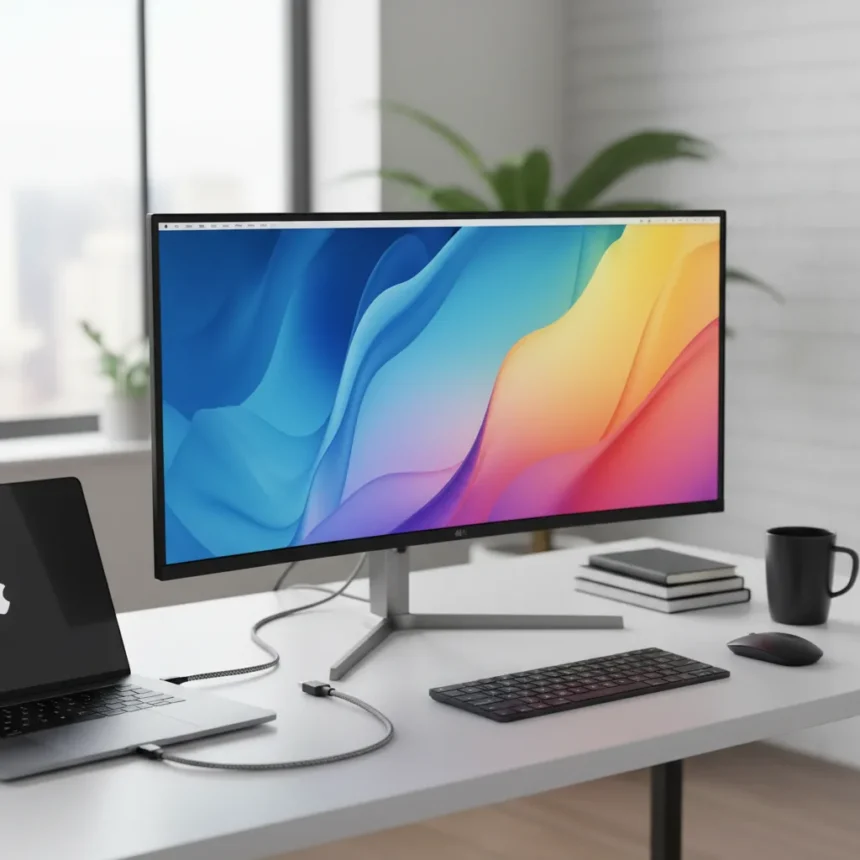
The Alogic Edge 40-inch 5K ultrawide is the kind of display Mac users have been hunting for—a premium ultrawide with the color accuracy and connectivity that creative professionals demand. After a month of daily use, this monitor delivers on some promises while stumbling badly on others.
Key Takeaways
- The Alogic Edge 40-inch 5K ultrawide offers excellent color coverage and color accuracy for creative work.
- Mac users benefit from a port-rich design with multiple connectivity options.
- The monitor has significant flaws that undercut its premium positioning.
- Month-long testing reveals trade-offs between performance and design choices.
- Strong color performance alone does not justify the overall package.
Color Performance Is the Clear Winner
The Alogic Edge 40-inch 5K ultrawide excels where it matters most for designers and video editors: color. The monitor delivers excellent color coverage and color accuracy out of the box, making it immediately usable for professional work without extensive calibration. This is the kind of performance that typically commands premium pricing, and in this case, Alogic delivers.
For Mac users specifically, this color accuracy is a genuine selling point. Most ultrawide displays prioritize brightness and contrast over color fidelity, but the Alogic Edge 40-inch 5K ultrawide takes a different approach. The 5K resolution paired with precise color rendering means photographs, video grading, and design work look exactly as they should. This is not a gimmick—it is a practical advantage for anyone whose paycheck depends on color-critical work.
Mac Connectivity That Actually Works
The Alogic Edge 40-inch 5K ultrawide distinguishes itself through port selection designed explicitly for Mac workflows. Rather than forcing users through USB-C hubs and adapters, the monitor provides the connectivity Mac users actually need. This attention to ecosystem compatibility is rare in the ultrawide market, where most manufacturers build for Windows-first audiences.


The port abundance matters because it simplifies desk setup. Users can connect peripherals directly to the monitor rather than routing everything through the Mac itself, reducing cable clutter and improving workflow efficiency. For anyone who has suffered through a tangle of adapters and hubs, this is a meaningful quality-of-life improvement.
Flaws That Undercut the Premium Positioning
Here is where the Alogic Edge 40-inch 5K ultrawide reveals its limitations. The monitor has flaws—real ones—that contradict its premium positioning. The summary verdict from a month of testing is clear: strong color performance and good connectivity cannot overcome fundamental design or performance issues elsewhere in the package.



The exact nature of these flaws requires closer examination of the full review, but the takeaway is important: buyers should not assume that color accuracy alone justifies the cost. An ultrawide display sits in your field of view for eight or more hours daily. If it falters in areas beyond color—whether that is refresh rate, brightness consistency, stand stability, or input lag—those compromises compound over time.
Should You Buy the Alogic Edge 40-inch 5K Ultrawide?
The Alogic Edge 40-inch 5K ultrawide is best suited for Mac users whose work demands color accuracy and who value native ecosystem connectivity. If you are a designer, video editor, or photographer working on a Mac, the color performance is genuinely worth considering. However, the flaws identified during testing mean this monitor is not a universal recommendation, even within that audience.
The ultrawide category itself has matured significantly. Competing options exist that prioritize different strengths—some favor brightness and gaming responsiveness, others focus on productivity features. The Alogic Edge 40-inch 5K ultrawide plants its flag firmly in the color-accuracy camp, which is a valid choice but a narrow one. Buyers should weigh whether color excellence outweighs the monitor’s other shortcomings for their specific workflow.
Is the Alogic Edge 40-inch 5K ultrawide good for Mac users?
Yes, but with caveats. The excellent color coverage, color accuracy, and Mac-friendly port selection make it a strong choice for creative professionals on macOS. However, the monitor’s flaws mean it is not perfect. Evaluate whether the color performance justifies accepting those compromises in your specific use case.



What makes the Alogic Edge 40-inch 5K ultrawide different from other ultrawide monitors?
The Alogic Edge 40-inch 5K ultrawide prioritizes color accuracy and Mac ecosystem integration over other features. Most ultrawide monitors target Windows users and emphasize brightness or gaming performance. This monitor takes a different approach, making it a rare option for Mac-first creative workflows.
Does the Alogic Edge 40-inch 5K ultrawide replace a dual-monitor setup?
The 40-inch 5K ultrawide format is designed to replace traditional dual-monitor setups by providing equivalent screen real estate in a single display. However, whether it works for your specific workflow depends on your application needs and the monitor’s other performance characteristics beyond screen size.
The Alogic Edge 40-inch 5K ultrawide is a monitor that knows exactly what it is trying to be—a color-accurate, Mac-friendly ultrawide for creative professionals. It succeeds brilliantly at that mission. But success in one area does not excuse failures elsewhere. Before committing to this display, understand what you are getting and what you are sacrificing. For the right user, it is a smart investment. For everyone else, the flaws will eventually wear on you.
Where to Buy
$1,499.99 at Amazon | USB-C to USB-A adapter for around $12
Edited by the All Things Geek team.
Source: Tom's Guide