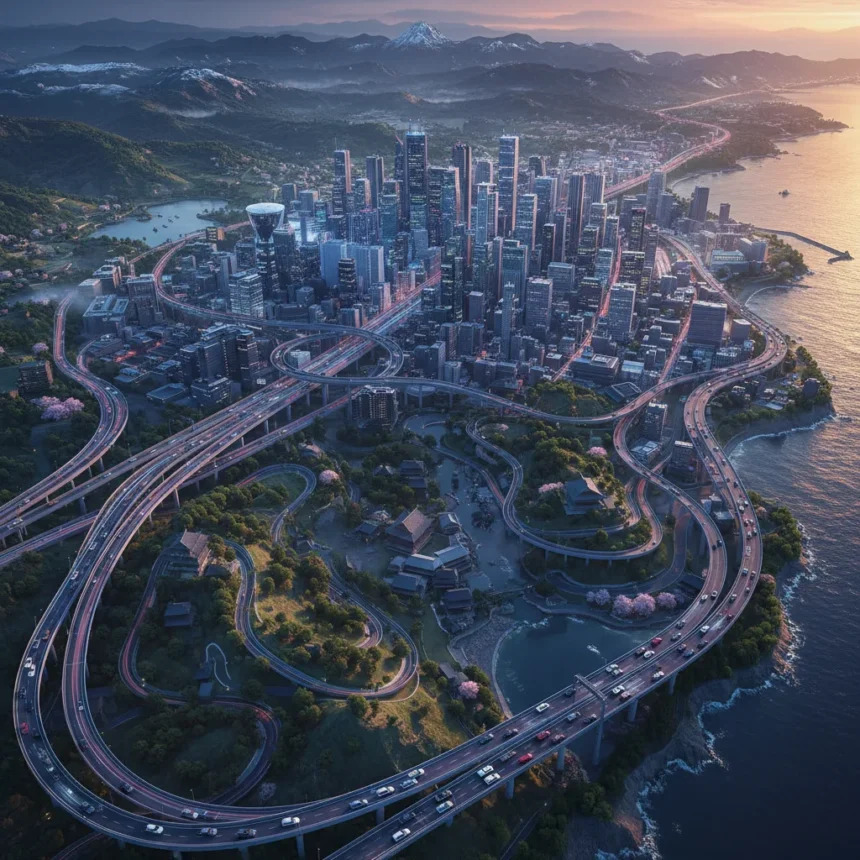
Forza Horizon 6’s Japan map represents a quantum leap in open-world design for the racing franchise. Playground Games has built what it calls the largest, densest, and most detailed map in Forza Horizon history, surpassing even the ambitious Mexico setting of Forza Horizon 5. The map is not a 1:1 recreation of Japan but rather a curated “greatest hits” of real locations bundled into one cohesive sandbox, blending modern Tokyo with rural villages, snow-capped mountains, and coastal highways.
Key Takeaways
- Forza Horizon 6’s Japan map is the largest and densest in the entire series, bigger than Forza Horizon 5.
- Tokyo City is five times larger than Forza Horizon 5’s Guanajuato and features four distinct districts.
- The map uses elevation-based biomes instead of separate regions, creating a more layered and interconnected world.
- Inspiration drawn from real Japanese roads including the C1 Loop, Venus Line scenic route, and Tateyama Kurobe Alpine Route.
- Over 550 cars with customizable body kits, liveries, and window stickerbombing options.
Tokyo City Dominates the Map’s Urban Landscape
Tokyo City stands as the centerpiece of the Forza Horizon 6 Japan map, dwarfing anything the series has attempted before. The urban area is five times larger than Guanajuato from Forza Horizon 5, organized into four distinct districts that capture both the neon-soaked modernity and traditional architecture of the real city. Art director Don Arceta described the achievement: “From the neon lights and towering buildings of Tokyo City – one of our most detailed and layered environments to date – to the serenity and natural beauty of Japan’s rural and mountain areas, we think players will be blown away by the open world of Japan that we have built.”
The scale is immediately apparent when driving through Tokyo’s interconnected streets. Multiple districts mean players encounter varied architecture, traffic patterns, and visual density as they explore—something previous Forza games struggled to achieve in their urban centers. The team visited Japan in person to capture authentic details, including observations like fallen cherry blossoms blowing around speeding cars and seasonal sound recordings across four seasons. These micro-details elevate Tokyo from a generic sprawl into a place that feels genuinely alive.
Elevation-Based Biomes Replace Sliced Regional Design
Rather than dividing the map into separate regions like deserts, jungles, and snowy areas as Forza Horizon 5 did, the Japan map uses elevation as its organizing principle. This architectural shift creates a denser, more layered world where players transition naturally between biomes as they climb or descend. The highest elevations feature snow-covered mountains inspired by the Tateyama Kurobe Alpine Route, complete with towering snow walls and jumpable terrain. Mid-elevations host ski resorts with working chairlifts, rural shrines, and tree corridors. Lower elevations blend urban sprawl, ocean views, and car meet locations styled after real-world Daikoku PA gathering spots.


Playground Games deliberately avoided recreating every corner of Japan. Instead, the studio focused on capturing the feeling of discovery. “It’s about looking at roads, references, thinking about what you see in each place and how it feels when you turn a corner. You don’t recreate every corner—you recreate the experience of having something revealed when you get there,” studio leaders explained. This philosophy means that driving through the map feels less like touring a museum and more like exploring a living, breathing version of Japan.
Real-World Roads and Car Culture Inspire the Entire Design
The map draws inspiration from specific Japanese driving roads and car culture hotspots. The C1 Loop—Tokyo’s famous expressway circuit used by street racers—appears as a drivable route. The Venus Line, a celebrated scenic driving road, inspired sections of the map’s winding mountain passages. The Tateyama Kurobe Alpine Route, famous for its dramatic snow walls that can reach stories high, translates into visually stunning and challenging terrain. These are not random references; they represent the roads that Japanese car enthusiasts actually drive and the culture that defines automotive passion in the country.



The game includes over 550 cars, and customization goes deeper than previous entries. New body kits feature aero components, and liveries now allow window stickerbombing—letting players decorate car windows with custom designs. Car meets styled after Daikoku PA, where Japanese enthusiasts gather to show off modified vehicles, are scattered throughout the map as natural gathering points.
Density Over Size: What Makes This Map Different
Don Arceta emphasized that the map’s strength lies not just in raw size but in how much detail is packed into every corner. “This map that we’ve created for Japan, or Horizon’s version of Japan, is big, but also dense. There’s always something around the corner for you to discover and see,” he stated. This density principle explains why the map feels more ambitious than Forza Horizon 5 despite not being marketed with specific size comparisons. Previous games often had large maps with stretches of empty space; the Japan map minimizes dead zones.
The biome structure reinforces this density. Cows graze in highlands, shrines dot rural plains, tunnels pierce through mountains, rock formations create natural obstacles, and ocean views reward exploration. Every elevation change brings new visual and gameplay variety. This is a deliberate departure from the region-slicing approach that made Forza Horizon 5 feel like driving between separate worlds rather than exploring one cohesive landscape.
How Does the Forza Horizon 6 Japan Map Compare to Previous Games?
The Forza Horizon 6 Japan map surpasses all predecessors in both scale and density. Forza Horizon 5’s Mexico was larger in raw size but divided into separate regions—deserts, jungles, cities—that felt disconnected. The Japan map uses elevation to create seamless transitions between biomes, making exploration feel more organic. Tokyo City alone is five times bigger than Forza Horizon 5’s most detailed urban area, with four districts offering distinct visual and driving characteristics. The elevation-based structure is also fundamentally different from how Forza Horizon 3’s Blizzard Mountain expansion handled alpine terrain, which was a separate, smaller area rather than an integrated part of the whole map.


What Real Japanese Locations Inspired the Map?
The map draws from multiple real Japanese driving destinations and cultural landmarks. The C1 Loop, a famous Tokyo expressway used by street racers, appears as a drivable circuit. The Venus Line scenic driving road inspired the map’s winding mountain passages. The Tateyama Kurobe Alpine Route, known for its dramatic snow walls, translates into visually stunning high-elevation terrain. Daikoku PA, a real car meet location where Japanese enthusiasts gather, inspired the car meet spots scattered throughout the map. These references ground the map in authentic Japanese automotive culture rather than generic mountain and city stereotypes.
Will the Forza Horizon 6 Japan Map Receive Expansions?
The research brief contains no information about planned map expansions or DLC for Forza Horizon 6. Playground Games has not announced post-launch map additions or seasonal updates to the Japan setting at this time.
Forza Horizon 6’s Japan map sets a new standard for open-world racing design. By prioritizing density over raw size and using elevation as an organizing principle, Playground Games has created a world that feels alive and rewarding to explore. Tokyo City’s scale alone justifies the upgrade, but it is the thoughtful integration of real Japanese roads, car culture, and seasonal detail that transforms this from a big map into a genuinely great one. For players who have grown tired of Forza Horizon 5’s disconnected regions, this elevation-based approach offers a more cohesive and immersive alternative.
Where to Buy
Microsoft Xbox Game Pass Ultimate
Edited by the All Things Geek team.
Source: Windows Central