Project Helix next-gen console represents Microsoft’s most ambitious hardware push since the Xbox Series X, promising performance improvements that fundamentally reshape what’s possible in console gaming. The company plans to share more details later in 2026, building momentum around a machine designed to dominate the next generation of gaming.
Key Takeaways
- Project Helix is a custom AMD-based SoC designed for next-generation DirectX and FSR performance.
- Ray tracing performance will be an order of magnitude better than Xbox Series X and S.
- Alpha hardware ships to developers beginning in 2027, with dev kits arriving early 2027.
- Microsoft is designing Project Helix as a PC/console hybrid that runs unified Xbox builds across devices.
- Backwards compatibility spans four generations of Xbox games, ensuring legacy titles remain playable.
Project Helix Architecture and Ray Tracing Leap
Project Helix next-gen console is built on a custom AMD-based system-on-chip co-designed specifically for next-generation DirectX and FSR technology. Jason Ronald, VP of Next Generation at Microsoft, stated the hardware will deliver ray tracing performance improvements of an order of magnitude beyond current Xbox Series X and S capabilities. This is not a marginal bump—it represents a fundamental architectural shift aimed at advancing the state of the art in console gaming.
The performance gains extend beyond raw ray tracing throughput. Microsoft’s engineering team has optimized the SoC to handle the computational demands of next-generation games while maintaining the console’s role as a unified platform. Unlike previous generational leaps that often came with compatibility headaches, Project Helix is designed to run existing Xbox builds natively, reducing developer friction and accelerating the transition to new hardware.
Developer Access and Timeline for Project Helix Next-Gen Console
Alpha versions of Project Helix next-gen console hardware will ship to developers beginning in 2027, according to Ronald’s GDC 2026 keynote announcement. This timeline mirrors the Xbox Series X development cycle, when Microsoft distributed dev kits in 2020, months before the console’s November 2020 launch. Early access allows studios to begin optimizing titles and exploring the hardware’s capabilities well before consumer availability.

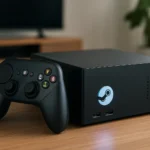
Microsoft is hosting its first-ever Xbox Game Dev Update showcase on May 7, 2026, offering developers a closer look at Project Helix and its development ecosystem. Chris Charla, Xbox’s portfolio and programs general manager, emphasized that the new hardware will be easier for developers to work with than previous generations. He noted that Microsoft is working hard to enable developers to create a single Xbox build that runs natively on Project Helix, PC, and streaming surfaces like smart TVs and other connected devices. This unified approach dramatically simplifies the development process and reduces the fragmentation that has historically plagued multi-platform releases.
PC-Console Hybrid Strategy and Cross-Platform Builds
Project Helix next-gen console is positioned as a PC/console hybrid, blurring the traditional boundaries between dedicated gaming hardware and personal computing. Microsoft’s long-term vision is to collapse the distinction between Xbox, PC, and cloud gaming into a single ecosystem where developers write once and deploy everywhere. Charla stated that Microsoft’s goal is to enable developers to make one Xbox build in the future that runs across Project Helix consoles, PC platforms, and streaming surfaces.
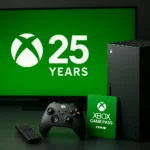
This architectural philosophy represents a departure from the siloed approach of previous generations. Rather than forcing developers to maintain separate builds for console and PC, the unified codebase approach reduces development overhead and accelerates time-to-market for multiplatform titles. The strategy also positions Xbox as a platform ecosystem rather than a single piece of hardware, hedging against the traditional console cycle and making the transition to Project Helix seamless for both players and creators.
Backwards Compatibility and Four Generations of Xbox Games
Microsoft remains committed to keeping games from four generations of Xbox playable for years to come. This backwards compatibility pledge ensures that the massive installed library of Xbox titles—spanning the original Xbox, Xbox 360, Xbox One, and Xbox Series X/S—will remain accessible on Project Helix next-gen console. For players, this eliminates the fear of losing access to beloved older titles when upgrading hardware. For Microsoft, it reinforces the ecosystem lock-in and justifies the investment in legacy support infrastructure.
The backwards compatibility commitment also signals confidence in the Project Helix next-gen console’s raw performance headroom. Supporting four generations of games requires substantial processing power and memory bandwidth, yet Microsoft is confident the custom AMD SoC can handle this burden while still delivering next-generation visual fidelity and performance in new titles. This is a meaningful differentiator against competitors who might force players to choose between new-generation graphics and access to their existing library.
How does Project Helix next-gen console compare to Xbox Series X?
Project Helix next-gen console aims to be far superior to the Series X in raw performance, particularly in ray tracing capabilities. Microsoft targets an order of magnitude improvement in ray tracing performance, which translates to dramatically higher frame rates and visual quality in games that rely on real-time ray-traced lighting and reflections. The Series X represents the current generation’s peak; Project Helix is designed to reset the performance baseline entirely.


When will Project Helix next-gen console launch?
Microsoft has not confirmed a consumer launch date. Alpha hardware will ship to developers in 2027, with dev kits arriving early 2027. Based on the Xbox Series X timeline—when dev kits shipped in 2020 and the console launched in November 2020—a potential consumer release could occur by late 2027 or early 2028, though Microsoft has not officially committed to these dates.
Will existing Xbox games work on Project Helix next-gen console?
Yes. Microsoft is committed to backwards compatibility across four generations of Xbox games. Developers are being advised to build for current Xbox consoles and PC to ensure their titles have native builds on Project Helix. The unified architecture means existing Xbox One and Series X/S titles will run on the new hardware, though optimized versions will take advantage of Project Helix’s superior ray tracing and processing power.
Project Helix next-gen console represents Microsoft’s most deliberate next-generation strategy in years. By combining raw performance improvements with a unified development ecosystem, backwards compatibility, and a PC-console hybrid architecture, the company is positioning itself to dominate the next console cycle. The real test comes in 2027 when developers get their hands on alpha hardware—and when Microsoft finally reveals the pricing and launch window that will determine whether Project Helix becomes the generation-defining console or another missed opportunity in a crowded gaming landscape.
Edited by the All Things Geek team.
Source: TechRadar