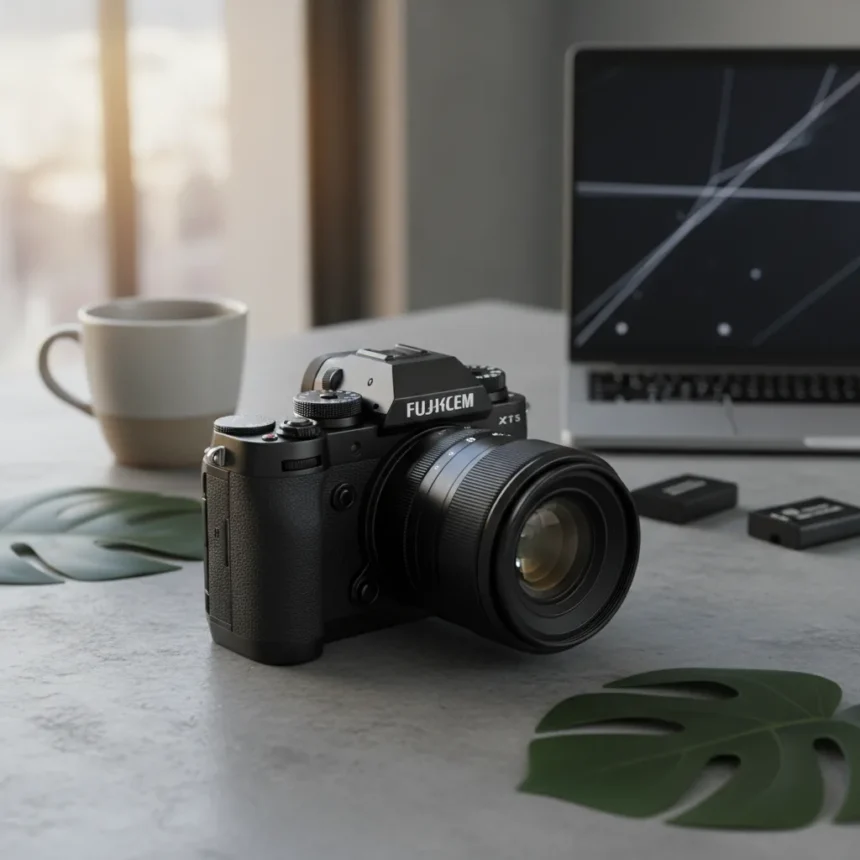
The Fujifilm X-T5 APS-C camera launched in November 2022 and remains the camera most professionals and enthusiasts recommend, even as rumors swirl about a potential X-T6 successor. Four years after its debut, the X-T5 has proven itself through real-world use—wedding coverage, landscape work, travel photography—in a way that benchmark tests never capture. The question now is whether Fujifilm can improve on a camera that already does nearly everything right.
Key Takeaways
- The Fujifilm X-T5 APS-C camera launched November 2022 with a 40-megapixel sensor, up from 26MP in prior models.
- Compact design is roughly 20% smaller than the X-T4 while delivering superior ergonomics and image quality.
- Excellent ISO performance up to 6,400 enables confident low-light shooting without excessive noise.
- Firmware updates fixed early autofocus weaknesses, making the X-T5 competitive with full-frame systems.
- The rumored X-T6 faces high expectations: a new processor, sensor, and autofocus improvements would be essential upgrades.
Why the Fujifilm X-T5 APS-C camera dominates its class
The Fujifilm X-T5 APS-C camera is a balanced masterpiece that refuses to compromise. At 40 megapixels in an APS-C body priced well below full-frame alternatives, it occupies an unusual and compelling sweet spot. Professional photographers have relied on it for years. One wedding photographer noted that since 2022 the X-T5 has been serving their couples reliably, producing stunning image quality that translates into actual print sales. Another reviewer emphasized that firmware updates fixed the autofocus issues that plagued early units, making the camera worthy of serious recommendation.
The sensor upgrade matters. Moving from 26 megapixels in the X-T4 to 40 megapixels in the X-T5 enables heavy cropping in post-production without sacrificing detail—critical for wedding and travel work where you cannot always position yourself perfectly. Paired with the X-Processor 5, the camera delivers strong low-light performance with excellent ISO handling up to 6,400, a rarity in APS-C bodies that typically struggle in dim conditions. The compact, pocketable design, roughly 20% smaller than its predecessor with an improved ergonomic grip, makes the X-T5 genuinely portable without feeling compromised.
What the rumored Fujifilm X-T6 must fix
If Fujifilm releases an X-T6, it faces a brutal reality: the X-T5 is already the camera 99% of users actually need. Incremental updates will not justify the upgrade cost. The X-T6 must address specific weaknesses that still exist, even after firmware refinements transformed the X-T5 into a formidable autofocus performer.

A new processor beyond the X-Processor 5 would be the obvious first step. Processing power determines autofocus speed, buffer performance, and video capabilities—areas where the X-T5, while competent, does not match full-frame rivals like the Sony a6700 or Canon R7 in raw performance metrics. The X-T6 needs a processor that closes this gap without bloating the body. Second, a new sensor exceeding 40 megapixels would justify the upgrade for professionals who regularly crop aggressively or print large. Third, autofocus must evolve beyond firmware fixes. The X-T5’s AF is now reliable thanks to post-launch updates, but matching or exceeding full-frame speed and accuracy would silence the last credible criticism.
Ecosystem strength shields the Fujifilm X-T5 APS-C camera
One reason the Fujifilm X-T5 APS-C camera has held its ground so well is the lens ecosystem. Fujifilm’s red-badge lenses deliver optical quality that justifies their cost, while third-party alternatives like Viltrox lenses offer surprising value. The X-T5 also pairs smoothly with Fujifilm’s GFX system—a backup X-T5 has saved jobs when a GFX 100RF failed, proving the ecosystem’s reliability. Canon and Sony offer more lens options in raw volume, but Fujifilm’s curated selection means less choice paralysis and more confidence in quality.



This ecosystem advantage could extend to the X-T6. If Fujifilm announces new lenses alongside the X-T6, it signals serious commitment to the X-T mount. If the X-T6 launches with only processor and sensor bumps and no new glass, the upgrade appeal weakens considerably. The best APS-C camera is only as good as the lenses you can afford to mount on it.
The upgrade calculus for X-T5 owners
Professional photographers using the X-T5 for weddings, landscapes, and portraits face a genuine dilemma if the X-T6 arrives. The X-T5 is reliable, proven, and still capable of work that commands premium fees. One reviewer who has used the X-T5 for two years still recommends it to nearly everyone, a ringing endorsement in a market obsessed with the latest. Upgrading to the X-T6 makes sense only if it delivers tangible improvements in autofocus responsiveness, processing speed, or resolution that justify the cost and the learning curve of new firmware.
For casual photographers and travel enthusiasts, the upgrade logic is even weaker. The X-T5’s compact design, battery life, and image quality are already exceptional. Firmware updates will likely keep the X-T5 competitive for years. Buying used X-T5 bodies at discount prices may remain smarter than upgrading to a new X-T6, depending on what Fujifilm actually delivers.
What makes the Fujifilm X-T5 APS-C camera different from competitors
The X-T5 does not compete on raw megapixels or autofocus speed alone. It competes on aesthetic design, ergonomic thoughtfulness, and image character. The film simulation modes—Provia, Velvia, Astia, and others—offer creative flexibility that Sony and Canon bodies only approximate through post-processing. The separate photo and video settings prevent exposure scrambling, a small but meaningful workflow advantage. Dual SD card slots provide redundancy that matters for professional work. These features add up to a camera designed by photographers for photographers, not by engineers optimizing for spec sheets.



Will the X-T6 justify its existence?
The hardest question Fujifilm faces is whether the market even wants an X-T6. The X-T5 is aging gracefully, supported by ongoing firmware improvements that keep it competitive. Full-frame cameras like the Sony a7R V offer more resolution and autofocus sophistication, but at substantially higher cost and bulk. The X-T5 sits in a comfortable middle ground where it is good enough for professionals and more than enough for enthusiasts. An X-T6 that merely iterates—a new processor here, more megapixels there—will disappoint the users who need it most. Fujifilm must either deliver substantial improvements or accept that the X-T5 will remain the default recommendation for APS-C shooters for years to come.
FAQ
Is the Fujifilm X-T5 APS-C camera still worth buying in 2026?
Yes. The X-T5 remains competitive four years after launch, with proven reliability in professional workflows, excellent image quality, and a compact design that rivals cannot match. Firmware updates have addressed early autofocus concerns. For most photographers, the X-T5 is still the best value in APS-C.
What autofocus improvements did the Fujifilm X-T5 receive?
Early X-T5 units had sluggish autofocus, but firmware updates significantly improved performance. The camera now tracks subjects reliably and focuses quickly, making it competitive with full-frame systems. Reviewers initially critical of autofocus have praised the improvements.
How does the Fujifilm X-T5 compare to the Sony a6700?
The X-T5 offers superior ergonomics, compact size, and design aesthetic, while the Sony a6700 provides higher autofocus speed and more megapixels. The X-T5 is the better choice for photographers who value portability and lens ecosystem; the a6700 suits those prioritizing autofocus performance and resolution.
The Fujifilm X-T5 APS-C camera has earned its reputation through years of real-world use, not marketing hype. Whether the rumored X-T6 can improve on that legacy depends entirely on Fujifilm’s willingness to innovate beyond processor and sensor bumps. For now, the X-T5 remains the camera most photographers should buy.
Where to Buy
Edited by the All Things Geek team.
Source: TechRadar