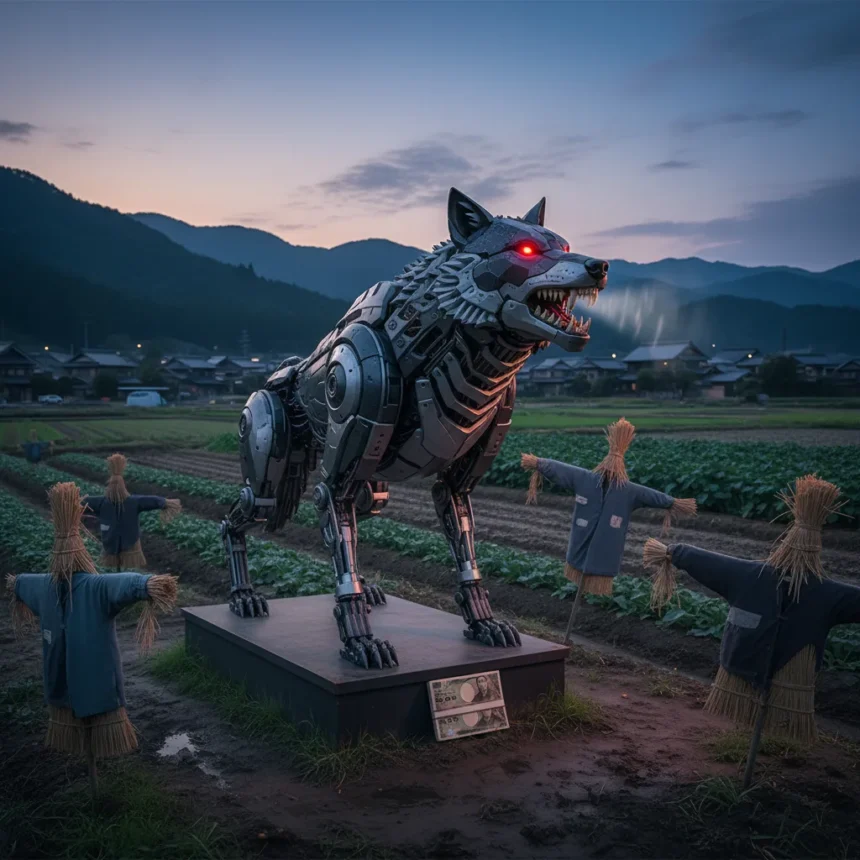
Monster Wolf robot bears are flying off the shelves in Japan, with demand so high that Hokkaido-based manufacturer Ohta Seiki cannot keep up. The company’s president, Yuji Ohta, told AFP: “We cannot make them fast enough.” This year alone, the order book has already reached 50 units—a number that would normally represent an entire year’s production.
Key Takeaways
- Monster Wolf robot bears cost around $4,000 each and are handmade, not mass-produced.
- Japan recorded 13 bear-related deaths and over 200 injuries in recent years, driving urgent demand.
- The device uses LED eyes, loud speakers emitting 50+ audio clips, and sensors to deter wildlife.
- Customers are being told to wait two to three months for delivery due to backlog.
- Ohta Seiki is exploring upgrades including wheels and AI cameras for future versions.
Why Japan’s Bear Crisis Created a Sudden Demand Surge
Japan is facing an unprecedented bear crisis. More than 50,000 bear sightings were recorded nationwide, with 13 people killed and over 200 injured in recent reporting periods. Rural communities, farmers, and golf courses are desperate for solutions. Traditional methods—trapping and hunting—are slow and labor-intensive. Enter Monster Wolf robot bears: an animatronic deterrent that mimics a predator’s presence without requiring lethal intervention. The device has shifted from being viewed as a novelty to an essential tool for public safety and agricultural protection.
Ohta Seiki first introduced Monster Wolf in 2016, originally targeting deer and boar control. The company’s growing recognition that the product is effective in dealing with bears has transformed its market. What began as a niche product for farmers has expanded to include orders from rural workers, hikers, and property owners across Japan. The surge is so sudden that the manufacturer is struggling to meet demand.
How Monster Wolf Robot Bears Actually Work
Monster Wolf robot bears are not subtle. The device features an animatronic wolf head with intense LED eyes that flash in sequence, combined with a speaker system that broadcasts over 50 different audio clips. The sounds range from wolf growls and howls to human voices and electronic sirens, all designed to trigger primal fear in wildlife. The speaker range reaches approximately 1 kilometer, making the device effective across large agricultural plots and rural properties.

The robot runs on a combination of battery power and solar panels, meaning it can operate continuously without frequent maintenance. Built-in sensors detect movement and trigger the audio-visual display, creating the illusion of an active predator. Yuji Ohta emphasized that “we make them by hand,” which explains both the high price point and the production bottleneck. Each unit is essentially bespoke, handcrafted rather than assembly-line manufactured.
Compared to traditional wildlife management—which relies on hunters, traps, or exclusion fencing—Monster Wolf robot bears offer a non-lethal, passive approach that requires minimal human intervention once deployed. The device works continuously, day and night, without the legal and ethical complications of culling wildlife.



The Production Crunch and Future Roadmap
Ohta Seiki is asking customers to wait two to three months for fulfillment, a significant delay that reflects both the handmade nature of the product and unprecedented demand. The company is not expanding its workforce dramatically; instead, it is exploring product upgrades that could improve efficiency and market appeal. Future versions may include wheels that allow Monster Wolf robot bears to patrol preset routes or chase animals actively, transforming the device from a stationary scarecrow into a mobile deterrent.
The company is also considering a handheld version designed for hikers, anglers, and schoolchildren—users who venture into bear territory and need portable protection. Additionally, Ohta Seiki is exploring AI-powered cameras to improve the device’s ability to detect and respond to bears specifically, rather than triggering on all motion. These upgrades suggest the company believes the bear-deterrent market is still in its infancy.
Is Monster Wolf Worth the $4,000 Price Tag?
For Japanese farmers and rural property owners facing escalating bear encounters, the price is justified by the alternative: property damage, livestock loss, or human injury. A single bear attack can cost tens of thousands in medical bills or crop destruction. Monster Wolf robot bears offer insurance against that risk at a fraction of the potential damage. The handmade construction and solar-powered durability also mean the device can operate for years with minimal ongoing cost.
However, the two-to-three-month wait time is a real friction point. Customers ordering today will not receive their devices until late in the season, when bear activity may already be declining. This timing mismatch could frustrate buyers who expected faster delivery. For those who can wait and afford the price, though, Monster Wolf robot bears represent a compelling solution to Japan’s acute wildlife-management crisis.



What makes Monster Wolf robot bears different from other wildlife deterrents?
Monster Wolf robot bears combine visual, audio, and motion-detection elements in a single handmade device, whereas traditional deterrents like fencing or traps address only one aspect of wildlife control. The combination of flashing LED eyes and 50+ audio clips creates a multisensory threat that mimics a living predator, which is more effective at triggering avoidance behavior than passive barriers alone.
Can Monster Wolf robot bears be used outside Japan?
The research brief does not specify whether Ohta Seiki exports Monster Wolf robot bears internationally or plans to. Current production is focused on meeting domestic Japanese demand, which is already exceeding capacity. International availability would depend on the company’s export strategy and regulatory approval in target markets, neither of which is addressed in available information.
How long does a Monster Wolf robot bear battery last?
The device runs on a combination of battery and solar panels, allowing continuous operation. The research brief does not specify battery capacity, charge time, or expected lifespan under typical use conditions. Buyers should contact Ohta Seiki directly for detailed battery and maintenance specifications.
Monster Wolf robot bears represent a striking collision between Japan’s wildlife crisis and technological innovation. As bear attacks continue to rise, demand for these $4,000 animatronic deterrents will likely remain strong—and the two-to-three-month wait may only grow longer. For rural Japan, the real question is not whether the device is worth the price, but whether Ohta Seiki can scale production fast enough to meet the moment.
Edited by the All Things Geek team.
Source: TechRadar