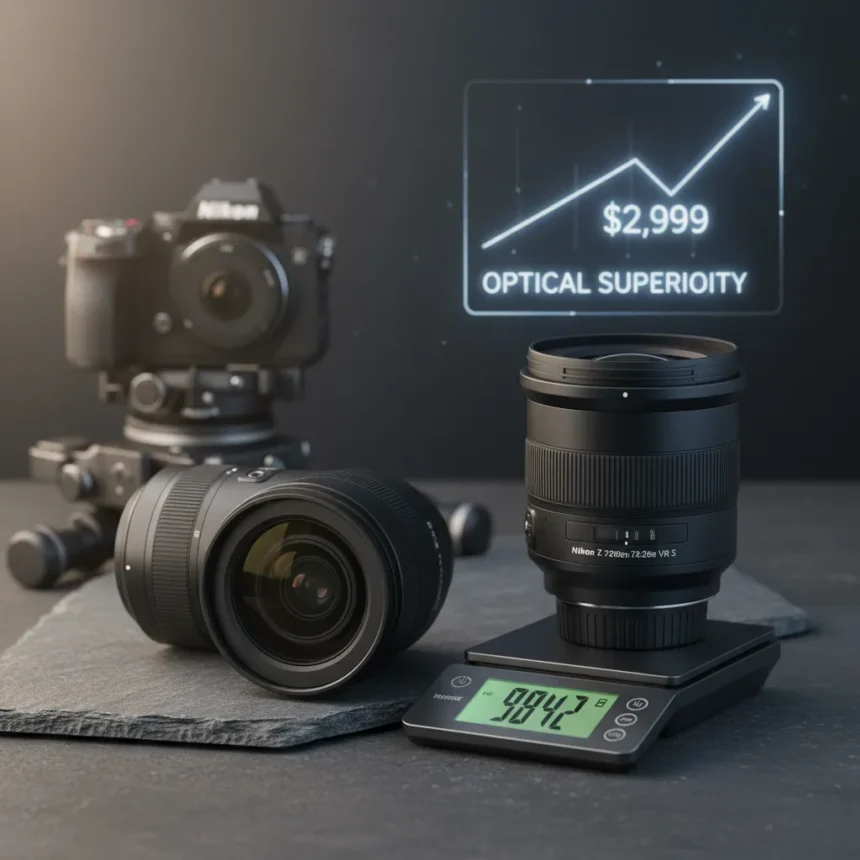
The Nikon Z 70-200mm f/2.8 VR S II is a second-generation telephoto zoom that does what few sequels manage: it improves on an already winning formula without breaking what made the original great. Announced for March 2026 availability at $2,999, this lens weighs just 998g (with tripod collar removed)—362g lighter than the original Nikkor Z 70-200mm f/2.8 VR S—making it the lightest full-frame mirrorless 70-200mm f/2.8 on the market. The question isn’t whether it’s better. It’s whether the jump justifies ditching your current setup.
Key Takeaways
- Nikon Z 70-200mm f/2.8 VR S II weighs 998g, 362g lighter than the original Z-mount version
- Autofocus is 50% quieter and faster with SSVCM stepping motor, ideal for video recording
- Optically sharper at 105mm f/5.6 and center frame; minimal chromatic aberration across focal lengths
- Six stops of in-lens VR plus Synchro VR on compatible Z bodies for full-frame stability
- Removable Arca-Swiss-compatible tripod collar and click/de-click control ring enhance versatility
Weight and Build: The Game-Changing Redesign
A 362g weight reduction doesn’t sound revolutionary until you’re holding the lens for eight hours shooting a wedding or sports event. The Nikon Z 70-200mm f/2.8 VR S II achieves this without sacrificing the premium feel that justified the original’s price tag. The removable tripod collar with Arca-Swiss-compatible foot is a small touch that matters—you save weight when handheld and gain stability when tripod-mounted. The control ring moved forward for better ergonomics, and the entire design feels more refined than its predecessor.
What makes this weight reduction remarkable is that it’s not achieved through cheaper materials or cost-cutting. Nikon retained the top-of-the-range lens coatings and the robust construction that professionals demand. This is lighter engineering, not lighter quality. For mirrorless shooters upgrading from DSLR telephoto lenses, the difference is tangible—less fatigue means more shots, and more shots mean better odds of capturing the decisive moment.
Optical Performance of the Nikon Z 70-200mm f/2.8 VR S II
The new optical formula delivers measurable improvements across the zoom range. At 105mm f/5.6, the lens exceeds its predecessor’s sharpness, and center-frame clarity rivals prime lenses. At 200mm, there’s a marginal softness only visible at f/22, a trade-off that barely matters for real-world shooting. Lateral chromatic aberration is borderline visible in corners at some focal lengths but impressively minimal at 135mm, even with in-camera corrections disabled.

This optical refinement matters most for video and high-resolution stills. A sharper 70-200mm zoom means less reliance on stopping down, letting you maintain subject isolation and shallow depth of field in low light. The variable ND window on the lens hood is a thoughtful addition for video shooters managing exposure in bright conditions.
Autofocus and Vibration Reduction
Nikon’s SSVCM (stepping silent voice coil motor) delivers whip-fast autofocus that’s 50% quieter than the original—a critical advantage for video work where audio matters. The six stops of in-lens Vibration Reduction, paired with Synchro VR on compatible Z bodies, provides full-frame stability that makes handheld telephoto work viable in conditions where a tripod isn’t practical. The clickable/de-clickable control ring adds flexibility for both stills and video workflows.



For hybrid creators juggling photo and video, this lens removes friction. You’re not compromising on either discipline—the autofocus is silent enough for documentary work, and the VR is reliable enough for handheld tracking shots.
The Price Question
At $2,999, the Nikon Z 70-200mm f/2.8 VR S II is expensive. It’s not a bargain. But it’s also not overpriced for what you get—a class-leading weight reduction, optically superior performance, and video-friendly features that justify the cost for professionals and serious enthusiasts. The closer minimum focusing distance enhances close-up photography suitability, expanding the lens’s range beyond typical telephoto work.
The real question is whether you own a Nikon Z body. If you do, and you shoot sports, weddings, or video, this lens is worth the investment. If you’re still on a DSLR, the jump to mirrorless plus this lens is a significant commitment—but it’s one that pays dividends in weight savings and autofocus speed alone.
How does the Nikon Z 70-200mm f/2.8 VR S II compare to the original?
The new version is 362g lighter, features 50% quieter autofocus, delivers improved optical sharpness at 105mm and center frame, and adds video-friendly features like the variable ND window and click/de-click control ring. If you own the original, the upgrade is worthwhile only if weight and video performance matter to your workflow.



When will the Nikon Z 70-200mm f/2.8 VR S II be available?
The lens launches in March 2026 at $2,999. Preorders and exact availability dates by region should be confirmed closer to launch.
Is the Nikon Z 70-200mm f/2.8 VR S II worth the price?
Yes, if you shoot on Nikon Z bodies and prioritize weight, optical quality, and video features. The premium price reflects class-leading specifications and engineering. For casual photographers, renting might make more sense; for professionals, it’s an investment that pays for itself through faster shooting and less fatigue.
The Nikon Z 70-200mm f/2.8 VR S II proves that iteration still matters. It’s not a radical reinvention—it’s a focused refinement of a lens that didn’t need fixing, executed with enough precision that it becomes genuinely difficult to go back. For Nikon Z shooters, this is the telephoto zoom to own when it arrives.
Where to Buy
Edited by the All Things Geek team.
Source: TechRadar