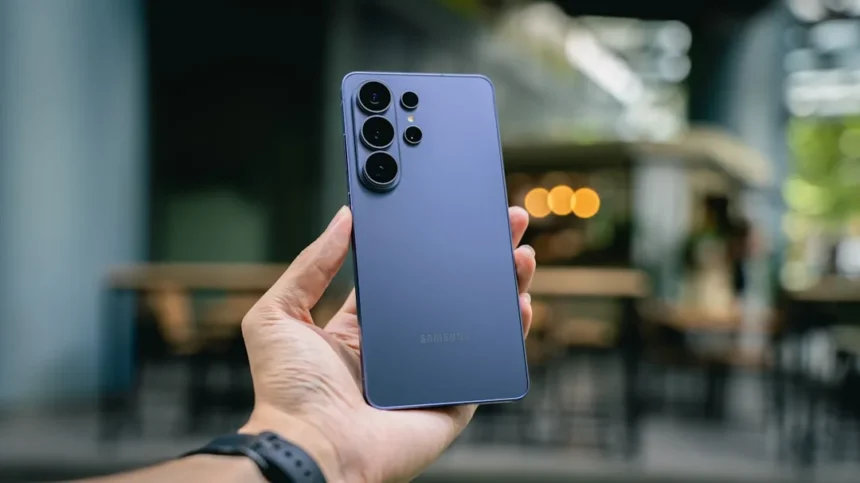
The Galaxy S26 Ultra camera improves on the S25 Ultra in ways that matter to daily photographers. After over 200 test photos across main sensor, zoom, low-light, and portrait modes, the S26 Ultra’s new f/1.4 aperture and refined AI processing deliver noticeably brighter, cleaner results. The question isn’t whether the S26 wins—it does—but whether the gap justifies an upgrade if you already own the S25 Ultra.
Key Takeaways
- Galaxy S26 Ultra main sensor uses f/1.4 aperture versus S25 Ultra’s f/1.6, capturing more light for brighter images.
- S26 Ultra produces cleaner low-light photos with lower ISO and less noise than the previous generation.
- Portrait mode on S26 Ultra delivers sharper object separation and more natural skin tone exposure.
- Ultra-wide, macro, and 3x zoom results are nearly identical between both phones.
- S26 Ultra supports up to 25x digital zoom versus S25 Ultra’s 20x maximum.
Main Sensor: Where the S26 Ultra Pulls Ahead
The Galaxy S26 Ultra’s wider f/1.4 aperture is the hardware difference that cascades through every daylight and indoor shot. Both phones can shoot at identical shutter speeds, but the S26 Ultra uses a lower ISO for a cleaner result. In side-by-side tests, the S26 delivers visibly brighter images with better focus accuracy and less soft edges. The dynamic range improvement is subtle but real—bright skies retain detail while shadows stay lifted without looking blown out.
Samsung’s software plays a role here too. The S26 Ultra’s refined AI image processing, powered by One UI 8.5, enhances contrast and color saturation without pushing into artificial territory. Skin tones render slightly brighter and more flattering, and object separation in busy scenes feels sharper than the S25 Ultra. The S26 main lens gets better focused images overall, with slightly better dynamic range, especially for bright spots.
The S25 Ultra isn’t bad—it’s still a strong main sensor. But the S26 Ultra wins the comparison decisively in everyday shooting, where that extra light capture and cleaner processing make the difference between a forgettable snapshot and a keeper.


Zoom and Night Photography: Mixed Results
The 3x and 5x zoom lenses show minimal improvement. Both phones deliver nearly identical results in most lighting conditions, though the S26 Ultra’s brighter exposure and slightly better skin tones in zoomed portraits give it a marginal edge. The 5x periscope zoom feels livelier on the S26, with elevated brightness and better shadow detail, but the gap is small enough that S25 Ultra owners won’t feel left behind here.
Night mode reveals the S26 Ultra’s processing trade-off. In low-light scenarios, the S26 produces cleaner images with less noise than the S25 Ultra. But in extreme darkness, that processing can veer into artificial-looking territory—what reviewers describe as cartoony rendering. The S25 Ultra’s slightly softer, less processed night mode actually looks more natural in those edge cases, making it the preferred choice for photographers who want authenticity over polish. Better exposure and autofocus favor the S26, but this is where Samsung’s AI becomes opinionated rather than invisible.


Portraits, Selfies, and Video: Incremental Gains
Portrait mode benefits from the S26 Ultra’s improved main sensor. Object separation feels sharper, and the phone handles bright backgrounds and deep shadows better than the S25 Ultra. Exposure on the S26 looks more balanced, rendering skin tones slightly brighter than the S25. The bokeh quality and available magnifications (four options, six filters) remain comparable between generations, so don’t expect a revolutionary portrait experience—just a cleaner, more polished one.
The 12MP selfie camera is unchanged, delivering similar results on both phones. Night selfies show minor sharpening improvements on the S26 Ultra, but the difference is negligible. Video quality remains nearly identical in low-light conditions, though the S26 Ultra shows better stabilization and exposure control in some scenarios. One caveat: the S26 Ultra exhibits minor screen artifacting during video recording in certain conditions, a quirk worth noting if you shoot video frequently.
Macro and Ultra-Wide: No Real Difference
The 50MP ultra-wide and macro modes produce nearly identical results on both phones. Sharpening and depth handling show minor refinements on the S26 Ultra, but these are imperceptible in real-world use. If ultra-wide or macro photography is your priority, the S25 Ultra remains perfectly capable—upgrading for these sensors alone makes no sense.
Display and Zoom: The Bonus Upgrades
Beyond the camera, the S26 Ultra’s M14 OLED display with CoE technology reaches up to 3,000 nits peak brightness, compared to the S25 Ultra’s 2,600 nits. The newer Gorilla Armor coating is also less reflective, making outdoor viewing less frustrating. The S26 Ultra supports up to 25x digital zoom versus the S25 Ultra’s 20x, a practical advantage for distant subjects.



Should You Upgrade from the S25 Ultra?
If you own a Galaxy S25 Ultra, the S26 Ultra camera upgrade is real but incremental. The f/1.4 aperture and refined processing deliver noticeably brighter, cleaner images in everyday shooting and portraits. But the ultra-wide, macro, and zoom results are nearly identical, and the S25 Ultra’s night mode holds its own in extreme low-light scenarios. The decision hinges on whether you value main sensor brightness and AI-enhanced color enough to justify a full phone upgrade. For most users, the S25 Ultra remains more than capable.
How much brighter are the Galaxy S26 Ultra photos compared to the S25 Ultra?
The S26 Ultra’s f/1.4 aperture captures significantly more light than the S25 Ultra’s f/1.6, resulting in visibly brighter images at the same shutter speed. The exact brightness difference depends on lighting conditions, but in indoor and low-light scenarios, the improvement is noticeable without requiring ISO bumps that introduce noise.
Does the Galaxy S26 Ultra camera work better in night mode than the S25 Ultra?
The S26 Ultra produces cleaner night mode images with less noise, but the S25 Ultra’s slightly softer processing can look more natural in extreme darkness. The S26 excels at balanced exposure and autofocus, but if you prefer authentic-looking night shots over heavily processed ones, the S25 Ultra may actually be the better choice in very dark conditions.
Are the zoom lenses improved on the Galaxy S26 Ultra?
The 3x and 5x zoom lenses deliver nearly identical results on both phones. The S26 Ultra shows marginally brighter exposure and slightly better skin tones in zoomed portraits, but the difference is minor enough that it shouldn’t drive an upgrade decision if zoom performance is your main concern.
The Galaxy S26 Ultra camera is the better phone for photography, but it’s not a game-changing leap. The f/1.4 aperture and refined AI processing deliver real improvements in brightness, detail, and color accuracy—gains that daily photographers will appreciate. Yet the S25 Ultra remains a formidable competitor, especially for night mode purists and ultra-wide shooters. Samsung’s hardware evolution is steady, not revolutionary, and that’s honestly the healthier approach to flagship phones.
Edited by the All Things Geek team.
Source: Tom's Guide