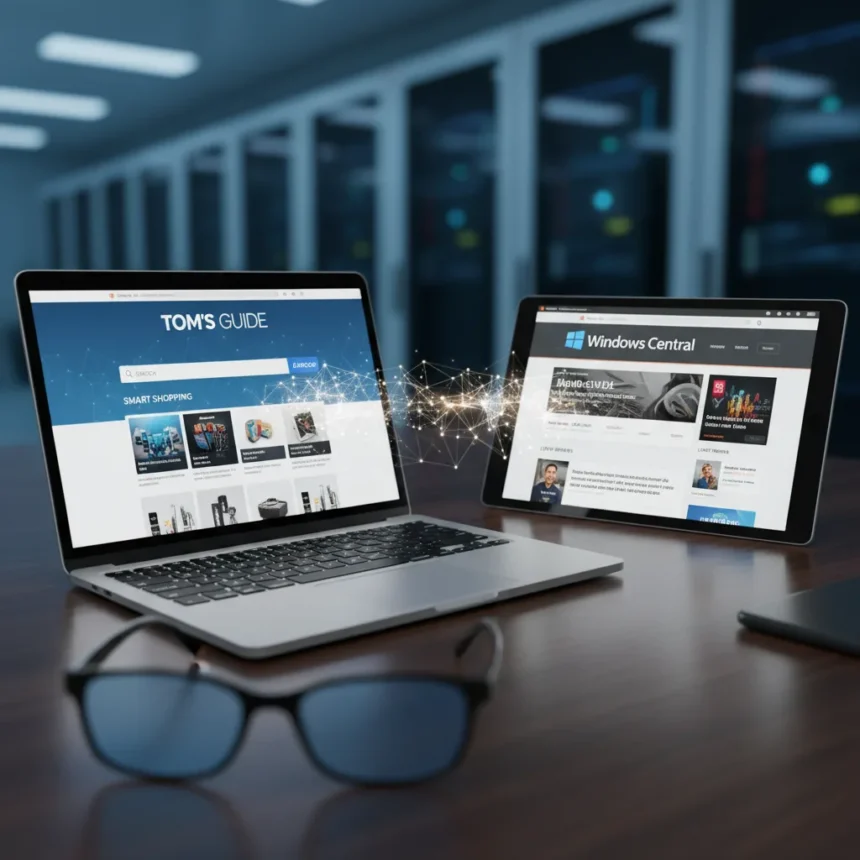
Tom’s Guide overhaul has just gone live, marking a significant redesign that introduces AI-powered search, streamlined navigation, and enhanced shopping tools. The relaunch represents a deliberate shift in how the publication delivers tech content and product recommendations to its audience, with potential ripple effects across its sister sites, including Windows Central.
Key Takeaways
- Tom’s Guide launched a full site overhaul featuring AI search and redesigned homepage navigation
- New shopping tools aim to reduce endless scrolling and improve content discovery
- The relaunch includes enhanced community engagement features
- Sister sites like Windows Central may benefit from shared resources and cross-promotion strategies
- The redesign positions tech publishing toward more user-centric, AI-assisted experiences
What Tom’s Guide’s redesign actually changes
Tom’s Guide’s overhaul introduces three core improvements: a redesigned homepage that eliminates excessive scrolling, AI-powered search functionality, and new shopping tools designed to surface relevant products faster. The homepage redesign is the most visible change—instead of forcing users to scroll through endless content feeds, the new layout prioritizes quick access to desired information. This shift reflects a broader recognition that tech readers want answers, not archives.
The AI-powered search represents a departure from traditional keyword-based discovery. Rather than typing exact product names or specifications, readers can now ask natural-language questions and receive contextual results. This mirrors similar implementations across tech publishing, where publications like Android Central have emphasized homepage redesigns and AI features as competitive advantages.
Community engagement tools round out the update, suggesting Tom’s Guide is betting on reader participation and discussion to drive return visits. Whether this translates to sustained engagement remains to be seen—many tech sites have launched community features only to watch them languish due to moderation overhead or insufficient critical mass.



How this affects Windows Central and sister sites
Windows Central stands to gain from Tom’s Guide’s infrastructure investments through shared backend systems, content syndication opportunities, and cross-promotional strategies. When one property in a publishing network overhauls its technology stack, sister sites often benefit from inherited improvements and streamlined workflows.
The relaunch positions Tom’s Guide as a testing ground for AI-assisted publishing practices that could eventually roll out across the broader portfolio. If the AI search and shopping tools drive measurable engagement improvements, Windows Central may adopt similar features for its own audience. Conversely, if users reject the new interface or find AI search results unreliable, Windows Central’s leadership will have data to avoid similar missteps.



The timing also matters. Tech publishing is under pressure from AI-generated content farms and Reddit’s growing dominance in search results. By investing in user experience and AI-native features, Tom’s Guide and its sister sites are attempting to remain relevant as search behavior shifts. This is not a luxury upgrade—it is a competitive necessity.
The broader implications for tech publishing
Tom’s Guide’s overhaul reflects a publishing industry in flux. Traditional tech sites built their audiences on comprehensive reviews and buying guides—content that took weeks to produce and ranked well in search. That moat is eroding. AI summaries can synthesize reviews in seconds, and readers increasingly trust Reddit threads over branded content.
By emphasizing shopping tools, AI search, and community engagement, Tom’s Guide is pivoting toward a model where the site becomes a transaction hub rather than a pure information archive. This is not inherently cynical—better shopping tools do serve readers who want to buy gear. But it also signals that ad-supported tech publishing alone no longer sustains growth. Affiliate revenue and direct commerce partnerships now matter more.
Windows Central and other sister sites will likely follow this playbook. The question is whether readers will embrace AI-assisted shopping recommendations or view them as aggressive monetization. Early evidence from other publications suggests users tolerate AI features when they demonstrably save time—but distrust them when they feel like sales pressure.


Is the Tom’s Guide overhaul actually an upgrade?
The relaunch introduces genuinely useful features—a faster homepage, natural-language search, and better product discovery tools. For casual tech shoppers, these improvements are meaningful. For power users who already know what they want to buy, the changes may feel marginal.
The real test is retention. A redesigned homepage and AI search only matter if they bring readers back. Tom’s Guide’s previous design was functional but dated; the overhaul addresses that. Whether the new tools create habit-forming behaviors or simply feel like a fresh coat of paint remains unclear. Publishing redesigns often generate initial traffic spikes that fade within weeks once novelty wears off.
Will the Tom’s Guide overhaul help Windows Central?
Potentially, but indirectly. Windows Central benefits if Tom’s Guide’s relaunch proves that AI search and shopping tools drive engagement and affiliate revenue. In that case, Windows Central’s leadership will prioritize similar upgrades. If the relaunch underperforms, Windows Central may take a different approach—focusing on exclusive reporting or community features instead of shopping optimization.
Cross-promotion is another vector. Tom’s Guide readers interested in hardware might be directed to Windows Central for software coverage, and vice versa. This only works if both sites maintain distinct audiences and complementary content strategies.
What’s next for Tom’s Guide and its sister sites?
The immediate priority is monitoring user behavior. Does the new interface reduce bounce rates? Do AI search results drive clicks to product pages? Does community engagement grow? These metrics will determine whether the overhaul was worth the investment and whether similar redesigns roll out across the publishing network.
Longer term, expect to see more AI integration—not just search, but content generation assistance, personalized homepages, and predictive recommendations. The goal is to make tech publishing feel less like browsing an archive and more like consulting a knowledgeable friend. Tom’s Guide’s overhaul is a step in that direction, though whether it succeeds depends on execution and user adoption.
FAQ
What features are included in the Tom’s Guide overhaul?
The redesign includes a streamlined homepage that reduces scrolling, AI-powered search for natural-language queries, and new shopping tools to help users find products faster. Community engagement features have also been added to encourage reader interaction.
How does the Tom’s Guide overhaul affect Windows Central?
Windows Central may benefit from shared infrastructure improvements and cross-promotion opportunities with Tom’s Guide. If the overhaul proves successful, similar features could eventually roll out to Windows Central and other sister sites.
Is the Tom’s Guide overhaul worth trying?
If you regularly shop for tech products or want faster access to buying guides, the new tools are worth exploring. The AI search and streamlined homepage should save time compared to the old design. However, the improvements are incremental rather than revolutionary.
Tom’s Guide’s overhaul represents a calculated bet that tech readers want faster shopping experiences and AI-assisted discovery. Whether that bet pays off depends on whether the new features actually drive engagement and whether readers trust AI recommendations. For Windows Central and the broader publishing network, the overhaul is a test case—if it works, expect similar redesigns across the portfolio. If it flops, expect a pivot toward different strategies. Either way, the tech publishing landscape is shifting, and Tom’s Guide is betting that AI and commerce integration are the future.
Edited by the All Things Geek team.
Source: Windows Central