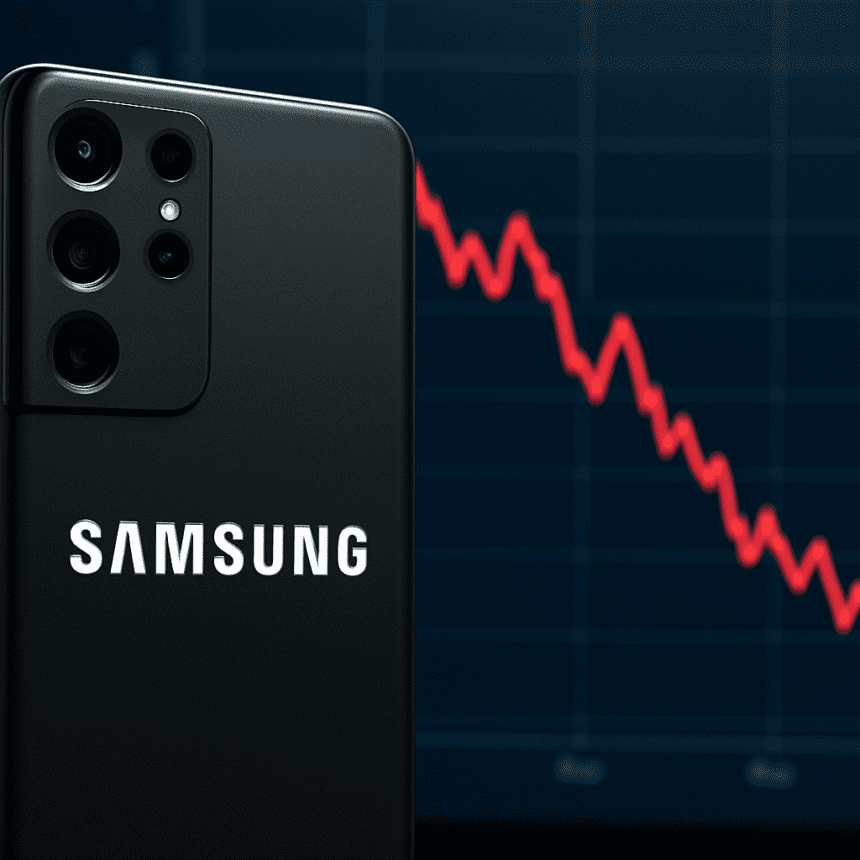
Samsung mobile division profits are under genuine threat for the first time in the company’s history as world’s largest smartphone maker — and the culprit is an AI-fuelled memory shortage that Samsung’s own semiconductor arm is helping to create. The mobile business, known internally as MX, saw Q4 2024 operating profit fall 10% to 1.9 trillion won, squeezed by rising memory component costs at the exact moment AI data centres are hoovering up global supply. According to Samsung’s own earnings, the semiconductor division that benefits from this crunch posted a Q4 profit of around $14 billion — up 470% year-over-year. The same company is simultaneously winning and losing from the same trend.
Why AI Demand Is Crushing Samsung Mobile Division Profits
The core tension here is structural. High-bandwidth memory — the specialist chip architecture powering AI accelerators from Nvidia and others — is consuming an outsized share of global fab capacity. Samsung executive Park stated plainly at the Galaxy S26 launch media roundtable: “There is a lot of surge in the AI industry for data centres, which has stuck the majority of supply in our fab.” That supply constraint is not easing soon. Park also confirmed that “the shortage of memory chips will go on till 2027” — a timeline that puts Samsung’s mobile business under sustained cost pressure for the foreseeable future.
The knock-on effects extend beyond smartphones. Samsung’s home appliances division posted a Q4 operating loss of 600 billion won, swinging from a 200 billion won profit a year earlier. Component costs and tariff uncertainty are both factors. When memory prices rise across DRAM, HBM, and NAND simultaneously, every product category that depends on those chips feels it — budget mobiles, laptops, and even LED televisions face price hikes and stock shortages as a result.
Samsung’s Semiconductor Windfall Cannot Offset the Mobile Squeeze
The irony is not lost on anyone watching Samsung’s earnings. The semiconductor division is in what one analyst described as “the enviable position of being able to dictate price, terms, etc. more than ever.” Analyst Sohn In-joon from Heungkuk Securities forecasts Samsung’s overall Q1 2026 profit surging five-fold year-over-year to around 35 trillion won as memory prices accelerate further. Samsung is also beginning to ship next-generation HBM4 chips in Q1 2026, with initial deliveries targeting Nvidia’s AI accelerators — a race to close the gap on SK Hynix, which currently holds the position of Nvidia’s primary HBM supplier.

But those semiconductor gains do not flow back into the mobile division’s cost structure. MX buys memory on the open market like any other device maker. Apple, which has now overtaken Samsung as the world’s largest smartphone manufacturer by volume, faces the same component headwinds — but Apple’s higher average selling prices give it more margin cushion to absorb shocks. Samsung’s broader Galaxy portfolio, which spans a much wider price range, is more exposed when component costs spike.
What the Memory Shortage Means for Galaxy S26 and Consumers
Samsung launched the Galaxy S26 series recently, positioning it as the company’s third AI smartphone generation and emphasising its agentic AI direction. Park described it as “the beginning of a new direction for us with agentic AI.” The device is manufactured at Samsung’s Noida plant in India, with significant R&D contribution from its Bengaluru centre — a meaningful signal of Samsung’s commitment to the Indian market, where 65% of the population is under 35. Early indications suggest the Galaxy S26 is performing better than expected commercially, which offers some relief against the broader market pressure.



That broader market context is bleak. The smartphone market is facing demand drops described as worse than the COVID-19 era, driven by the combination of rising device prices and consumer hesitation. Trade-in values for older Galaxy devices have also plummeted. Samsung has responded with internal cost-cutting measures — including restricting executive travel to economy class — signalling that leadership takes the profit risk seriously. Park acknowledged the challenge directly: “Rising memory semiconductor prices are a global issue and impacting the broader industry. We expect to be relatively well-positioned on the supply side through strategic partnerships and will continue efforts to minimise the impact on our business by responding flexibly to market changes.”
How long will the AI memory shortage last?
Samsung executive Park stated at the Galaxy S26 launch that the memory chip shortage will continue until 2027. New fabrication capacity takes years to come online, and AI data centre demand from companies including Meta — which guided $135 billion in capital expenditure for 2026 — and Microsoft at record investment levels continues to outpace supply additions.
Is Samsung’s mobile business actually losing money?
Not yet. Samsung mobile division profits declined 10% in Q4 2024 to 1.9 trillion won, but the division remains in profit. The concern — flagged internally and by analysts — is that sustained memory cost increases through 2026 and 2027 could push the historically profitable mobile unit into operating loss territory for the first time. The Galaxy S26 performing better than expected is a positive sign, but the structural cost pressure remains.
How does the memory shortage affect smartphone buyers?
Consumers can expect upward pressure on device prices across the industry as DRAM, HBM, and NAND costs rise. Budget smartphones and mid-range devices are most vulnerable to margin compression, which typically results in either higher retail prices or reduced specifications at existing price points. The shortage affects all major manufacturers, not Samsung alone.



Samsung finds itself in a paradox that will define its next two years: its semiconductor business has never been more powerful, yet that very power is undermining the mobile division that made Samsung a household name. The AI memory boom that is minting record profits in one corridor of Samsung’s headquarters is quietly eroding margins in another. Unless memory supply catches up with AI demand — and Park’s 2027 timeline suggests it will not anytime soon — Samsung mobile division profits will remain under pressure no matter how well the Galaxy S26 sells.
Edited by the All Things Geek team.
Source: Android Central