




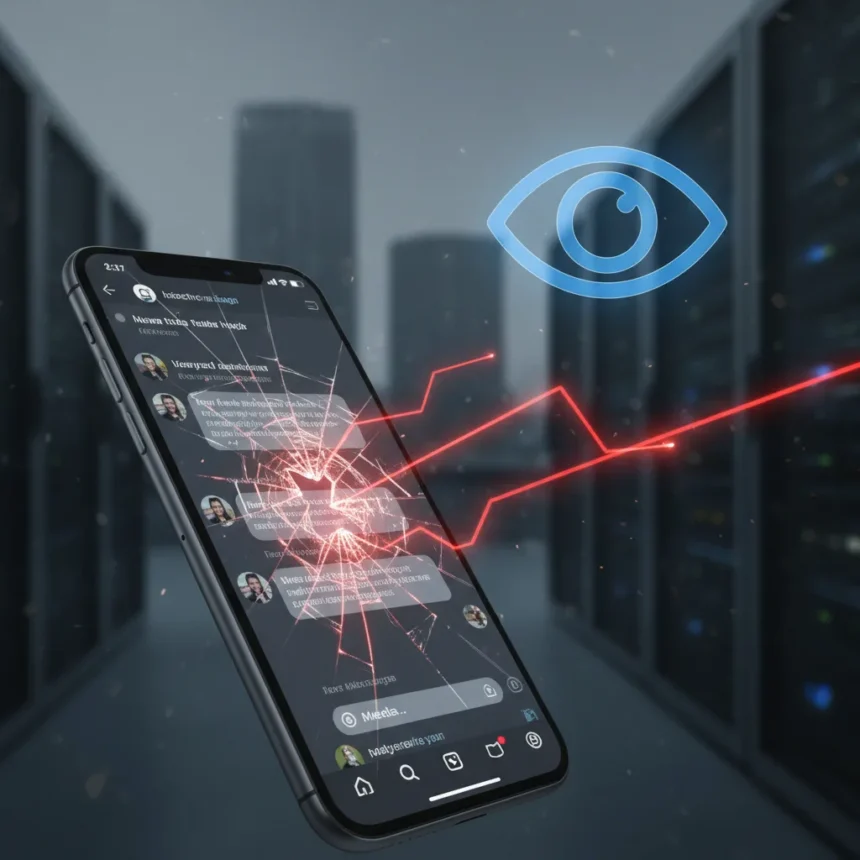
Instagram’s DM encryption rollback represents one of the most significant privacy reversals on a major social platform in recent years. The company is scaling back or removing end-to-end encryption (E2EE) from direct messages, dismantling what was previously marketed as the platform’s biggest security feature. This change makes Instagram messages substantially less private, exposing conversations to Meta and potentially other third parties in ways users did not anticipate when the encryption feature was introduced.
Key Takeaways
- Instagram is removing or scaling back end-to-end encryption for all direct messages
- The rollback reverses a major security upgrade previously positioned as core to user privacy
- Messages will now be more accessible to Meta and potentially external parties
- This shift coincides with broader 2025-2026 scrutiny of Meta’s data handling practices
- Users concerned about privacy have limited recourse beyond switching platforms or using alternative tools
Why Instagram Is Dismantling Its Biggest Security Feature
Meta’s decision to roll back Instagram DM encryption comes at a moment when privacy expectations are rising, not falling. The company previously championed end-to-end encryption as a core privacy protection, distinguishing Instagram from competitors and positioning it as a platform that respected user confidentiality. Reversing this stance suggests Meta’s priorities have shifted—likely toward data access for moderation, targeted advertising, or law enforcement cooperation. The timing raises questions about whether user privacy was ever the genuine commitment, or merely a feature to be toggled when business incentives demanded it.
Instagram’s DM encryption rollback eliminates a fundamental barrier between user conversations and Meta’s infrastructure. Without E2EE, Meta gains direct access to message content, metadata, and communication patterns. This access enables more granular behavioral tracking, more targeted ad targeting, and easier compliance with government requests. For users, the trade-off is stark: convenience and platform features in exchange for the illusion of private communication.
How This Compares to Other Meta-Owned Platforms
The contrast with WhatsApp is instructive. WhatsApp, also owned by Meta, maintains full end-to-end encryption across all messages and calls. Users can communicate on WhatsApp with reasonable confidence that Meta cannot read their conversations. Instagram users no longer have that guarantee. The divergence reveals that Meta’s commitment to encryption is selective and negotiable—applied where user expectations demand it most (WhatsApp’s core function is messaging) and abandoned where other incentives dominate (Instagram’s core function is content discovery and advertising).



This inconsistency also highlights a broader ecosystem problem. Users who trust Meta with one service may assume similar protections across all Meta properties. The Instagram DM encryption rollback shatters that assumption. A user might assume their Instagram DMs are private because they know WhatsApp is encrypted, only to discover their Instagram conversations are fully exposed. Meta has not clearly communicated this distinction, leaving users in the dark about which conversations are protected and which are not.
What the Instagram DM Encryption Rollback Means for Users
For the average Instagram user, this change is largely invisible until it matters. Messages will continue to appear and function normally. Users will not receive warnings that their conversations are no longer encrypted or that Meta can now read them. The shift is architectural, not visible in the UI. This invisibility is precisely what makes it dangerous—users retain the false sense of privacy while losing the actual protection.



Users concerned about message privacy now face limited options. Switching to platforms with stronger encryption protections (Signal, Telegram, or even WhatsApp for sensitive conversations) is one path, though it requires coordination with contacts and abandons Instagram’s social features. Some privacy-conscious users explore VPN services as a supplementary layer, though VPNs protect network traffic, not message content once it reaches Meta’s servers. The most realistic option for most users is acceptance: Instagram DMs are now semi-public channels, suitable only for content users would not mind Meta accessing.
The Broader Privacy Reckoning at Meta
Instagram’s DM encryption rollback occurs within a larger context of Meta’s data practices facing increased scrutiny in 2025 and 2026. Regulators, privacy advocates, and users themselves are questioning how much data Meta collects, how it uses that data, and whether the company’s privacy commitments are genuine or performative. Rolling back encryption suggests Meta views privacy as a feature to be deployed tactically when necessary and abandoned when inconvenient—not as a foundational principle.
This move also signals confidence that Meta faces minimal regulatory risk from the rollback. If the company feared significant legal or reputational consequences, it might maintain encryption while seeking other data access methods. The decision to openly remove encryption suggests Meta believes the privacy cost is acceptable relative to the benefits it gains from unencrypted message access.
Can Users Still Expect Privacy on Instagram?
Instagram DM encryption rollback means the answer is no, not without additional precautions. Users should assume that anything sent via Instagram DMs is accessible to Meta. This includes text, images, links, and metadata about when and how often users communicate. For sensitive conversations, private information, or content users would not want Meta to access, Instagram DMs are no longer a suitable channel.



What should I do if I rely on Instagram for private messaging?
If you use Instagram DMs for sensitive conversations, consider migrating those discussions to a platform with end-to-end encryption, such as Signal or WhatsApp. For casual or social messaging on Instagram, the privacy impact may feel acceptable depending on your comfort level with Meta accessing your conversations. Be explicit with contacts about the privacy implications if you continue using Instagram for any sensitive communication.
Will Instagram’s DM encryption come back?
There is no indication from Meta that the Instagram DM encryption rollback is temporary or reversible in the near term. Once a privacy feature is removed, restoring it requires acknowledging the mistake and investing resources to rebuild it—moves that damage corporate credibility. Meta is unlikely to reverse this decision unless regulatory pressure becomes severe enough to outweigh the business benefits of unencrypted access.
The Instagram DM encryption rollback is a watershed moment for platform privacy. It demonstrates that even features positioned as core to user protection can be dismantled when business incentives shift. For users who value privacy, the lesson is clear: do not assume any social platform is truly private unless encryption is built into its fundamental architecture and consistently applied across all communication types. Instagram’s decision to abandon encryption shows that corporate promises about privacy are only as solid as the profit motive behind them.
This article was written with AI assistance and editorially reviewed.
Source: TechRadar