

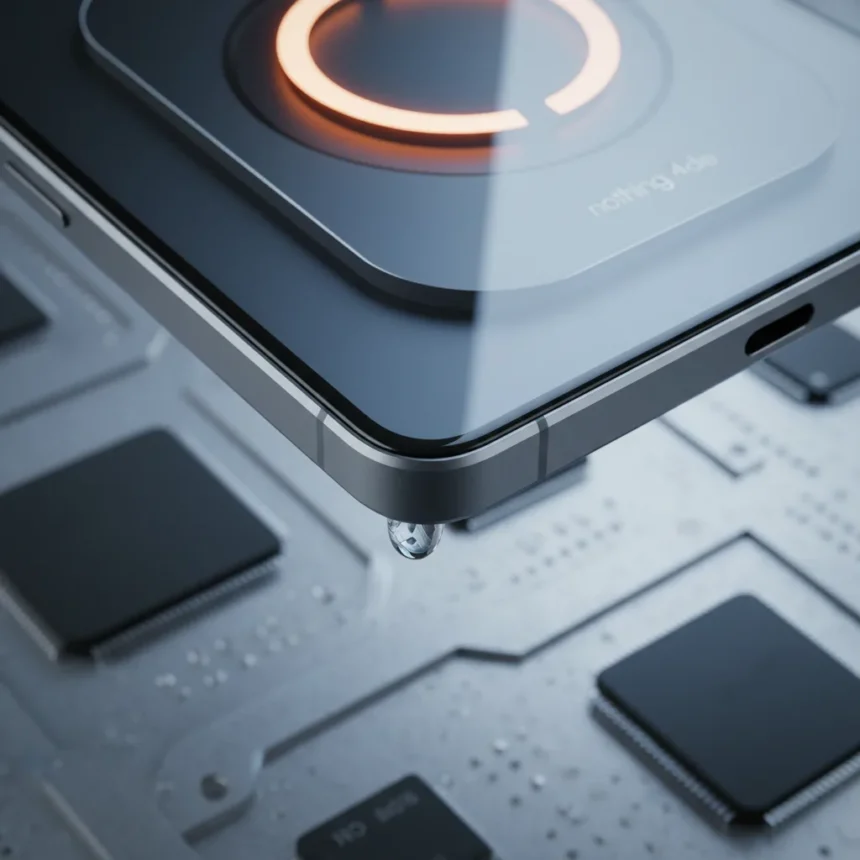
The Nothing Phone 4a Pro durability test reveals a phone that is surprisingly resilient in most ways, yet compromised by a single oversight that could undermine its water resistance promise. The device features a full aluminum unibody construction, a significant departure from Nothing’s transparent plastic designs, and it delivers the rigidity and premium feel of phones costing twice as much. But that durability advantage crumbles when you examine how the microphone hole was engineered.
Key Takeaways
- Aluminum unibody construction survives bend tests and resists denting like flagship iPhones
- Gorilla Glass 7i display shows visible scratches at Mohs hardness level 6, deeper grooves at level 7
- Microphone hole design flaw allows SIM removal tool to puncture internal waterproof mesh, compromising IP65 rating
- Transparent plastic camera cover scratches easily despite aluminum chassis
- Priced at $499, positioned as mid-range phone with premium build quality
Nothing Phone 4a Pro Durability: Where Aluminum Shines
The Nothing Phone 4a Pro durability test confirms that the shift from transparent plastic to aluminum unibody construction delivers genuine mechanical advantages. The aluminum chassis feels weighty and premium, even compared to titanium-framed flagship phones, and it resists bending under significant force from both front and back. This is Nothing’s strongest phone ever made, achieving rigidity on par with iPhone durability standards. The device survived the full bend test without damage, a stark contrast to previous Nothing models that relied on plastic backs for structural integrity.
The screen protection tells a different story. Gorilla Glass 7i shows visible scratches when tested at Mohs hardness level 6, with deeper grooves appearing at level 7. This is typical for mid-range phones, but it means daily use with keys or sand in a pocket will leave marks. The phone also includes a pre-installed screen protector, though reviewers criticize its poor quality, suggesting you may want to replace it immediately.
The Fatal Flaw: Microphone Hole Design Threatens Waterproofing
Despite an IP65 rating promising protection against rain and water splashes, the Nothing Phone 4a Pro durability test uncovered a critical vulnerability. The microphone hole sits next to the SIM slot and is large enough for a SIM removal tool to puncture the internal waterproof mesh. While a secondary backup layer exists beneath the mesh, the risk is real and preventable. Other smartphones protect this area more carefully, and the fact that Nothing did not suggests a design oversight rather than intentional engineering. This flaw transforms the IP65 rating from a reliable promise into a conditional one, contingent on users never using the SIM ejector near the microphone hole.



This is the design flaw the headline warns about. It does not make the phone fragile or unusable, but it does mean you cannot rely on the IP65 rating if you handle the SIM slot carelessly. For a mid-range phone marketed on durability, this is a significant miss.
Camera Module and Thermal Management
The transparent plastic cover protecting the camera module scratches easily, undermining the premium feel of the aluminum chassis. This is a minor but visible compromise—aluminum resists scratches, plastic does not, and the contrast is jarring when you notice it. The main and ultrawide cameras include optical stabilization, which helps with video quality, but the protective cover will show its age quickly.


Thermal management is a strength. The phone features thick thermal paste and a large vapor chamber for heat distribution, which should keep performance stable during sustained use. Repairability is low, however—accessing the main board requires removing the camera shield and plateau first. Basic tools suffice, but the design reduces your ability to repair the phone without professional help.
Design Details: Notification LEDs and Color Options
The Nothing Phone 4a Pro includes circular LED patterns on the back for notifications, timers, and music visuals, a signature Nothing feature that adds personality without compromising durability. The phone comes in silver (grippy and pleasant to hold), black (a fingerprint magnet), and pink (understated). The aluminum construction means no wireless charging—a tradeoff for the durability and premium feel.
Is the Nothing Phone 4a Pro worth buying despite the design flaw?
If you rarely use the SIM slot and do not plan to eject your SIM card frequently, the Nothing Phone 4a Pro durability profile is solid for $499. The aluminum build genuinely resists bending and denting, the screen is adequately protected by Gorilla Glass 7i, and the thermal management is robust. The microphone hole flaw is a design mistake, but it is not a deal-breaker if you are aware of it and handle the SIM slot with care.
How does the Nothing Phone 4a Pro compare to other mid-range phones?
Most mid-range phones use plastic or glass backs, making the Nothing Phone 4a Pro’s aluminum unibody unusual at this price point. That alone gives it a premium feel and durability advantage. However, competitors typically engineer their microphone holes more carefully, so the Nothing Phone 4a Pro durability advantage is partially negated by this oversight. For pure build quality, it outperforms peers; for waterproofing reliability, it lags.


Can you use the Nothing Phone 4a Pro in the shower or pool?
The IP65 rating protects against rain and water splashes, not full submersion. You can use it in light rain or splash it accidentally, but do not submerge it. Given the microphone hole vulnerability, avoid letting water near the SIM slot area during any water exposure.
The Nothing Phone 4a Pro durability test ultimately reveals a phone that nails the fundamentals—aluminum feels premium, bends resist, and the overall construction is genuinely impressive for the price. But that one design flaw transforms the waterproof promise from reliable to conditional, and that matters more than the aluminum does. Nothing built a strong phone here, just not a flawless one.
This article was written with AI assistance and editorially reviewed.
Source: Android Central