


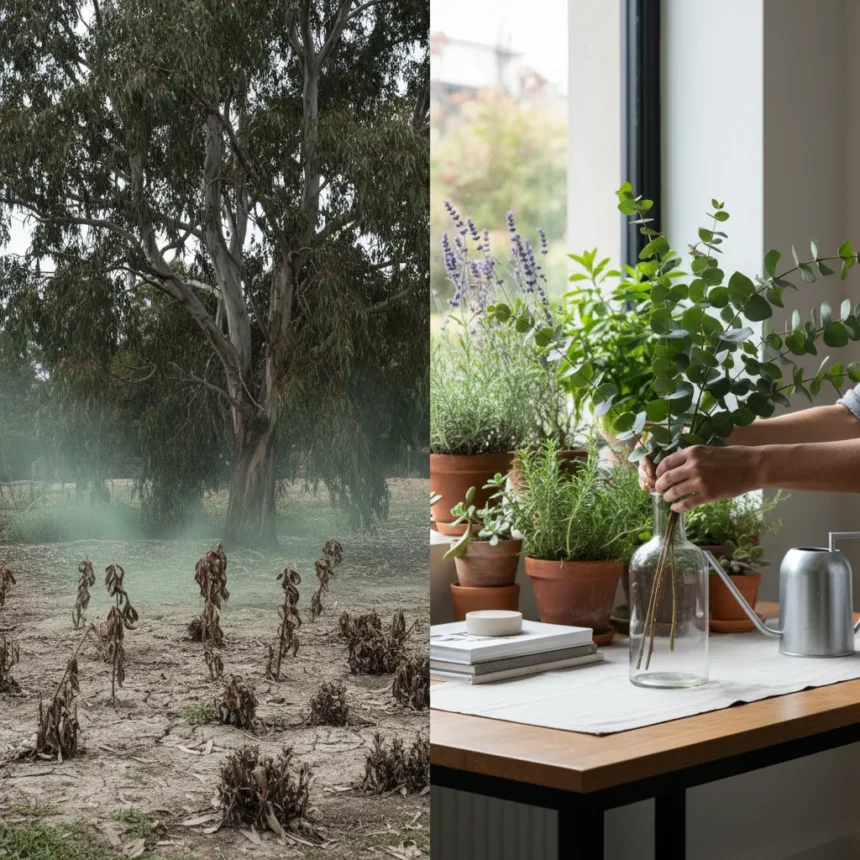
Eucalyptus trees yard planting has become a cautionary tale in modern landscaping. What looks beautiful in a florist’s arrangement becomes a nightmare when rooted in your garden, poisoning the soil and killing everything nearby.
Key Takeaways
- Eucalyptus leaves and roots release allelopathic chemicals that inhibit growth of surrounding plants
- Common yard varieties often require professional arborist removal due to invasive root systems
- Eucalyptus foliage can be enjoyed without growing the tree itself, offering aesthetic benefits without ecological damage
- Expert landscapers warn against planting eucalyptus in residential yards due to long-term maintenance and environmental costs
- A practical alternative exists for gardeners who love eucalyptus’s silvery foliage and aromatic qualities
The Allelopathic Problem With Eucalyptus Trees Yard Plantings
The core issue with eucalyptus trees yard integration lies in their chemical warfare against neighboring vegetation. According to landscaping expert Dysinger, the leaves and roots of eucalyptus have an allelopathic effect on their surroundings—this means that the growth of other plants and trees is inhibited by chemicals released by eucalyptus leaves and roots. This is not a minor inconvenience. It is a fundamental incompatibility between the tree and a healthy garden ecosystem.
When you plant eucalyptus, you are essentially creating a dead zone around it. Grass struggles. Shrubs wither. Other trees fail to establish. The allelopathic chemicals seep into the soil and persist, making it difficult to grow anything else in that space for years. Gardeners who plant eucalyptus expecting a beautiful addition to their landscape often find themselves calling an arborist within a few years to remove it—a costly and labor-intensive process.
The problem is compounded by the fact that many common eucalyptus varieties are particularly aggressive. They are not regional natives in most parts of the world, and their invasive tendencies make them problematic long-term residents of residential yards. Once established, they are difficult to remove and their impact on surrounding soil chemistry can last well beyond their removal.

Why Experts Warn Against Growing Eucalyptus in Your Yard
Landscape professionals and arborists have issued consistent warnings about eucalyptus trees yard cultivation because the long-term costs outweigh the short-term aesthetic appeal. The tree’s aggressive growth pattern, combined with its allelopathic properties, creates a maintenance burden that most homeowners do not anticipate.
Beyond the chemical problem, eucalyptus trees demand significant space and resources. They grow quickly and can become unwieldy without constant pruning. Their shallow, spreading root systems can damage hardscaping, foundations, and underground utilities. By the time a homeowner realizes they have made a mistake, the tree is often too large and too entrenched to remove without professional help.



The environmental cost is also substantial. Native plants struggle in eucalyptus-dominated landscapes, reducing biodiversity and habitat value. In regions where eucalyptus has naturalized, it has become an invasive species, crowding out native vegetation and altering entire ecosystems. Planting one in your yard, even unintentionally, contributes to this broader problem.
A Better Way to Enjoy Eucalyptus Without Growing the Tree
The solution lies in separating the aesthetic appeal of eucalyptus foliage from the ecological damage of growing the tree itself. Rather than planting eucalyptus in your yard, you can enjoy its silvery leaves, pleasant fragrance, and distinctive texture through cut foliage arrangements.
This approach draws on the author’s early experience working in a florist store as a teenager, where eucalyptus was commonly used in floral bouquets, sparking an interest in homes and gardens. The florist world has long understood that eucalyptus is at its best when cut and arranged—not rooted in soil. Fresh eucalyptus stems can be sourced from specialty florists, farmers markets, or online suppliers. They last weeks in water, adding elegance to indoor arrangements without the long-term commitment or environmental cost of a living tree.
For those who want a more permanent solution, dried eucalyptus offers year-round appeal. Bunches of dried eucalyptus can be displayed in vases, incorporated into wreaths, or used in home décor. The foliage retains its color and fragrance for months, providing all the aesthetic benefits of the tree without any of the drawbacks.



How to Source and Display Eucalyptus Foliage at Home
Sourcing quality eucalyptus foliage is straightforward. Local florists often sell fresh stems year-round, and many can special-order specific varieties if you have a preference for particular colors or textures. Farmers markets in urban and suburban areas frequently stock fresh eucalyptus, especially in spring and summer. Online retailers also offer both fresh and dried options, shipped directly to your home.
When displaying fresh eucalyptus, change the water every few days and trim the stems at an angle to encourage water uptake. Kept in a cool location away from direct sunlight, fresh stems typically last two to three weeks. For dried arrangements, no water is needed—simply place the bunches in a vase or hang them upside down for a rustic, botanical aesthetic.
Eucalyptus Trees Yard Alternatives for Actual Landscaping
If you want living plants in your yard that offer similar visual appeal without the allelopathic problems, consider alternatives that provide silvery foliage or aromatic qualities. Native shrubs and trees in your region often deliver comparable aesthetics while supporting local ecosystems and requiring less maintenance than eucalyptus.
The key is choosing plants that are well-suited to your climate and soil, do not inhibit the growth of neighbors, and offer the visual interest you are seeking. A landscape designer or local nursery can recommend species that match your aesthetic goals while avoiding the pitfalls of eucalyptus cultivation.
Should I ever plant eucalyptus in my yard?
No. The allelopathic properties of eucalyptus—its ability to poison surrounding soil and inhibit plant growth—make it unsuitable for residential yards in most climates. Even small ornamental varieties cause problems. Professional removal is expensive and often necessary within a few years.
Where can I buy fresh eucalyptus for arrangements?
Local florists, farmers markets, and online retailers all stock fresh eucalyptus year-round. Many florists can special-order specific varieties. Fresh stems last two to three weeks in water when stems are trimmed and water is changed regularly.
What’s the difference between fresh and dried eucalyptus?
Fresh eucalyptus requires water changes and lasts a few weeks; dried eucalyptus needs no water and lasts months. Both retain the foliage’s distinctive color and fragrance. Choose fresh for temporary arrangements, dried for permanent displays.
The eucalyptus story is a reminder that beauty and practicality do not always align in gardening. What works in a florist’s hand—eucalyptus foliage—becomes problematic when rooted in soil. By embracing the cut-foliage approach, you get all the aesthetic pleasure of eucalyptus without the ecological damage, the maintenance headache, or the eventual need for expensive professional removal. Your garden—and your neighbors’ gardens—will thank you.
Where to Buy
17% OFFFelco F2 Pruning Shears$71$86shop now | Amazing StuffGarden Gloves$9.99shop now | 11% OFFGrampa's Weeder$39$44shop now
This article was written with AI assistance and editorially reviewed.
Source: Tom's Guide