





Proton ARM support just became real. Valve’s latest Proton 11.0-Beta1 release demonstrates Steam running on the original Nintendo Switch, a 2017 ARM-based handheld that was never designed to host a PC gaming platform. The breakthrough relies on FEX 2604, a dynamic binary translator that converts x86-64 instructions into AArch64 (ARM64) code on Linux, effectively bridging the architectural gap between Windows software and ARM hardware.
Key Takeaways
- Proton 11.0-Beta1 adds ARM device support, enabling Steam on non-x86 hardware like the Nintendo Switch.
- FEX 2604 translates x86-64 instructions to ARM64, allowing Proton-compatible games to run on ARM Linux systems.
- The Switch demo shows Steam’s UI launching on a hacked Switch running Linux, though performance remains unoptimized.
- This expands gaming possibilities for ARM handhelds without requiring official Nintendo or Valve support.
- Proton’s ARM push aligns with broader 2026 handheld trends as new devices move beyond traditional x86 processors.
What Proton ARM support actually means
Proton ARM support refers to Valve’s compatibility layer now functioning on ARM processors instead of x86 chips. Previously, Proton only worked on x86-64 systems like the Steam Deck or gaming PCs, translating Windows games to Linux. The new ARM capability inverts this: Proton still translates Windows games to Linux, but now does so on ARM devices that lack native x86 support. This matters because most handheld devices—including Nintendo’s aging Switch—use ARM chips due to their power efficiency and thermal characteristics.
The Switch itself runs an NVIDIA Tegra X1, an ARM-based processor from 2015 with Cortex-A57 and Cortex-A53 cores. Without translation, x86 Windows software simply cannot execute on ARM silicon. FEX 2604 solves this by dynamically translating x86-64 machine code to ARM64 at runtime, effectively emulating the CPU instruction set without emulating the entire system. The result is slower than native x86 execution, but faster than full system emulation like QEMU.
How FEX 2604 differs from earlier ARM translation efforts
Before FEX 2604, the community relied on Box86 and Box64, earlier ARM translators designed for low-end ARM systems like Raspberry Pi. Box64 translates x86-64 to ARM64, while Box86 handles 32-bit x86 to ARM32. Both work, but FEX introduces a faster JIT (just-in-time) compilation approach that recompiles frequently-used code blocks into native ARM instructions, rather than translating every instruction on the fly.

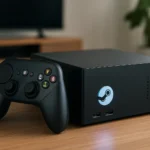
The practical difference: FEX 2604 should deliver better performance on demanding tasks, though the Switch demo does not include game benchmarks—only Steam’s UI launching. This is crucial context. A working Steam client does not guarantee playable framerates for actual games. The Switch’s 2017 hardware, even with FEX’s optimizations, likely cannot sustain 30 FPS on modern AAA titles. The demo proves the concept works; it does not prove the Switch is a viable gaming platform for Proton.
Why this matters for the handheld gaming landscape
The Switch demo is not just a nostalgic hack. It signals Valve’s commitment to ARM compatibility at a moment when new handhelds are diverging from x86. As handheld gaming moves toward more power-efficient ARM-based processors—driven by thermal and battery constraints—Proton’s ARM support removes a major barrier to bringing the entire Windows game ecosystem to non-x86 devices. This is especially relevant as 2026 approaches and new handheld platforms launch with ARM or alternative architectures.
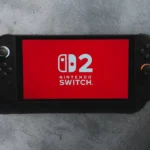

Steam’s Beta client already defaults Proton on for all titles on Linux, removing the manual toggle that existed in stable versions. This simplification, combined with ARM support, suggests Valve is positioning Proton as the universal translation layer for gaming across any architecture, not just x86. The Switch demo is proof of concept; the real impact will come when new handhelds ship with Linux and FEX pre-installed.
The caveats: this is not an official feature
The Switch demo requires a hacked device running custom firmware and a Linux distro, voids the warranty, and carries a real risk of bricking the hardware. This is not a feature Valve or Nintendo endorses. The community process involves installing Atmosphere (custom firmware), booting a Linux distro like Sudachi, installing FEX-Emu and Proton via package manager, and launching Steam with emulation flags. Every step is manual, fragile, and requires technical expertise.
Performance is another elephant in the room. No frame rates are published from the demo. The Switch’s Tegra X1 is underpowered for modern gaming even with native code; running x86 games through FEX translation adds a second layer of overhead. Casual indie titles might be playable at low settings. AAA games will likely be unplayable or require severe compromises.
What comes next for Proton and ARM
The real story is not the Switch itself, but what Proton ARM support enables for future handhelds. If new ARM-based gaming devices ship with native Proton support baked in, players gain access to thousands of Windows games without developers recompiling for ARM. That is a massive advantage over closed ecosystems that require individual porting efforts. FEX 2604 makes this feasible at the software level.
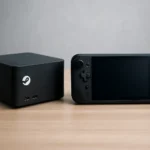

Valve’s Steam Beta client already auto-enables Proton for all Linux titles, removing friction for desktop users. The next logical step is shipping Proton and FEX as standard on any new handheld that uses ARM. The Switch demo proves the technical foundation exists. Whether new handhelds actually ship with this support depends on manufacturer decisions outside Valve’s control.
Is Steam actually playable on a hacked Nintendo Switch?
The demo shows Steam’s UI launching, not games running at playable framerates. No benchmarks or gameplay footage is provided, only the client startup. Realistically, demanding games will not be playable due to the Switch’s 2017 hardware and FEX translation overhead. Lightweight indie titles might work at reduced settings, but this remains untested and unverified.
How does FEX 2604 compare to running Switch games on PC emulators?
This is the inverse problem. Yuzu and Ryujinx are Switch emulators that run Switch games on PC or Android by emulating the entire Switch system. FEX does the opposite: it translates x86 Windows software to run on ARM Linux. One brings Switch games to powerful x86 hardware; the other brings x86 games to low-power ARM hardware. The approaches are fundamentally different and address different use cases.
Proton ARM support represents a significant milestone for cross-architecture gaming, proving that Valve’s compatibility layer can function on any processor architecture, not just x86. The Switch demo is a proof of concept; the real impact will emerge when new handhelds adopt ARM and ship with Proton support built in. Until then, running Steam on a hacked Switch remains a technical curiosity rather than a practical gaming platform.
Edited by the All Things Geek team.
Source: Tom's Hardware




