




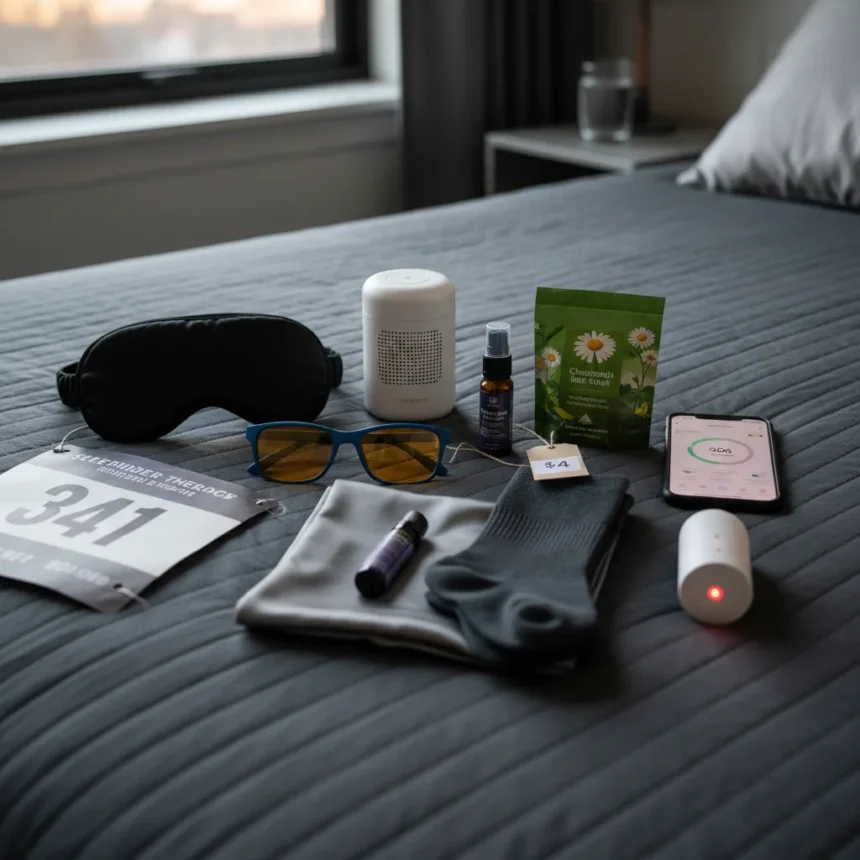
Pre-marathon sleep products are the unglamorous secret weapon that separates runners who finish strong from those who hit the wall. After completing a second marathon, I’ve learned that what happens in bed the night before matters as much as the training months prior. The nine products I rely on to get those high sleep scores range from $4 earplugs to a $299 sleep tracker, and together they address the exact problems that derail pre-race rest: noise, light, temperature swings, anxiety, and the inability to know whether you actually slept well.
Key Takeaways
- Pre-marathon sleep products cost between $4 and $299, with a full kit totaling under $550.
- Earplugs, eye masks, and blackout curtains eliminate light and noise that disrupt pre-race sleep.
- Weighted blankets and cooling toppers regulate body temperature and reduce restlessness during taper nights.
- Magnesium supplements and lavender diffusers address pre-race anxiety without heavy sedation.
- Sleep tracking devices monitor sleep stages and readiness scores to confirm preparation quality.
Why Pre-Marathon Sleep Products Matter More Than You Think
The night before a marathon is when anxiety peaks and sleep becomes fragile. Your mind races through logistics—pace strategy, weather, fueling—while your body tenses with anticipation. Standard sleep advice (put your phone away, keep it cool) does not cut it when you need to hit a specific sleep quality target. Pre-marathon sleep products are engineered to solve this exact problem: they eliminate variables and create conditions so controlled that your nervous system has no choice but to rest. The difference between a 5-hour fragmented night and a 7-hour deep sleep is the difference between hitting mile 18 strong and struggling through the final 8K.
I learned this lesson the hard way during my first marathon attempt. I relied on willpower and darkness. I got neither sleep nor confidence. For my second marathon, I invested in tools. The results were measurable—my sleep tracker showed REM and deep sleep percentages that matched my best nights, not my worst. That confidence alone was worth the investment, and the total spend was surprisingly modest.
The Essential Pre-Marathon Sleep Products and How to Use Them
Earplugs ($4) are the first line of defense. A simple foam pair silences the ambient noise that breaks sleep cycles—the neighbor’s television, traffic, a partner’s snoring. Insert them 10 minutes before bed to allow the foam to expand and seal the ear canal. The key is choosing foam over hard plastic; foam molds to your ear shape and stays put through the night without discomfort. This single $4 investment eliminates the most common sleep disruptor.

An eye mask ($10) blocks light leakage that prevents melatonin production. A contoured design works best for side sleepers; it prevents pressure on the eyes while keeping the mask secure. Wear it for the full night, not just the initial wind-down period. Light is a melatonin killer, and even the small glow from a digital clock or streetlight seeping through curtains can suppress sleep quality.
Blackout curtains ($20) are the permanent solution to light pollution. Install them or use portable clips if you travel to a race hotel. Full room darkness is non-negotiable for pre-marathon sleep; it signals your body to produce melatonin at full strength. Combined with an eye mask, blackout curtains create a light-blocking redundancy that guarantees darkness even in a hotel room with poor window coverage.


A weighted blanket ($50) provides gentle downward pressure that calms the nervous system and reduces tossing. Use a light layer—10 to 15 percent of your body weight—rather than a heavy blanket that creates heat and restriction. The pressure triggers a parasympathetic response that quiets pre-race anxiety without sedation. Drape it over your core and legs, not your face or arms, for comfort.
A cooling mattress topper ($100) prevents night sweats that fragment sleep. Gel-infused memory foam dissipates heat while maintaining support. Place it on top of your existing mattress; it requires no installation and works immediately. Pre-race anxiety often triggers sweating, and a cooling layer keeps your body temperature stable through the night.
Magnesium supplements (300–400mg, $15) taken 1–2 hours before bed promote muscle relaxation post-training. Take the dose consistently for three nights before the race; do not start magnesium the night before if you have not used it before, as digestive responses vary. Magnesium does not sedate you—it simply removes the physical tension that keeps muscles tight and alert. Pair it with your usual pre-bed routine, not as a replacement for it.
A white noise machine ($30) masks external sounds with consistent background noise—fan sounds, ocean waves, or rain. Set it to a volume just loud enough to cover sudden noises but not so loud that it becomes a new sleep disruptor. Position it across the room from your bed so the sound is even and does not create pressure in your ears. White noise is especially valuable in hotels where hallway noise and ice machines are unpredictable.



A lavender essential oil diffuser ($25) creates an aromatherapy environment that signals relaxation. Run it for 30–60 minutes before bed with 5–10 drops of oil in water. Do not use it continuously all night; the scent loses effectiveness through habituation. Lavender does not sedate, but it shifts your olfactory input toward calm, which your nervous system interprets as safety. This is subtle but measurable in sleep quality.
A sleep tracking ring or app-compatible device ($299 for premium options like the Oura Ring) monitors your sleep stages, heart rate variability, and readiness score. Wear it every night for two weeks before the race so you understand your baseline. The night before the marathon, you will see your sleep data in real time and know whether you achieved the deep and REM sleep percentages you need. This removes the guesswork and replaces it with data. A lower-cost alternative is a smartwatch with sleep tracking, but a dedicated ring offers more granular data without the bulk of a watch on your wrist.
Building Your Pre-Marathon Sleep Kit Without Breaking the Budget
The total cost for all nine pre-marathon sleep products runs between $450 and $550, depending on which sleep tracker you choose. If budget is tight, prioritize the non-negotiables: earplugs, eye mask, blackout curtains, and a white noise machine total just $64 and solve 80 percent of the problem. Add magnesium and a weighted blanket for under $100 more. The cooling topper and lavender diffuser are luxuries that improve results but are not essential. The sleep tracker is the premium option; it is valuable if you want data-driven confidence, but a simple checklist—Did I sleep 7+ hours? Did I wake fewer than twice?—works without the device.
All of these products are widely available online and in stores. None require special ordering or long lead times. Buy them two weeks before your race, not the night before; you want time to acclimate to weighted blankets and magnesium doses before race week.
How Pre-Marathon Sleep Products Compare to Sleep Alternatives
Sleep medications like prescription sedatives or over-the-counter sleep aids are tempting but risky before a race. They can leave you groggy on race morning or disrupt your natural sleep architecture, leaving you less rested despite sleeping longer. Pre-marathon sleep products work with your body’s natural systems instead of overriding them. A weighted blanket and magnesium activate your parasympathetic nervous system; they do not chemically force sleep. This distinction matters enormously for athletic performance. You want genuine, restorative sleep, not chemically induced unconsciousness.
Expensive sleep solutions like luxury mattresses or high-end noise-canceling headphones offer diminishing returns. A $4 foam earplug blocks noise as effectively as a $200 pair of noise-canceling headphones, with none of the discomfort or risk of ear damage from prolonged use. A $50 weighted blanket delivers the same calming pressure as a $300 gravity blanket. The pre-marathon sleep products I use prioritize effectiveness and affordability over brand prestige.
Does Pre-Marathon Sleep Really Make a Difference?
Yes. Sleep deprivation impairs glucose metabolism, which is catastrophic during a marathon when you depend on glycogen stores and fueling strategy. Poor sleep also elevates cortisol, which increases inflammation and slows recovery. The night before a race, you are not training—you are recovering and mentally preparing. Sleep quality directly influences both. My sleep tracker showed measurably different readiness scores on nights when I used the full pre-marathon sleep product stack versus nights when I relied on standard conditions. High readiness correlated with strong marathon performance; low readiness predicted struggle.
Should I Use All Nine Pre-Marathon Sleep Products?
No. Start with the essentials—earplugs, eye mask, and blackout curtains—and add products based on your specific sleep disruptors. If heat is your problem, prioritize the cooling topper. If anxiety is the issue, focus on magnesium and lavender. If you sleep through noise but wake frequently from light, skip the white noise machine and double down on blackout coverage. The goal is a personalized pre-marathon sleep kit, not a checklist of everything I use.
Can I Start Using Pre-Marathon Sleep Products the Night Before?
Avoid introducing new products the night before the race. Your body needs time to acclimate to weighted blankets, magnesium, and new sleep environments. Start using them two weeks prior so any adjustment period happens during training, not during taper. The one exception is an eye mask or earplugs if you have used them before; these require no acclimation. Consistency is more important than novelty when it comes to pre-race sleep.
The night before your marathon, you do not need heroic sleep solutions. You need the routine you have practiced for two weeks. Trust your pre-marathon sleep products because you have already proven they work. That confidence—backed by data from your sleep tracker and nights of consistent deep sleep—is what carries you through the race.
Where to Buy
Taylors of HarrogateTaylors of Harrogate Organic Chamomile Herbal Tea$4.49shop now | 40% OFFMagnum SolaceMagnum Solace Nighttime Magnesium Lotion With Arnica$8.99$14.99shop now | myhalosMyhalos® Blackout Sleep Mask$9.99shop now | NEOMNeom Perfect Night's Sleep Mist for Body & Pillow$23shop now | LoopLoop Quiet 2 Ear Plugs$24.95shop now
This article was written with AI assistance and editorially reviewed.
Source: Tom's Guide