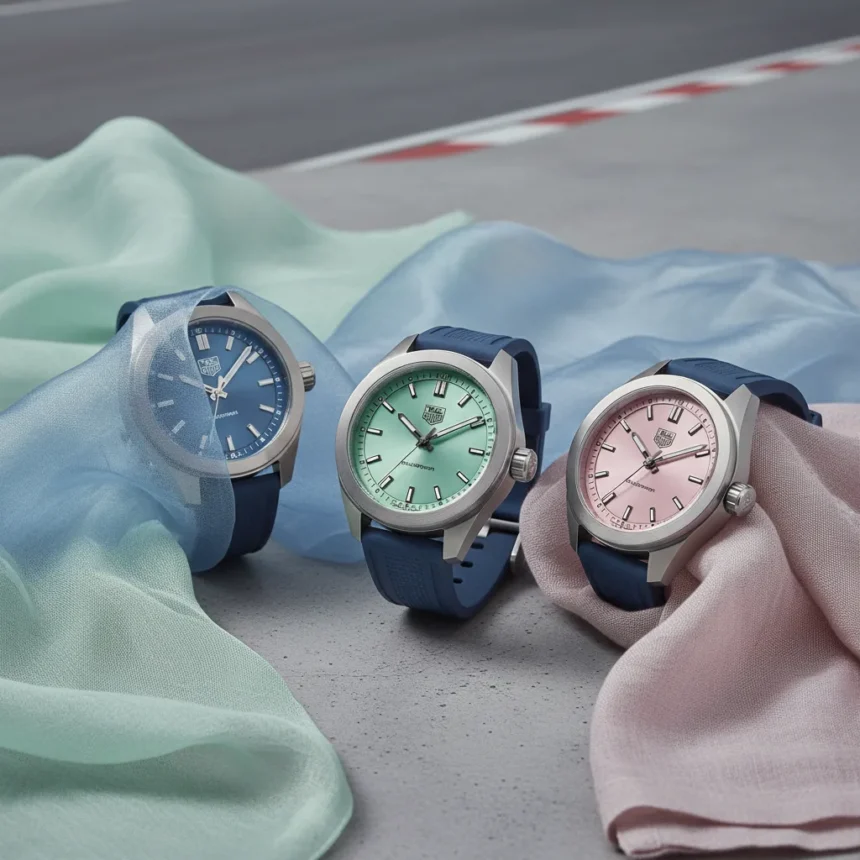
TAG Heuer’s new Solargraph pastel models represent a deliberate departure from the aggressive aesthetics that have long dominated motorsport-inspired timepieces. The TAG Heuer Solargraph line, powered by solar technology, now arrives in soft, muted color palettes designed to appeal to racing enthusiasts who want precision without the visual aggression.
Key Takeaways
- TAG Heuer Solargraph pastel models introduce softer hues to the solar-powered racing watch category
- New colorways target motorsport fans seeking elegance over traditional bold aesthetics
- Solar technology remains central to the Solargraph design philosophy
- Launch coincides with LVMH Watch Week 2023, positioning TAG Heuer alongside luxury competitors
- Pastel finishes offer a fresh visual identity while maintaining sports watch functionality
Breaking the Racing Watch Formula
Motorsport-inspired watches have historically relied on high-contrast colors, bold bezels, and aggressive proportions to signal performance and speed. TAG Heuer’s decision to introduce pastel hues to the Solargraph line challenges this convention directly. The new models retain the solar-powered technology and precision engineering expected from a racing chronograph while stripping away the visual intimidation factor. This repositioning opens the category to buyers who appreciate mechanical sophistication but reject the aesthetic aggression of traditional sport watches.
The pastel color strategy signals confidence in the Solargraph’s core technology. Rather than hiding behind bold design language, TAG Heuer is essentially saying: this watch is fast and reliable enough to whisper instead of shout. For collectors accustomed to seeing racing watches in blacks, grays, and steel, the softer palette represents a genuine design risk—and a calculated one.
Solar Technology Meets Luxury Aesthetics
The Solargraph line’s solar-powered mechanism is the technical foundation that makes this aesthetic shift possible. By eliminating the traditional mechanical winding crown and its associated visual bulk, solar watches can afford cleaner, more refined dial designs. The pastel models capitalize on this advantage, using the dial real estate to showcase color rather than compensate for mechanical complexity. This is where TAG Heuer’s engineering philosophy intersects with luxury watch design: technology should enable elegance, not demand it.

Solar technology also addresses a practical concern for buyers hesitant about sport watches. Perpetual charging through ambient light means the Solargraph pastel models require less active maintenance than traditional mechanical racers. For someone drawn to the racing heritage but skeptical about constant winding or service intervals, this is a meaningful advantage over competitors like Hublot and Zenith, which rely on conventional mechanical movements.
Positioning Within the Luxury Watch Landscape
TAG Heuer unveiled the Solargraph pastel models during LVMH Watch Week 2023, a strategic moment that positioned the brand alongside other luxury watch innovators within the LVMH portfolio. This timing matters because it signals that pastel sport watches are not a niche experiment—they are a legitimate category evolution. Hublot, Zenith, and Bulgari each brought their own innovations to the same event, but TAG Heuer’s pivot toward softer aesthetics stands out as a direct challenge to the assumption that racing watches must be visually dominant.



The pastel strategy also targets a specific buyer psychology. Traditional sport watch collectors often view color restraint as a mark of seriousness—black, gray, or steel only. By positioning pastel as an intentional design choice rather than a compromise, TAG Heuer is reframing softness as a form of confidence. This appeals to buyers with the means to own multiple watches and the taste to appreciate subtlety.
Will Pastel Sport Watches Stick?
The real test for TAG Heuer Solargraph pastel models is longevity. Trend-driven colorways often fade quickly in luxury watch collecting, where heritage and timelessness drive resale value. However, the pastel movement in luxury goods—from fashion to automotive—suggests this is not a fleeting moment but a broader cultural shift toward softer, more approachable luxury. If that trend holds, the Solargraph pastel line could become a defining release for TAG Heuer in the 2020s, much as steel sports watches became the standard in the 1990s.
Are TAG Heuer Solargraph pastel models available globally?
The research brief does not specify regional availability or launch dates for these models. Interested buyers should contact TAG Heuer directly or authorized dealers to confirm availability in their market.
How do pastel sport watches compare to traditional black racing watches?
Pastel Solargraph models sacrifice the visual aggression and contrast of traditional black or steel sport watches in exchange for refined aesthetics and approachability. Both serve the same technical function; the difference is purely visual and psychological. Traditional models appeal to buyers who want their watch to announce its purpose; pastel models appeal to those who prefer understated performance.



Why did TAG Heuer choose solar technology for the pastel line?
Solar mechanisms enable cleaner dial designs without the visual bulk of traditional mechanical winding systems. This design freedom allows pastel colors to become the focal point rather than an afterthought applied to a mechanically complex movement. The technology supports the aesthetic vision rather than fighting against it.
TAG Heuer’s Solargraph pastel models represent a calculated bet that luxury buyers are ready to separate performance from aggression. In a market saturated with black sport watches, softness reads as confidence—and that confidence is backed by solar-powered precision. Whether this becomes a lasting category shift or a moment of brand experimentation will depend on how the collecting community responds. What is certain is that TAG Heuer has thrown down a challenge to the racing watch establishment: excellence does not require volume.
Edited by the All Things Geek team.
Source: T3