






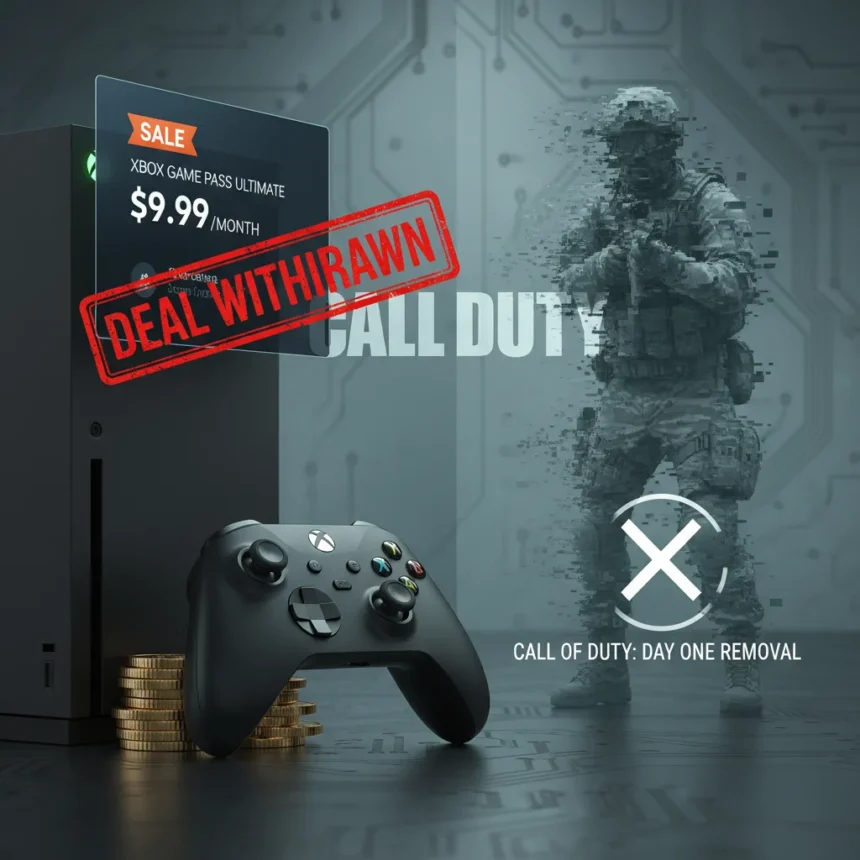
Xbox Game Pass Ultimate price cuts are rare enough that when Microsoft offers one, it deserves scrutiny. The company is dangling a discount on its premium subscription tier, but the deal comes with a significant trade-off: Call of Duty will no longer arrive on day one.
Key Takeaways
- Xbox Game Pass Ultimate pricing is being adjusted with a rare discount offer.
- Call of Duty games will no longer launch day one on Game Pass.
- The deal represents a shift in Microsoft’s content strategy for premium subscribers.
- This change affects the value proposition of Game Pass Ultimate versus other tiers.
- Subscribers must weigh the price savings against losing immediate access to major releases.
What’s Happening to Xbox Game Pass Ultimate Price
Microsoft is offering a price reduction on Xbox Game Pass Ultimate, marking an uncommon move in a subscription service that has historically trended upward. The discount comes attached to a condition: Call of Duty titles will no longer be available at launch for Game Pass Ultimate subscribers. This is not simply a price adjustment—it is a restructuring of what Ultimate membership actually delivers. For years, Game Pass Ultimate has positioned itself as the premium tier that gets day-one access to major Microsoft-published and select third-party blockbusters. Removing Call of Duty from that guarantee fundamentally changes the service’s appeal.
The timing matters. Call of Duty remains one of gaming’s most valuable franchises, and its absence from day-one Game Pass availability signals Microsoft’s willingness to prioritize revenue over subscription breadth. This is the kind of trade-off that looks good on a spreadsheet but feels hollow to subscribers who joined Ultimate specifically for early access to tentpole releases.
How This Compares to Game Pass Tiers
Game Pass comes in three flavors: Essential, Standard, and Ultimate. Ultimate has always commanded a premium price because it promised the most comprehensive experience—day-one access to Microsoft games, cloud gaming, and PC availability. By removing Call of Duty from that tier while cutting the price, Microsoft is essentially saying: we want more subscribers at a lower price point, but we are not willing to subsidize every blockbuster equally. Standard and Essential subscribers already lack day-one access to most releases, so they are unaffected by this change. The real sting lands on Ultimate members who upgraded specifically for that privilege.

This creates an awkward middle ground. Ultimate subscribers still get something Essential and Standard subscribers do not, but that something is now slightly less valuable than it was yesterday. It is a subtle erosion of the tier’s positioning that Microsoft hopes the price cut will offset.
Why Call of Duty Matters More Than Other Games
Call of Duty is not just another franchise in the Game Pass library. It is Activision’s annual juggernaut, the game that drives hardware sales, console loyalty, and subscription decisions. When a player decides between PlayStation Plus and Game Pass, Call of Duty’s availability often tips the scale. Removing it from day-one Game Pass Ultimate access hands a competitive advantage back to PlayStation, which does not face the same pressure to include every major release on day one. Microsoft acquired Activision Blizzard for nearly $70 billion partly to secure Call of Duty for Game Pass. Stepping back from day-one inclusion suggests the company is rethinking that calculation—or at least willing to monetize Call of Duty separately from the subscription service.



The franchise generates billions in annual revenue through full-price sales. Game Pass, by contrast, spreads that revenue across millions of subscribers at a fixed monthly cost. For Microsoft, the math probably favors selling Call of Duty at full price for the first month or two, then adding it to Game Pass later. It is a strategy that maximizes revenue but frustrates subscribers who thought they were paying for premium access.
Should You Accept This Trade-Off?
The decision depends entirely on your play habits. If you are a casual Game Pass browser who rarely plays new releases on day one, the price cut is a straightforward win. You pay less and lose nothing you were actually using. If you are someone who buys Game Pass specifically to play Call of Duty, Starfield, or other blockbusters the moment they drop, this deal is a downgrade disguised as a discount. You are saving money on a service that now delivers less value in the category that matters most to you.
For subscribers in this second camp, the math is brutal. A lower Game Pass Ultimate price does not offset losing day-one access to the franchise you subscribed for. You would be better off buying Call of Duty at full price and downgrading to Game Pass Standard or Essential. Microsoft is betting that enough subscribers fall into the first camp to make up for the defections in the second.
What Does This Mean for Game Pass’s Future?
This shift signals a broader recalibration of Microsoft’s subscription strategy. Game Pass has always been positioned as the Netflix of gaming—a service so comprehensive that it justifies its price through sheer breadth and day-one access to tentpoles. By carving out Call of Duty, Microsoft is admitting that the Netflix model does not work indefinitely for gaming. Games cost more to develop than TV shows, and blockbusters generate more revenue as individual sales than as subscription inclusions. Eventually, something has to give.



Do not expect Call of Duty to be the only franchise that eventually loses day-one status. As Microsoft’s subscription service matures and competition intensifies, the company will likely negotiate separate windows for other major releases. Game Pass will remain valuable, but its value proposition will narrow. It will become a service for indie games, smaller releases, and back catalog titles—not the day-one blockbuster machine it promised to be.
Is the Xbox Game Pass Ultimate price cut worth it for new subscribers?
New subscribers should compare the discounted Ultimate price against Standard and Essential tiers. If the price gap is small enough, Ultimate still offers cloud gaming and PC access that justify the premium. However, if you play only console and do not use cloud gaming, Standard might now be the smarter buy. The loss of day-one Call of Duty access removes one of Ultimate’s strongest selling points.
When will Call of Duty come to Game Pass Ultimate after launch?
The research brief does not specify a timeline for when Call of Duty will be added to Game Pass Ultimate after launch. Microsoft has not publicly committed to a specific window, which means subscribers could face weeks or months of waiting. This uncertainty is part of what makes the deal frustrating—you are paying for a premium service that no longer guarantees access to major releases on your preferred schedule.
Does this price cut apply to all Game Pass Ultimate subscribers?
The research brief does not detail whether the price reduction applies to existing subscribers or only new sign-ups, nor does it specify regional availability or promotional conditions. These details matter significantly for current Ultimate members deciding whether to stick with the service. Microsoft should clarify whether this is a permanent price adjustment or a limited-time offer tied to the Call of Duty trade-off.
The Xbox Game Pass Ultimate price cut is a textbook example of how a discount can actually represent worse value. Microsoft is giving with one hand while taking with the other. The price drop is real, but so is the loss of day-one Call of Duty access. For subscribers who joined Ultimate specifically for blockbuster day-one availability, this deal is not a win—it is a renegotiation of the service’s core promise. The question is whether enough players will accept the trade-off to make Microsoft’s new math work.
This article was written with AI assistance and editorially reviewed.
Source: Tom's Guide