





Earth Day nature crafts represent a category that sits awkwardly between genuine environmental education and seasonal marketing noise. The appeal is real: hands-on projects that connect people to natural materials and processes. But not all Earth Day nature crafts deliver the same value, and some promise more environmental benefit than they actually provide.
Key Takeaways
- Sun printing and flower pressing are the most accessible Earth Day nature crafts for beginners.
- These projects require minimal equipment and use readily available natural materials.
- Earth Day nature crafts work best when framed as creative exploration, not environmental activism.
- Seasonal craft projects peak in relevance during April but work year-round.
- Natural material sourcing matters more than the craft technique itself.
What Earth Day Nature Crafts Actually Deliver
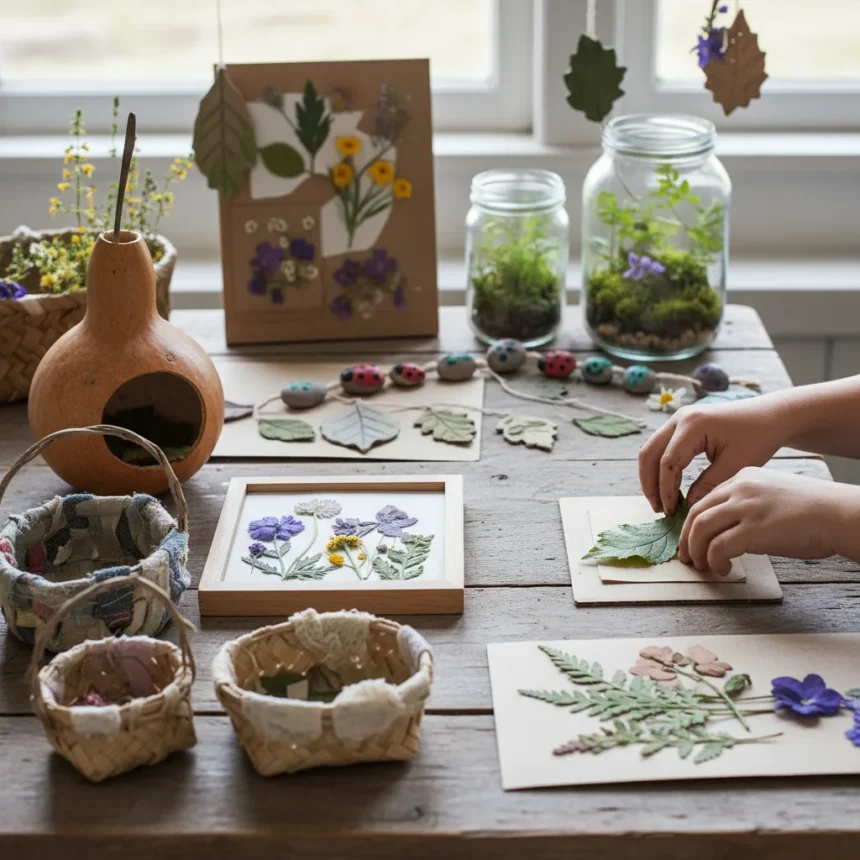
Earth Day nature crafts encompass a range of projects using natural materials—leaves, flowers, sunlight, and pressed botanicals—to create visual art or functional objects. The core appeal lies in their simplicity: most require no special equipment, no electricity, and no expensive supplies. A person can make sun prints with photosensitive paper and sunlight, or press flowers between book pages. The barrier to entry is almost nonexistent, which is precisely why these projects resurface every April.
The real question is whether Earth Day nature crafts deliver genuine creative satisfaction or merely aesthetic Instagram content. Sun printing, for instance, produces striking silhouettes through a straightforward photochemical process. You place objects on light-sensitive paper, expose it to sunlight, and the paper darkens everywhere except where the objects blocked light. The results are visually compelling. Flower pressing works differently—it’s preservation through weight and time—but the outcome is equally immediate: flat, dried botanicals that retain color and structure for months or years.
What separates meaningful Earth Day nature crafts from throwaway seasonal projects is intentionality. A person who sources materials from their own garden, documents the species they’re using, and creates a cohesive collection has engaged in something substantive. A person who buys pre-pressed flowers and glues them to cardstock has completed a craft activity. Both are valid, but they are not equivalent.
Sun Printing and Flower Pressing: The Accessible Core
Sun printing stands out as the most forgiving Earth Day nature craft for beginners because it requires almost nothing to start. Photosensitive paper (cyanotype or similar) costs a few dollars per sheet. Sunlight is free. Objects—leaves, flowers, twigs, feathers, found paper—are everywhere. You arrange them on the paper, leave it in direct sun for 10-20 minutes depending on intensity, then rinse the paper in water to stop the reaction. The image develops in real time, and the surprise of seeing the silhouette emerge is part of the appeal.
Flower pressing demands patience rather than equipment. You need flowers (fresh, ideally at peak bloom), paper or a flower press, and weight. The process takes weeks or months. Flowers are placed between paper layers, stacked under heavy books or in a dedicated press, and left undisturbed. Moisture evaporates slowly, and the flower dries flat. The results are fragile but stable—pressed flowers can last years if kept dry and away from direct light. This slowness is actually an advantage for Earth Day nature crafts because it forces engagement with natural timescales rather than instant gratification.


Both projects work because they respect the material. Sun printing doesn’t destroy the objects you use—they simply cast shadows. Flower pressing preserves the botanical structure without chemicals or heat. This gentleness is what makes these Earth Day nature crafts feel aligned with environmental values, even if the actual environmental impact is neutral.
Why Material Sourcing Matters More Than Technique
The technical difficulty of Earth Day nature crafts is genuinely low. Anyone can execute sun printing or flower pressing. The skill gap widens when you consider material selection and sourcing. A person who walks through their neighborhood identifying plants, understanding which flowers press well, and which leaves create the most interesting silhouettes is doing something more sophisticated than someone who grabs random objects from a craft store.
This is where Earth Day nature crafts can genuinely connect to environmental awareness—not through the craft itself, but through the observation it demands. You learn which plants grow near you. You notice seasonal changes. You develop an eye for texture and form. These are the real benefits, and they’re independent of whether your final product is aesthetically successful.
The sourcing question also raises practical considerations. Invasive plant species, endangered flowers, and fragile ecosystems all exist. Responsible Earth Day nature crafts mean understanding what you’re harvesting and from where. A person who presses flowers from their garden is operating responsibly. A person who strips wildflowers from a protected area is not. This distinction matters far more than craft technique.


When Should You Actually Make Earth Day Nature Crafts?
April is the obvious answer, but it’s also the least interesting one. Earth Day nature crafts work best when they’re driven by material availability and personal interest rather than a calendar date. Spring offers fresh flowers and new growth. Summer provides seed pods and mature foliage. Fall delivers colorful leaves and dried grasses. Winter offers evergreens and structural branches.
Seasonal availability is actually a feature, not a limitation. It forces you to engage with what’s present rather than forcing a project onto unsuitable materials. Sun printing works better with certain objects—delicate ferns and feathery grasses produce more interesting silhouettes than thick leaves. Flower pressing works better with flowers that have thin petals and manageable moisture content. Respecting these constraints produces better results than fighting them.
Are Earth Day nature crafts worth your time?
Yes, if you approach them as creative exploration rather than environmental activism. The projects are accessible, the results are visually satisfying, and the process itself is meditative. The environmental benefit is negligible—you’re not saving the planet by pressing flowers—but the creative and observational benefits are real.
What’s the difference between sun printing and other photographic techniques?
Sun printing uses light-sensitive paper and objects placed directly on it to create silhouettes. Traditional photography uses a camera and lens to capture images. Sun printing is simpler, requires no camera, and produces a different aesthetic—high contrast, graphic silhouettes rather than detailed photographic representation.
Can you preserve pressed flowers long-term?
Yes. Pressed flowers last years or decades if stored in a dry environment away from direct sunlight. Keep them in a closed book or archival folder. Humidity and UV light are the main threats. Avoid laminating them, which traps moisture and causes deterioration.
Earth Day nature crafts endure because they’re genuinely simple and because they connect people to materials and processes that feel different from screen-based creativity. They’re not revolutionary, and they’re not going to solve environmental problems. But they offer something real: a few hours of hands-on engagement with natural materials, a finished object you made yourself, and a reason to pay attention to the plants around you. That’s enough.
Where to Buy
6% OFFRuiHawkTravel Watercolour Paint Set$25.49$26.99shop now | 5% OFFLARICEOCyanotype Sun Printing Kit$17.98$18.99shop now | 15% OFFCraft CrushNature Lantern Making Kit$17$19.99shop now | 11% OFFBobblebroLinocut Printmaking Kit$16.99$18.99shop now | 10% OFFRemerryPaint Your Own Mini Succulent Pots$27.99$30.99shop now
This article was written with AI assistance and editorially reviewed.
Source: Creativebloq