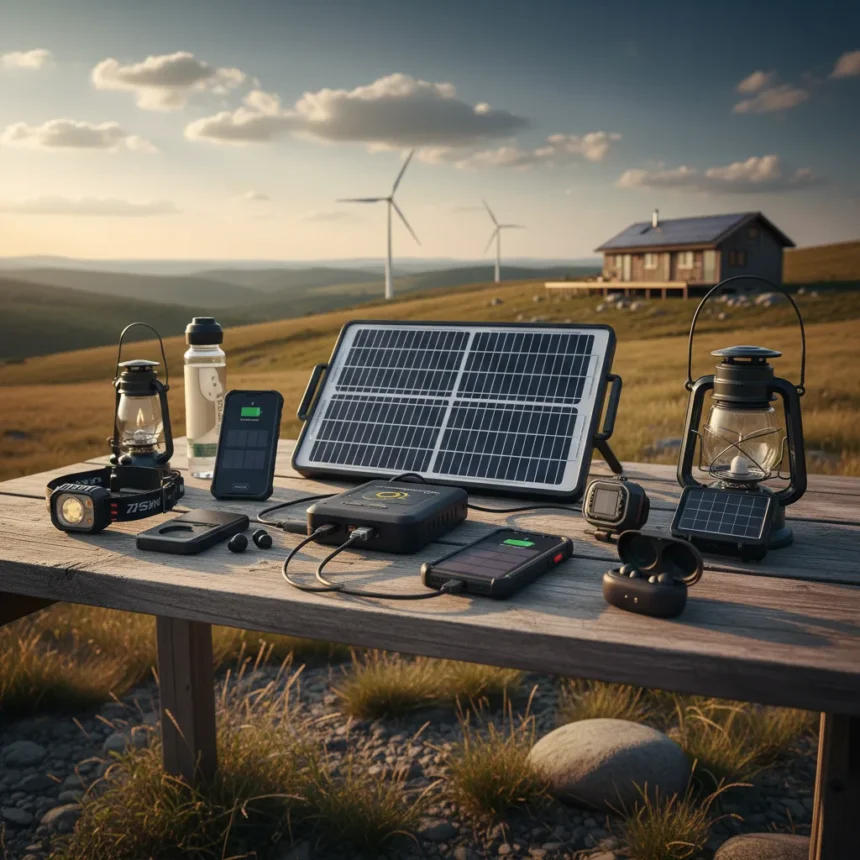
Solar-powered gadgets harness sunlight to keep your devices running without traditional outlets, making them ideal for off-grid adventures and reducing reliance on wall chargers. As long as the sun is shining, these clever devices continue operating and charging your phones, tablets, and laptops through built-in photovoltaic cells.
Key Takeaways
- Solar-powered gadgets enable off-grid operation by converting sunlight directly into usable energy.
- Solar bags and backpacks integrate charging panels for continuous power during outdoor activities.
- Some solar power banks use recycled materials, combining renewable energy with sustainable manufacturing.
- Voltaic Systems Array panels can charge phones in 1.5 hours or laptops in 11 hours with adjustable voltage.
- DIY solar bag options exist for customizing any backpack with solar hardware.
How Solar-powered Gadgets Work for Off-Grid Living
Solar-powered gadgets operate by converting photons from sunlight into electrical current through semiconductor photovoltaic cells. Unlike traditional power banks that require electricity to charge, these devices generate power continuously whenever exposed to direct sunlight. The energy flows directly into attached devices or internal batteries, eliminating the need for wall outlets entirely. This makes them particularly valuable for camping, hiking, and extended travel where electrical infrastructure is unavailable.
The efficiency of solar-powered gadgets depends on sunlight intensity, panel surface area, and the quality of the photovoltaic cells. Devices designed for outdoor use typically prioritize durability and weather resistance alongside energy conversion. Some models include voltage regulation to prevent damage to sensitive electronics, while others feature battery storage to capture excess energy for use during cloudy periods or nighttime.
Solar Bags and Backpacks: Wearable Power Generation
Solar bags integrate charging panels directly into their fabric or exterior surfaces, allowing you to generate power while moving through outdoor environments. Models like the Glory Solar Cycling Backpack, SunnyBAG, and Birksun Boost embed photovoltaic cells into the pack material, creating a seamless charging solution for adventure gear. These bags typically include USB ports or charging connectors to link directly to phones, cameras, and other portable electronics.

The Voltaic Systems Array represents a more advanced approach, featuring 10-watt solar cells with an integrated voltage slider that lets users adjust power output for different device types. This design can charge a smartphone in approximately 1.5 hours under direct sunlight, while a laptop requires around 11 hours of continuous charging. Other notable options include The Bugout Solar Backpack and Lifepack, each offering different capacity and integration approaches for outdoor professionals and travelers.
For those seeking customization, DIY solar bag options exist through platforms like Instructables, enabling users to install solar hardware onto any existing backpack using standard components. This approach offers flexibility for people who already own bags they prefer but want to add renewable charging capability.



Solar Power Banks and Renewable Charging Solutions
Solar power banks provide portable charging without requiring access to electrical outlets, making them essential for extended outdoor trips and emergency preparedness. Many modern solar power banks incorporate recycled materials in their construction, combining renewable energy generation with sustainable manufacturing practices. These devices typically feature internal battery storage, allowing them to accumulate solar energy during daylight hours and release it on demand.
The advantage of solar power banks over wall-powered alternatives lies in their independence from infrastructure. A hiker, camper, or disaster survivor can recharge devices indefinitely as long as daylight is available. Some models include multiple USB ports to charge several devices simultaneously, while others prioritize compact design for backpack integration. The trade-off is slower charging speeds compared to grid-powered alternatives, particularly in low-light conditions or when charging high-capacity devices like laptops.
Choosing Solar-powered Gadgets for Your Needs
Selecting the right solar-powered gadgets depends on your primary use case, travel style, and power requirements. If you need continuous charging while moving, a solar bag or backpack provides integrated power generation without adding weight beyond what you’d normally carry. For stationary camps or base camps, a dedicated solar panel array like the Voltaic Systems Array offers higher wattage and faster charging speeds. Solar power banks work best as backup charging solutions or for light-duty devices like phones and small cameras.
Consider the climate and season when choosing solar equipment. Devices perform best in sunny, equatorial regions with consistent daylight. In northern climates or during winter months, solar gadgets generate significantly less power due to lower sun angles and shorter daylight hours. Cloudy regions may require supplementary charging methods or larger panel surfaces to maintain adequate power generation. For adventure travelers in sunny regions, solar-powered gadgets can eliminate charging anxiety entirely, while urban users may find them most useful as emergency backup solutions.



Are solar-powered gadgets reliable in cloudy weather?
Solar-powered gadgets continue generating electricity in cloudy conditions, but at reduced efficiency compared to direct sunlight. Overcast skies typically reduce output by 50-80%, meaning charging times extend significantly. For reliable operation in consistently cloudy climates, pairing solar gadgets with internal battery storage or supplementary power sources ensures devices stay charged during extended gray periods.
Can solar-powered gadgets charge laptops quickly?
Charging laptops with solar-powered gadgets is slower than traditional wall chargers. The Voltaic Systems Array requires approximately 11 hours of direct sunlight to fully charge a laptop. For faster results, use solar panels during peak sunlight hours and consider keeping devices in low-power mode or closing unnecessary applications during charging.
What’s the difference between solar bags and solar power banks?
Solar bags integrate charging panels into the fabric and generate power while you wear them, providing continuous charging during movement. Solar power banks are portable standalone units that store solar energy in internal batteries, offering flexibility in placement but requiring manual positioning toward sunlight. Bags suit active outdoor use, while power banks work better for stationary camps or emergency backup charging.
Solar-powered gadgets represent a genuine shift toward off-grid independence for outdoor enthusiasts and sustainability-focused users. Whether you choose integrated solar bags, dedicated power banks, or DIY solutions, these devices eliminate the anxiety of dead batteries during adventures. The technology works best in sunny climates with extended daylight, but even in less ideal conditions, solar gadgets provide valuable supplementary charging capacity that reduces reliance on traditional electrical infrastructure.
Where to Buy
38% OFFBaseusSecurity S2 camera$79.96$129.99shop now | 46% OFFAnkerSolix C1000 Portable Power Station$428.99$799shop now | UrbanistaMalibu Solar Bluetooth Speaker£54.99shop now
Edited by the All Things Geek team.
Source: TechRadar