





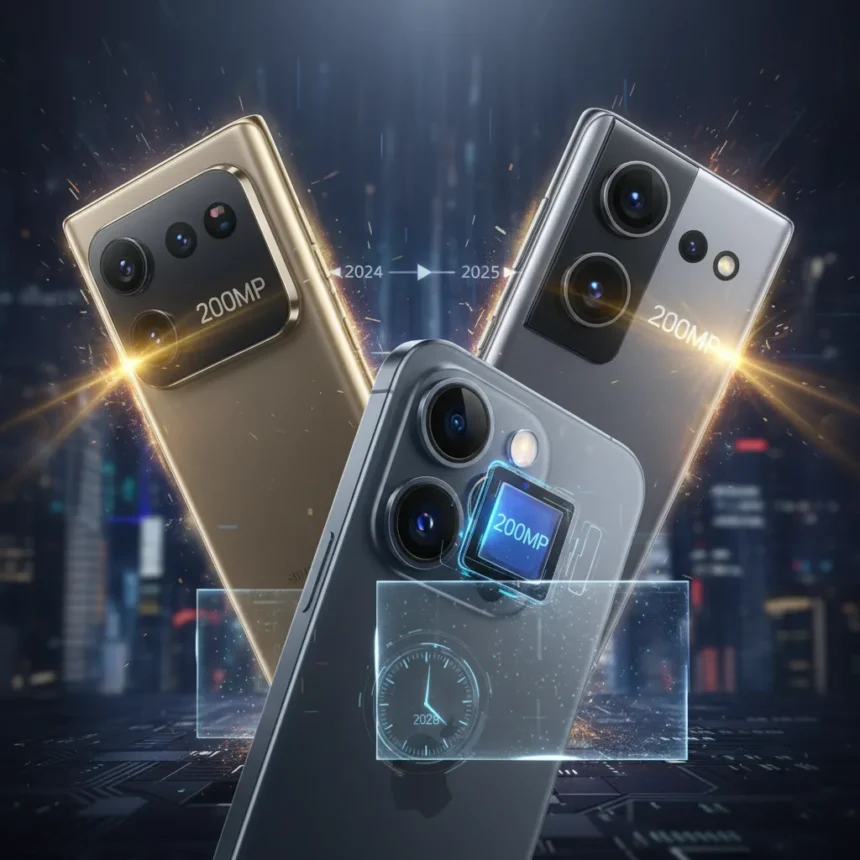
Apple is testing a 200-megapixel telephoto sensor for future iPhone models, but don’t expect it before 2028. The company has been evaluating a periscope-type camera with a 1/1.12-inch sensor size in prototypes, matching configurations already seen in Android flagships like the Oppo Find X9 Ultra. Yet repeated delays and supply chain complications have pushed the iPhone 200-megapixel camera ambitions further into the future, leaving Apple trailing rivals in the race for ultra-zoom dominance.
Key Takeaways
- Apple is testing a 200MP periscope telephoto sensor for future iPhones, but adoption is at least two years away.
- Current iPhones use 48MP sensors; a 200MP upgrade would enable sharper cropping and larger prints.
- Samsung Galaxy S23 Ultra already offers 200MP rear cameras, giving Android flagships a significant resolution advantage.
- Leaker Digital Chat Station shifted the timeline from a possible 2027 launch to 2028, aligning with Morgan Stanley predictions.
- The sensor matches specs rumored for Oppo’s flagship, showing Apple is pursuing similar hardware strategies to close the gap.
Why Apple’s Camera Roadmap Just Got Longer
Apple has been testing a 200-megapixel telephoto camera for prototypes, but the technology remains years away from production. According to leaker Digital Chat Station on Weibo, the company evaluated a periscope-type sensor with a 1/1.12-inch configuration, the same setup Oppo is using in its flagship models. However, supply chain realities have forced Apple to delay. What once seemed like a possible 2027 debut for the iPhone 19 Pro has now shifted to a 2028 timeline, aligning with analyst predictions from Morgan Stanley.
The shift reflects a broader truth about smartphone camera development: megapixel counts are easy to announce, but delivering them reliably at scale is not. Apple’s caution here is understandable. The company has historically prioritized computational photography and software optimization over raw sensor specifications. Yet the gap is widening. Samsung introduced its 200MP rear camera in the Galaxy S23 Ultra back in 2023, and competitors like Oppo have since matched or exceeded that capability. Apple’s current 48-megapixel sensors, while capable, are being outresolved by rivals in the telephoto category.
How the iPhone 200-megapixel camera stacks against Android rivals
The iPhone 200-megapixel camera sensor Apple is testing would be a significant upgrade, but it arrives late to a market where Android manufacturers have already staked claims. Samsung’s Galaxy S23 Ultra set the standard with its 200MP rear camera, enabling users to capture more detail and crop photos more aggressively without losing quality. Oppo’s Find X9 Ultra uses a similar 200MP telephoto with a larger sensor, giving it an edge in low-light performance. Apple’s tested sensor matches Oppo’s specifications, suggesting the company is following a proven formula rather than charting new ground.

The real advantage of a 200-megapixel telephoto lies not in everyday photography but in specific use cases: printing large photos, cropping for composition, and capturing distant subjects with detail. For casual iPhone users, the jump from 48MP to 200MP may feel incremental. But for professionals and enthusiasts, the difference is material. By delaying until 2028, Apple risks ceding another generation of early adopters to Samsung and Oppo, both of which have already proven they can integrate high-megapixel sensors without sacrificing usability or battery life.
What’s holding Apple back?
Supply chain constraints and sensor maturation are the primary culprits. Digital Chat Station, whose track record on Apple leaks has been reasonably solid, first reported the 200MP testing in May 2025. Since then, updates in January, March, and April 2026 have consistently pushed the launch window further out. The April update was the most telling: instead of a possible 2027 debut, the leaker stated that 2028 seemed more plausible, effectively confirming that Apple’s initial timelines were too optimistic.


This is not unusual for Apple. The company often tests technologies for years before deploying them, ensuring they meet exacting standards for reliability and integration. A premature launch of a 200MP telephoto could introduce autofocus issues, thermal management problems, or software bugs that would damage Apple’s reputation far more than a two-year delay. Yet the cost of caution is competitive vulnerability. By 2028, competitors will have iterated further, possibly moving to 300MP sensors or alternative imaging technologies that Apple has not yet publicly discussed.
What happens to iPhone’s camera strategy in the meantime?
Apple is unlikely to introduce a 200-megapixel telephoto in the iPhone 16, iPhone 17, or iPhone 18. The company will continue refining its 48MP telephoto sensors and leaning on computational photography to compete. This approach has merit—Apple’s Night mode and computational zoom remain industry-leading—but it does not address the raw-resolution gap that Android users can point to on spec sheets. In the marketing battle for camera supremacy, megapixels still matter, even if they are not the whole story.
The broader question is whether Apple’s delay signals a shift in camera strategy or merely a manufacturing bottleneck. If the latter, the 2028 iPhone 21 will arrive as a formidable competitor with a proven sensor design. If the former, Apple may be reconsidering whether megapixel races are worth the engineering effort. Either way, the iPhone 200-megapixel camera ambitions are on hold, and the Ultra camera wars will be decided by others for at least the next two years.
Will the iPhone 21 finally match Samsung’s camera specs?
Yes, if timelines hold. The iPhone 21, expected in 2028, should include the 200MP telephoto sensor that Apple is currently testing. This would bring the iPhone into parity with Samsung’s existing offerings, though by then Samsung will likely have moved forward with higher megapixel counts or alternative sensor technologies.



Why is Apple waiting until 2028 for the iPhone 200-megapixel camera?
Supply chain maturation and sensor reliability testing are the main reasons. Apple initially hoped for a 2027 launch, but repeated delays have pushed the timeline back. The company prioritizes stable production over rushing new technology to market.
How does a 200MP sensor improve iPhone photography?
A 200-megapixel telephoto enables sharper cropping, larger prints without quality loss, and better detail capture at distance. For most users, the improvement is incremental, but professionals benefit significantly from the extra resolution.
Apple’s camera ambitions are real, but patience is the price of perfection—or at least, that is the company’s bet. Whether that patience pays off in 2028 depends on whether competitors stand still, which history suggests they will not.
Where to Buy
This article was written with AI assistance and editorially reviewed.
Source: T3