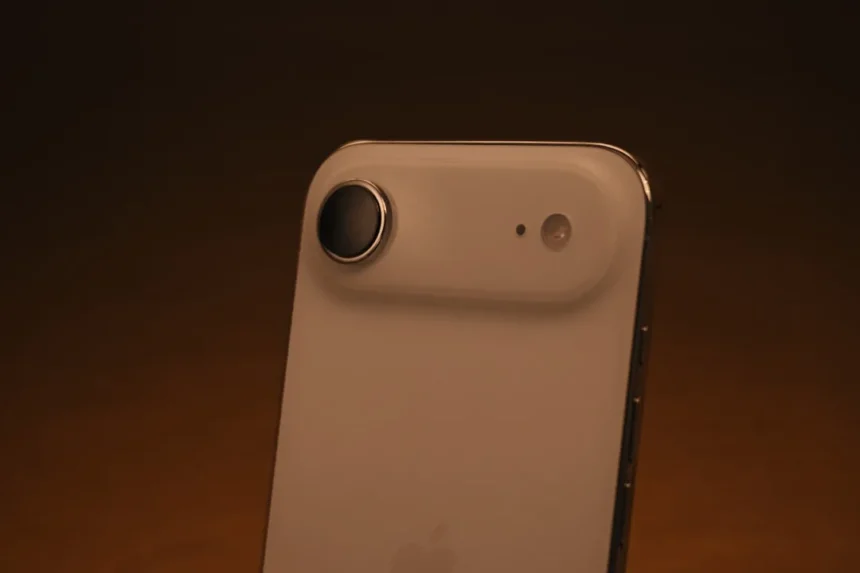
The iPhone Air 2 camera concept addresses what many see as the original iPhone Air’s most glaring compromise: a single rear lens. Launched in autumn 2025 alongside the iPhone 17 lineup, the original iPhone Air prioritized extreme thinness—just 5.6mm—over the multi-camera versatility that defines modern flagship phones. A new concept render proposes adding an ultra-wide camera to the next generation, potentially solving the portability-versus-capability trade-off that frustrated early adopters.
Key Takeaways
- iPhone Air 2 concept adds a second ultra-wide camera to fix the original Air’s single-lens limitation
- Original iPhone Air is 5.6mm thick, slimmer than iPhone 17, 17 Pro, and 17 Pro Max models
- iPhone Air retains 6.5-inch 120Hz display, Face ID, and MagSafe despite ultra-thin profile
- iPhone Air positioned as rival to Samsung Galaxy S25 Edge in the slim-phone category
- Mark Gurman predicts iPhone Air will eventually gain Pro-level power in the future
Why the iPhone Air 2 camera upgrade makes sense
The original iPhone Air’s single rear camera was a deliberate sacrifice for thinness. Apple stripped down the back camera system to maintain the 5.6mm profile, betting that users would accept the limitation in exchange for unmatched portability. But that bet created a practical problem: a flagship phone without ultra-wide or telephoto capability feels incomplete to anyone accustomed to standard iPhone Pro features. Adding a second ultra-wide lens to the iPhone Air 2 would preserve the slim design while restoring the photographic flexibility that users expect.
The challenge lies in fitting two cameras into an already impossibly thin chassis. The iPhone Air 2 concept does not confirm whether Apple could add a second lens without increasing thickness beyond the original Air’s ultra-slim profile. If the iPhone Air 2 requires even a millimeter more depth, Apple faces a design dilemma: does thinness remain the defining feature, or does capability win? This tension explains why the iPhone Air 2 camera rumors conflict with other leaks suggesting a single rear camera again.
iPhone Air 2 vs. original Air: what would actually change
The iPhone Air 2 is expected to retain the original Air’s 6.5-inch 120Hz display, Face ID recognition, and overall design language. The aluminum or titanium construction that enables the thin profile would remain unchanged. What the iPhone Air 2 concept proposes is surgical: one additional lens, positioned alongside the existing camera module. This is not a complete redesign—it is the smallest possible fix to the original Air’s most obvious weakness.


By comparison, the Samsung Galaxy S25 Edge occupies similar territory in the slim-phone market, but Samsung’s approach differs. Where the Galaxy S25 Edge balances thinness with a dual-camera system, the original iPhone Air chose thinness almost exclusively. The iPhone Air 2 concept suggests Apple learned from that decision and is willing to add minimal thickness if it means restoring practical versatility.
Will Apple actually do this for iPhone Air 2?
The iPhone Air 2 camera upgrade remains speculative. Apple is only considering the dual-camera addition, and no official confirmation exists. Analyst Mark Gurman has suggested that the iPhone Air line will eventually gain Pro-level power, but he framed that as a long-term trajectory rather than an immediate iPhone Air 2 feature. The concept render demonstrates what is possible, not what is guaranteed.



The broader pattern suggests Apple views the iPhone Air as a stepping stone. Just as the iPad Air evolved from a portability-first device into something many users prefer over the Pro model, the iPhone Air may follow a similar path. The iPhone Air 2 camera concept is a logical first step: keep the thinness, add back the features that make a phone feel complete.
Is the iPhone Air 2 just a concept, or could it actually launch?
The iPhone Air 2 is currently a concept based on rumors and design speculation, not an official Apple product. The original iPhone Air launched in autumn 2025, meaning any iPhone Air 2 release remains at least a year away. During that time, camera technology will improve, and Apple’s engineering constraints may shift. What seems difficult today—fitting dual cameras into a 5.6mm frame—might become feasible by 2026 or 2027.
Could the iPhone Air 2 add other upgrades beyond the camera?
The research available focuses specifically on the iPhone Air 2 camera as the defining potential upgrade. While the original Air already includes Face ID, MagSafe, an action button, and a 120Hz display, future improvements could extend to processor power or battery life. However, Gurman’s comments suggest that major power upgrades are planned for later iterations, not the immediate iPhone Air 2.
The iPhone Air 2 camera concept matters because it represents Apple’s smallest possible concession to practicality. By adding one lens, Apple could transform the iPhone Air from a design statement into a genuinely usable flagship. Whether that change actually happens depends on whether Apple believes its customers value thinness more than versatility—a question the original Air’s market reception will ultimately answer.



Where to Buy
Edited by the All Things Geek team.
Source: T3