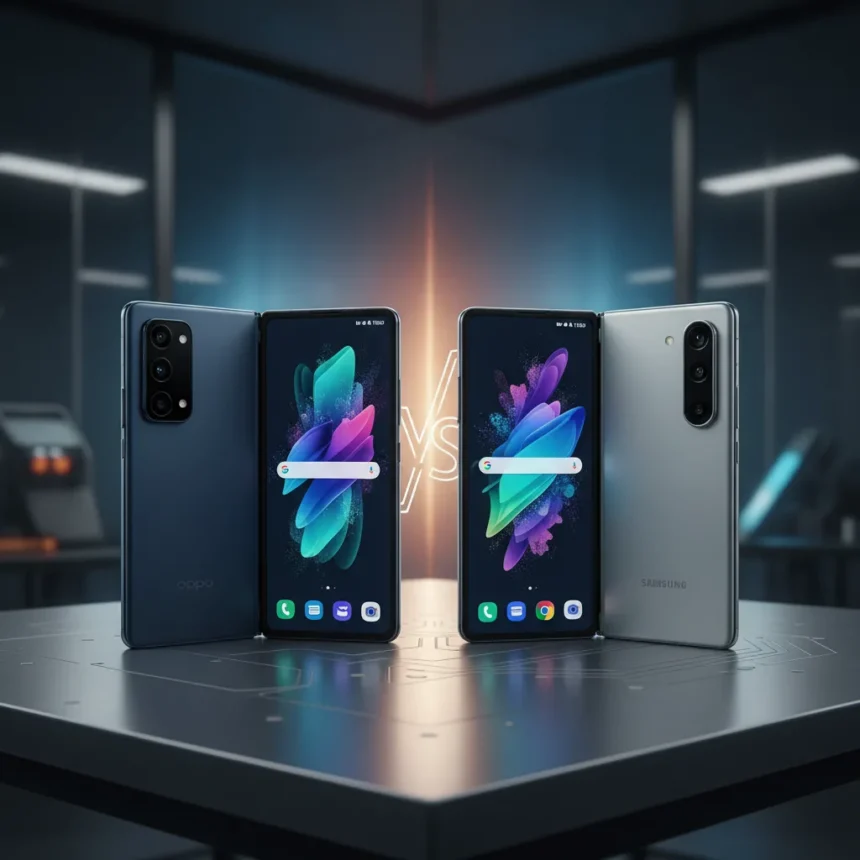
OPPO Find N6 vs. Galaxy Z Fold 7 represents the most compelling foldable phone rivalry of 2026, pitting OPPO’s aggressive hardware push against Samsung’s established market dominance. The OPPO Find N6 is a foldable smartphone made by OPPO, launched in March 2026, featuring a Snapdragon 8 Elite Gen 5 processor, a 6000mAh battery, and a distinctive “Zero-Feel Crease” design using 3D Liquid Printing. The Galaxy Z Fold 7, Samsung’s latest flagship foldable, competes in the same premium segment but with different design philosophy and software integration.
Key Takeaways
- OPPO Find N6 uses Snapdragon 8 Elite Gen 5 processor with 6000mAh battery and 80W wired charging
- Device features 8.12-inch inner OLED display and weighs 225g when folded
- Zero-Feel Crease technology aims to reduce visible fold line through 3D Liquid Printing
- 200MP main camera positions OPPO in the high-end imaging segment
- 8.93mm thickness when folded makes it competitive in portability
Display and Design: The Crease Question
The OPPO Find N6 addresses the most persistent complaint about foldables: the visible crease. OPPO’s 3D Liquid Printing process claims to deliver a “Zero-Feel Crease,” making the fold line less noticeable both visually and tactilely. The inner display spans 8.12 inches, offering substantial screen real estate for multitasking and media consumption. At 225g when folded and just 8.93mm thick, the Find N6 achieves impressive portability for a device of its class. Samsung’s approach with the Galaxy Z Fold 7 traditionally emphasizes refinement over radical innovation, but the Find N6’s crease reduction technology represents a genuine hardware breakthrough that Samsung has not yet matched in comparable fashion.
Performance and Battery: Where OPPO Pushes Harder
The Snapdragon 8 Elite Gen 5 processor powers the OPPO Find N6, delivering flagship-tier performance for gaming, video editing, and multitasking. Battery capacity reaches 6000mAh with dual charging support: 80W wired and 50W wireless. This combination addresses one of foldables’ traditional weaknesses—users demanded larger batteries to sustain the power demands of big displays and premium processors. The Find N6’s charging speeds exceed what most competitors offer, meaning users can refuel quickly during the day without committing to extended charging sessions.
Samsung’s Galaxy Z Fold 7 typically features comparable or slightly lower battery capacity in previous generations, though exact specifications for the current model require direct comparison. The Find N6’s emphasis on fast charging suggests OPPO recognized that raw battery size alone no longer satisfies power users—speed matters equally.


Camera System: The 200MP Advantage
OPPO equips the Find N6 with a 200MP main camera sensor, positioning the device in the ultra-high-resolution imaging segment. This megapixel count outpaces many competitors and enables detailed cropping and zoom capabilities without quality loss. For content creators and photography enthusiasts, the Find N6’s camera system represents a genuine differentiator in the foldable market, where imaging quality has historically taken a back seat to form factor innovation.
Software Integration and Ecosystem
Samsung’s Galaxy Z Fold 7 benefits from deep integration with One UI and Samsung’s ecosystem of apps, services, and cross-device continuity features. OPPO’s Find N6 runs ColorOS and integrates with OPPO’s ecosystem, which is expanding but remains less mature in Western markets than Samsung’s offering. For users already invested in Samsung devices—Galaxy Buds, Galaxy Watches, SmartThings—the Z Fold 7 offers seamless continuity. OPPO users, particularly those in Asia where the brand has stronger presence, will find better ecosystem synergy with the Find N6.


Which Foldable Should You Actually Buy?
The OPPO Find N6 wins on hardware innovation, particularly the crease reduction technology, faster charging, and aggressive camera specs. If you prioritize latest design and don’t need deep ecosystem integration with other devices, the Find N6 deserves serious consideration. The Galaxy Z Fold 7 remains the safer choice for users embedded in Samsung’s ecosystem or those who prioritize software stability and long-term support maturity. Neither phone is objectively “better”—they serve different priorities. Choose the Find N6 if hardware innovation excites you. Choose the Z Fold 7 if ecosystem continuity and software polish matter more.
Does the OPPO Find N6 have a better display than the Galaxy Z Fold 7?
The OPPO Find N6’s 8.12-inch inner OLED display delivers excellent brightness and color accuracy. Direct comparison with the Galaxy Z Fold 7 requires side-by-side testing, but both devices use premium OLED panels. The Find N6’s claimed crease reduction may make the display experience feel smoother, though this is subjective.
How does the OPPO Find N6 battery compare to previous foldables?
The 6000mAh battery with 80W wired and 50W wireless charging represents a significant step forward for OPPO’s foldable line. Previous-generation foldables typically offered smaller batteries with slower charging, making the Find N6’s dual fast-charging approach a meaningful upgrade for all-day usage.
Is the OPPO Find N6 available outside Asia?
OPPO’s global availability varies by region. The Find N6 launched in March 2026, but distribution outside Asia remains limited compared to Samsung’s worldwide presence. Check local retailers and OPPO’s official channels for regional availability before making a purchase decision.


The OPPO Find N6 vs. Galaxy Z Fold 7 decision ultimately hinges on whether you value hardware innovation or ecosystem integration more. OPPO has delivered a genuinely competitive foldable with features Samsung has not yet replicated, but Samsung’s ecosystem advantage and software maturity remain formidable. For early adopters willing to embrace a newer ecosystem, the Find N6 offers compelling value. For users seeking the safest, most integrated foldable experience, Samsung still holds the crown.
Where to Buy
Check Amazon | $1,598.50 at Amazon
Edited by the All Things Geek team.
Source: Android Central