





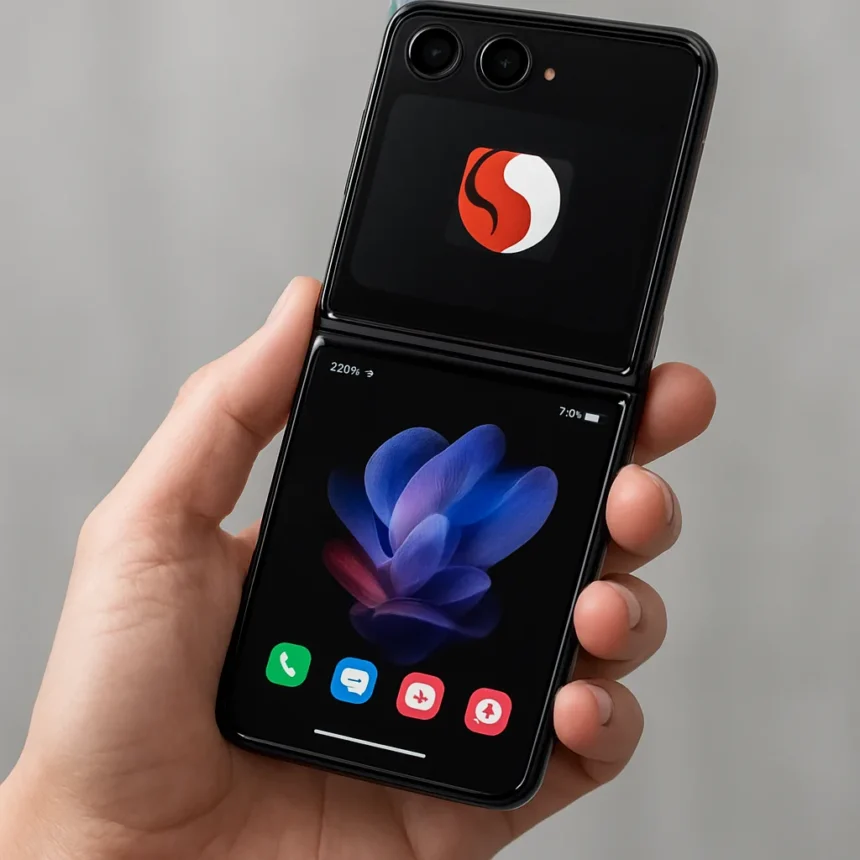
The Galaxy Z Flip 8 Snapdragon rumor signals Samsung may be reversing course on its chipset strategy for foldables. After equipping the Galaxy Z Flip 7 entirely with Exynos processors, Samsung could bring back Qualcomm Snapdragon chips to at least some markets with the Flip 8, according to Android Central. This matters because chipset selection directly affects performance, AI capabilities, and how Samsung positions its flagship foldable against competitors.
Key Takeaways
- Samsung may split Galaxy Z Flip 8 chipsets between Snapdragon and Exynos 2600 depending on region
- The Exynos 2600 is a 2nm processor with a new CPU layout that Samsung claims is 39% faster
- Galaxy Z Flip 7 used Exynos 2500 exclusively, marking a departure from Snapdragon
- Expected storage options include 256GB and 512GB with 12GB of RAM
- The Flip 8 could feature 25W wired charging and possibly 10W wireless charging
Why Samsung Abandoned Snapdragon for the Flip 7
Samsung made a bold move with the Galaxy Z Flip 7, ditching Snapdragon entirely in favor of its in-house Exynos 2500 processor. This was a notable departure from the Flip 6, which relied on Snapdragon 8 Gen 3. The shift reflected Samsung’s broader push to control more of its supply chain and differentiate its foldables through proprietary silicon. However, the decision reportedly created friction with some buyers who preferred Snapdragon’s proven track record and broader software optimization across Android apps.
The Galaxy Z Flip 8 Snapdragon Return: What We Know
The Galaxy Z Flip 8 Snapdragon rumor suggests Samsung is reconsidering a global one-chipset approach. Rather than universally adopting Exynos, Samsung could split production by region, with some markets receiving Snapdragon while others get the new Exynos 2600. This mirrors Samsung’s historical practice of varying chipsets by geography—a strategy that balances supply chain flexibility with regional performance preferences.
The Exynos 2600 itself is positioned as a significant upgrade. Built on a 2nm process with a new CPU layout, Samsung claims the chip delivers 39% faster performance than its predecessor. The processor is expected to power not just the Flip 8 but also the Galaxy S26 in select global markets. If confirmed, this dual-flagship strategy would give Samsung’s in-house silicon real-world validation across its most demanding devices.


Specs and Features Expected for the Flip 8
Beyond chipset rumors, the Galaxy Z Flip 8 is expected to ship with 12GB of memory and storage options of 256GB and 512GB. Charging support should include 25W wired charging, with 10W wireless charging still uncertain. Android Central also suggests the Flip 8 could add Qi2 magnets for better accessory compatibility, though this remains speculative. More ambitious rumors point to a redesigned hinge mechanism and a crease-free folding display, but neither has been confirmed.
The software picture is less clear. Depending on Samsung’s launch timing, the Flip 8 could arrive with either One UI 9 based on Android 17 or One UI 8.5 based on Android 16. This timing uncertainty reflects how Samsung’s development roadmap interacts with Google’s Android release schedule—a reminder that foldable launches are complex logistical undertakings.



How This Compares to the Flip 7
The Galaxy Z Flip 7 established a baseline with its Exynos 2500 processor and Exynos-only strategy. If the Flip 8 truly does split chipsets by region, it would represent a strategic recalibration rather than a wholesale return to Snapdragon dominance. The Flip 6’s universal Snapdragon approach had clear benefits for consistency, but Samsung’s move to Exynos-first reflected confidence in its silicon roadmap. A hybrid strategy for the Flip 8 suggests Samsung wants the best of both worlds: Exynos performance validation in premium markets alongside Snapdragon reliability where buyers demand it.
Why This Rumor Matters Now
Chipset selection is rarely just technical—it shapes the entire product narrative. Snapdragon carries brand recognition and proven stability across millions of Android devices. Exynos carries Samsung’s ambition to own its destiny as a chipmaker. The Galaxy Z Flip 8 Snapdragon rumor signals that Samsung may be listening to market feedback while still pursuing in-house silicon dominance. Whether this flexibility extends to the final product remains unclear, but the rumor itself reveals how competitive foldable markets have become.
Will the Galaxy Z Flip 8 definitely get Snapdragon in my region?
No. The Snapdragon return is a rumor, not a confirmed decision from Samsung. Android Central’s reporting suggests some regions may receive Snapdragon while others get Exynos, but no final regional allocation has been verified. Historically, the U.S., Canada, China, India, and South Korea have seen different chipsets in Samsung foldables, but the Flip 8’s exact split is not yet public.
What is the Exynos 2600, and is it better than Snapdragon?
The Exynos 2600 is Samsung’s next-generation processor built on a 2nm process with a redesigned CPU layout. Samsung claims it delivers 39% faster performance than the Exynos 2500. Whether it outperforms Snapdragon depends on real-world testing, which has not yet occurred. Snapdragon and Exynos have historically traded performance leads depending on the workload and software optimization.



When will the Galaxy Z Flip 8 launch?
Samsung has not announced an official launch date for the Galaxy Z Flip 8. Based on historical patterns, Samsung typically unveils new foldables in the first half of the year, but this is not confirmed for the Flip 8. Pricing and exact availability remain unannounced.
The Galaxy Z Flip 8 Snapdragon rumor reveals Samsung at a crossroads: pursuing its own silicon ambitions while acknowledging that some buyers still prefer Snapdragon’s proven ecosystem. Whether the Flip 8 truly splits chipsets by region will become clear only when Samsung makes an official announcement. Until then, the rumor serves as a useful reminder that foldable strategy involves more than just engineering—it reflects Samsung’s broader bet on vertical integration versus market pragmatism.
Edited by the All Things Geek team.
Source: Android Central




