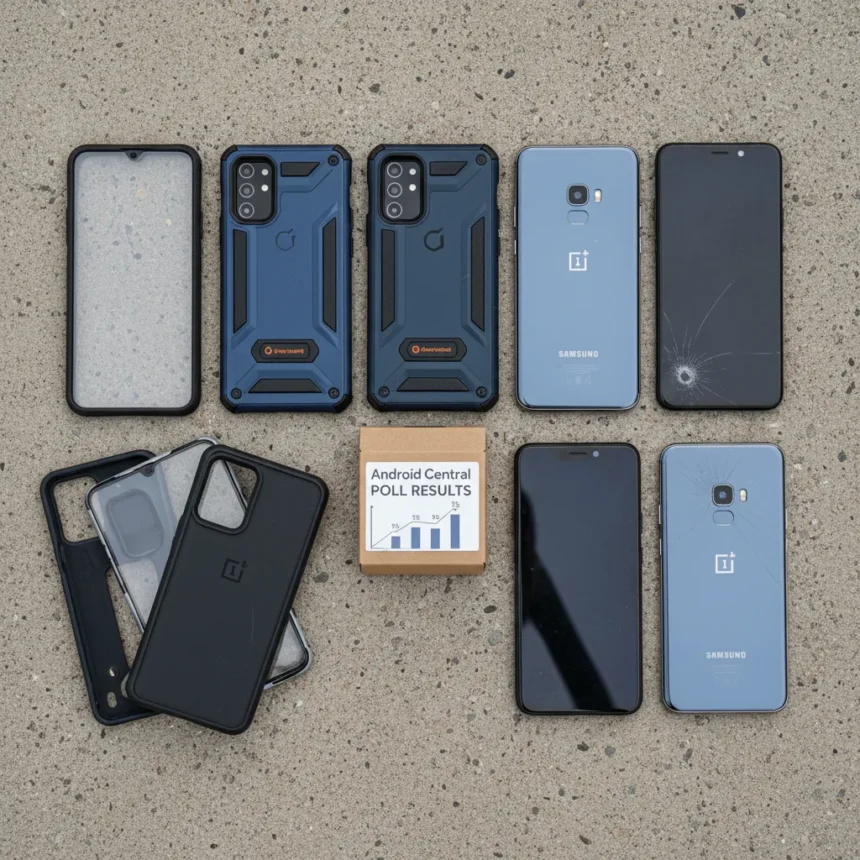
Smartphone protection habits vary wildly among users—some treat their phones like fragile museum pieces, while others seem determined to test how much damage modern glass can actually withstand. Android Central’s latest poll asks the question directly: do you use a case and screen protector, or are you living on the edge?
Key Takeaways
- Android Central’s poll examines whether users protect phones with cases and screen protectors or go unprotected.
- Smartphone protection habits remain divided among Android users globally.
- Physical safeguards like cases and screen protectors represent the most common protection approach.
- The debate reflects broader tensions between aesthetics, durability, and risk tolerance.
- User preferences on smartphone protection habits inform accessory market trends.
Why Smartphone Protection Habits Matter Now
The question of smartphone protection habits has never been simpler to answer, yet the actual decision remains surprisingly personal. Modern phones cost hundreds of dollars, yet their glass bodies invite damage from even minor drops. Android Central’s poll taps into a genuine divide among users: those who view protection as essential insurance and those who believe the risk is overblown.
This isn’t just about vanity or paranoia. Smartphone protection habits directly affect repair costs, resale value, and long-term usability. A cracked screen or dented frame doesn’t just look bad—it can compromise functionality, reduce trade-in value, and force expensive repairs that could have been prevented. Yet many users resist protection because cases add bulk, screen protectors reduce clarity, and both obscure the phone’s design.
Android Central’s engagement with these practical questions reflects broader industry interest in how users actually live with their devices. The poll sits at the intersection of design philosophy and pragmatism—manufacturers want their phones to look premium, but users need them to survive real-world use.


The Case for Protection: Why Most Users Opt In
The majority of smartphone users choose some form of protection, whether a case, screen protector, or both. This preference reflects straightforward risk calculation: phones are expensive, drops are inevitable, and protection is cheap insurance compared to repair bills. A quality case costs between 15 and 50 dollars, while screen replacement can run 200 to 400 dollars depending on the phone.
Beyond economics, protection habits shape how people use their phones. Users with cases tend to be less anxious about everyday handling—they can toss the phone onto a couch, set it down on hard surfaces, or hand it to a friend without constant worry. Screen protectors add another layer, protecting against scratches that accumulate over a phone’s lifespan and can eventually affect touch sensitivity or visibility.


The psychology matters too. For many users, smartphone protection habits feel like basic responsibility. It’s the same logic that drives people to use seatbelts or lock their doors—not because disaster is likely, but because the cost of protection is negligible compared to the potential consequence.
The Case Against: Why Some Users Reject Protection
Not everyone buys the protection argument. A vocal minority of users deliberately avoid cases and screen protectors, arguing that modern phones are durable enough to handle normal use without safeguards. This perspective values the phone’s original design, weight, and tactile feel over the peace of mind that protection provides.
These users often cite the engineering advances in smartphone glass—modern Gorilla Glass and ceramic shields are genuinely tougher than they were five years ago. They point out that many phones survive drops onto hard surfaces without visible damage. And they note that cases obscure the phone’s aesthetics, add weight, and can trap heat during intensive use.
There’s also an element of confidence or fatalism in this approach. Some users have simply never broken a phone and see protection as unnecessary. Others accept that if they do drop their phone and damage it, they’ll deal with the consequences. It’s a choice that reflects different attitudes toward risk, money, and how much aesthetic compromise feels acceptable.


What Android Central’s Poll Reveals About User Preferences
Android Central’s poll on smartphone protection habits serves as a barometer for real-world user behavior rather than aspirational design preferences. The publication regularly surveys its audience on practical phone decisions—from unlock methods to update preferences to whether they prefer locked or unlocked devices. These polls matter because they capture how people actually use Android phones in daily life, not how manufacturers wish they would.
The protection question is particularly revealing because it cuts across demographics. Casual users, power users, professionals, and enthusiasts all have to make the same choice. Someone’s smartphone protection habits say something about their priorities: durability and peace of mind, or design purity and tactile experience. Neither choice is objectively wrong, but the split reveals how diverse Android’s user base truly is.
This diversity in smartphone protection habits also reflects regional and economic differences. In markets where phone repair is expensive or difficult to access, protection rates tend to be higher. In regions with abundant repair services or where users upgrade frequently, protection might feel less critical. Android Central’s global audience means the poll captures these variations in real time.
How Smartphone Protection Habits Shape the Accessory Market
The smartphone case and screen protector industry exists because of user preferences revealed in surveys like this one. Billions of dollars flow into protective accessories annually, driven by the simple fact that millions of people choose protection over risk. Smartphone protection habits directly fund entire companies devoted to designing cases, screen protectors, and hybrid solutions.
This market responds to the tension that Android Central’s poll highlights. Manufacturers create slim cases that add minimal bulk, tempered glass screen protectors that preserve clarity, and premium materials that feel good while protecting. The diversity of options—rugged cases for outdoor enthusiasts, minimalist cases for design purists, modular solutions for people who want flexibility—reflects the genuine spectrum of smartphone protection habits among users.
Interestingly, the market also reveals that protection habits vary by phone model. Flagship phones costing 1000 dollars or more see higher protection adoption rates than budget phones. This makes sense economically—the more expensive the device, the more protection feels justified. But it also suggests that smartphone protection habits are partly about device value and partly about personal risk tolerance.
Does Your Phone’s Design Matter to Your Protection Choice?
One often-overlooked factor in smartphone protection habits is the phone’s original design. Some phones feel inherently more durable—solid metal frames, matte glass backs, curved edges that distribute impact. Others feel fragile from the moment you unbox them—flat glass, sharp corners, premium materials that seem designed to show every fingerprint and scratch.
Users with phones that feel robust might skip protection more readily. Those with phones that feel delicate tend toward protection. It’s not rational—the actual durability might be identical—but perceived durability influences smartphone protection habits significantly. A phone that feels premium but fragile creates anxiety; a phone that feels solid creates confidence.
This perception gap matters for manufacturers. Phones designed to feel premium sometimes sacrifice durability in ways that drive users toward protection. Conversely, phones designed for durability might feel less elegant but require less protection, which some users actually prefer because it lets them enjoy the phone’s original design.
Is a case or screen protector really necessary?
Necessity depends on your circumstances. If you’re careful with phones, rarely drop them, and don’t mind paying for repairs if damage occurs, protection is optional. If you use your phone heavily, work in environments with hard surfaces, or want to preserve resale value, protection is practical insurance. Modern phones are durable, but they’re not indestructible—one bad drop at the wrong angle can cause expensive damage.
What’s the best way to protect a smartphone without a case?
If you want to avoid cases, prioritize careful handling: use a phone stand instead of propping it against surfaces, keep it in a dedicated pocket away from keys and coins, and use a screen protector as a compromise—it’s thin, barely visible, but catches scratches and minor impacts. Some users also opt for a thin skin or bumper that protects edges without adding bulk.
Do screen protectors actually protect against cracks?
Screen protectors prevent scratches and can absorb impact from minor drops, but they won’t fully protect against major impacts that would crack the underlying glass. They’re best viewed as defense against everyday wear and small accidents, not as complete protection. For serious drop protection, a full case is more effective.
Smartphone protection habits ultimately reflect personal values. There’s no universally correct answer—only the choice that makes sense for how you actually use your phone, how much you value its appearance, and how much risk you’re willing to accept. Android Central’s poll captures this genuine diversity of opinion, proving that even on a straightforward practical question, smartphone users remain delightfully divided.
Where to Buy
Google Pixel 10 Pro XL | Motorola Razr Ultra 2025
Edited by the All Things Geek team.
Source: Android Central