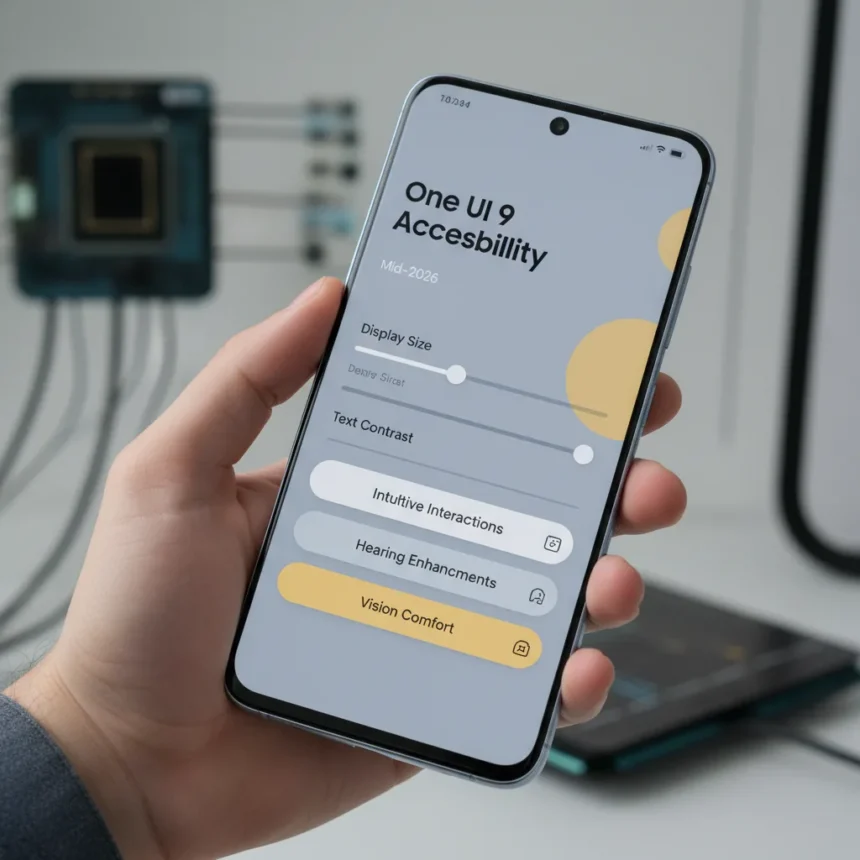
One UI 9 accessibility refinements are quietly reshaping how Samsung Galaxy users interact with their devices, focusing on usability tweaks rather than flashy new features. Samsung’s upcoming software, based on Android 17, is currently in early testing on Galaxy S26 series devices and signals a shift toward smarter, more intuitive accessibility tools. The refinements hint at a philosophy that sometimes the best feature is simply making existing ones work better for everyone.
Key Takeaways
- One UI 9 accessibility refinements include thicker, wider sliders designed for easier one-handed use
- Parental controls have moved from Digital Wellbeing to a dedicated Settings section
- Samsung emphasizes refinements over major redesigns, following One UI 8.5’s larger overhaul
- Beta testing expected May 2026 for Galaxy S26 and high-end devices
- Full release anticipated mid-2026, likely debuting on Galaxy Z Fold 8 and Z Flip 8
Why One UI 9 Accessibility Refinements Matter Now
The timing of these One UI 9 accessibility refinements is significant. Samsung launched the Galaxy S26 just weeks before these leaks surfaced, meaning the company is already iterating on its accessibility approach for the next major software release. This speed reflects Samsung’s broader strategy to align release cycles more closely with Android’s development calendar, rather than waiting months after Google’s annual updates.
Most smartphone makers treat accessibility as an afterthought—a checkbox for compliance. Samsung’s focus on One UI 9 accessibility refinements suggests a different mentality: that thoughtful UI tweaks can have outsized impact. Wider sliders, for instance, sound trivial until you consider users with motor control challenges or anyone trying to adjust settings one-handed while holding a coffee cup. These are real problems that affect real people daily.
What’s Actually Changing in One UI 9 Accessibility Refinements
The One UI 9 accessibility refinements center on organization and ergonomics rather than entirely new tools. Parental controls moving to a dedicated Settings section is a practical reorganization—it removes friction for parents who previously had to dig through Digital Wellbeing menus. The change reflects user feedback that settings buried in logical-sounding categories are still hard to find when you need them.


Thicker and wider sliders represent a design philosophy shift. Standard sliders assume you have perfect fine motor control and can see tiny touch targets. Wider sliders reduce the precision required and make adjustments feel less finicky. Early builds show stable performance with cleaner media controls, though no major new accessibility features have been widely observed yet due to the early development stage.
This incremental approach contrasts with how other manufacturers sometimes launch accessibility updates—adding a flashy new feature while leaving core tools clunky. Samsung’s strategy prioritizes reliability and usability over headline-grabbing announcements.



How One UI 9 Accessibility Refinements Compare to Android 17’s Broader Changes
Android 17 itself introduces features like floating app bubbles and adaptive scaling, which benefit all users but especially those with foldable devices like the Galaxy Z Fold and Z Flip. These system-level changes mean apps no longer lock to specific orientations, making tablets and foldables more flexible. One UI 9 accessibility refinements build on this foundation by ensuring Samsung’s interface layer doesn’t undo the accessibility gains Android 17 provides.
Apple’s ecosystem offers seamless handoff between devices, and Android users have often felt left behind on cross-device continuity. Samsung’s One UI 9 accessibility refinements, combined with Android 17’s improvements, suggest Samsung is taking this gap seriously—not just for power users juggling a phone and tablet, but for accessibility users who benefit from consistent, predictable interfaces across devices.
Timeline: When Will One UI 9 Accessibility Refinements Roll Out?
Samsung plans a beta program in May 2026 for high-end devices, including the Galaxy S26 series. A full stable release is anticipated in mid-2026, likely debuting first on the Galaxy Z Fold 8 and Z Flip 8 before rolling out to older flagships. This timeline gives Samsung several months to gather feedback on the One UI 9 accessibility refinements before the public release, which is crucial for accessibility features—real-world testing with diverse users often reveals issues that internal testing misses.
The staggered rollout means early adopters will test the refinements first, and Samsung can adjust based on feedback before pushing to the broader user base. For users with accessibility needs, this phased approach is actually preferable to a big bang launch, since bugs in accessibility features can be genuinely disabling.



What’s Not Changing (Yet)
It’s worth noting what One UI 9 accessibility refinements are NOT doing: they’re not introducing entirely new accessibility categories or overhauling Samsung’s existing toolkit. There’s no indication of major new features for vision, hearing, or mobility support. The focus remains on refining what exists, making it easier to find, and ensuring it works smoothly on Android 17.
This conservative approach might disappoint users hoping for breakthrough new tools. But it also reflects a realistic understanding of accessibility development—getting the fundamentals right matters more than adding features that half-work or confuse users with poor discoverability.
Does One UI 9 have new accessibility features beyond refinements?
Early leaks show subtle UI tweaks and reorganization rather than entirely new accessibility features. No major new tools for vision, hearing, or mobility support have been widely observed yet, likely because the software is still in very early testing stages. Samsung may introduce new features closer to the beta launch in May 2026.
When will One UI 9 accessibility refinements be available to all Galaxy users?
A beta program is expected in May 2026 for high-end devices like the Galaxy S26 series, with a full stable release anticipated in mid-2026, likely debuting on the Galaxy Z Fold 8 and Z Flip 8. Older flagship models should receive the update in the months following.
Why is Samsung reorganizing parental controls in One UI 9?
Moving parental controls from Digital Wellbeing to a dedicated Settings section makes the feature easier to locate and configure. Users searching for parental controls in Digital Wellbeing menus often struggle to find them, so the reorganization is a usability improvement based on real user friction points.
Samsung’s approach with One UI 9 accessibility refinements proves that meaningful progress doesn’t always require flashy announcements or headline-grabbing features. Sometimes the most valuable update is the one that makes existing tools work better, feel more intuitive, and reach the users who need them most. For a company that’s often chasing the next big thing, that’s a refreshingly grounded philosophy.
Edited by the All Things Geek team.
Source: Android Central