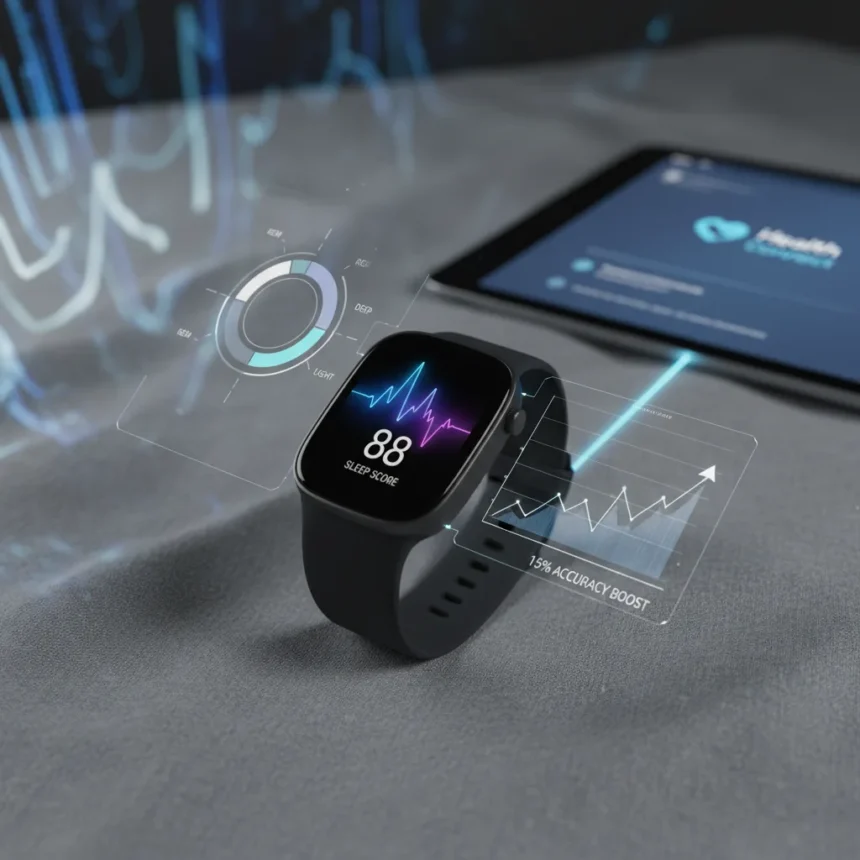
Fitbit Sleep Score is getting a significant overhaul that addresses one of the most frustrating gaps in wearable sleep tracking: accuracy. The redesigned Sleep Score will deliver a 15% improvement in sleep staging accuracy, according to testing data, alongside a complete tab structure redesign and deeper health record integration for US Public Preview users.
Key Takeaways
- Fitbit Sleep Score achieves 15% better sleep staging accuracy in the redesigned version
- Enhanced nap detection and interruption recognition now part of the core tracking system
- New Sleep Need and Sleep Debt metrics spotted in app code, coming to the platform
- Health records integration available for US Public Preview participants
- Tab structure redesign improves navigation and data visibility
What’s Actually Changing in Fitbit Sleep Score
The rework goes beyond cosmetic tweaks. Fitbit Sleep Score is moving from a simplified overnight-only metric to a more granular sleep analysis system. The 15% accuracy improvement in sleep staging means the system better distinguishes between light, deep, and REM sleep phases—the distinction that matters most for understanding whether you’re actually resting. This is critical because previous versions of sleep tracking across wearables have struggled with false positives, often crediting users with deep sleep when they were simply lying still.
The redesigned interface now includes enhanced nap detection and interruption recognition, two features that casual sleep trackers have historically ignored. If you sleep 90 minutes at midday or wake up three times during the night, Fitbit Sleep Score will now capture and contextualize those events rather than treating sleep as a monolithic block. For users managing irregular schedules, shift work, or parenting duties, this distinction matters.
New Sleep Metrics Coming to Fitbit
App code analysis has revealed two incoming metrics that will reshape how Fitbit frames sleep health: Sleep Need and Sleep Debt. These metrics move beyond the current Sleep Score philosophy of assigning a nightly grade. Sleep Need calculates how much rest your body actually requires based on activity, age, and recovery patterns. Sleep Debt tracks cumulative sleep deficit—essentially, how much you owe your body after nights of insufficient rest. Neither metric is live yet, but their presence in the app code suggests a phased rollout is planned.


The distinction matters because Sleep Score alone tells you whether last night was good or bad. Sleep Need and Sleep Debt tell you whether you’re chronically undersleeping and how much you need to recover. For anyone managing a demanding job or caregiving responsibilities, that context is the difference between a useful metric and a guilt machine.
Health Records Integration and Public Preview Access
The Public Preview update includes health records linking for US users, a feature that connects Fitbit Sleep Score data to broader health documentation. This integration allows the app to correlate sleep patterns with medical history, medications, or conditions that affect rest quality. For users in the US Public Preview, this means deeper insights into why sleep quality fluctuates—whether related to illness, medication timing, or underlying conditions.



The rollout is currently limited to Public Preview participants in the United States. This regional limitation reflects both data privacy requirements and the staged nature of Google’s Fitbit updates. If you’re outside the US or not enrolled in Public Preview, the accuracy improvements and tab redesign will eventually reach you, but the health records integration timeline remains unclear.
How Fitbit Sleep Score Compares to Competitors
Most wearables—Apple Watch, Garmin, Oura—offer sleep tracking, but few provide the granular staging accuracy that Fitbit is now targeting. Apple Watch focuses on overall sleep duration and consistency, while Oura Ring emphasizes readiness scores. Fitbit’s new approach of separating Sleep Score (nightly quality), Sleep Need (personal requirement), and Sleep Debt (cumulative deficit) is more diagnostic than competitive offerings, which tend to deliver a single number without context.
The 15% accuracy bump positions Fitbit as a serious sleep diagnostics tool rather than a casual wellness tracker. That distinction matters if you’re choosing between devices—you’re paying for precision, not just data collection.
When Will These Updates Roll Out
The redesigned Fitbit Sleep Score is currently in Public Preview, meaning it’s available to opted-in testers but not yet the default experience for all Fitbit users. The Sleep Need and Sleep Debt metrics are in app code but not yet live, suggesting they’re in final testing before a broader release. Fitbit typically moves features from Public Preview to general availability within 2-3 months, though timelines vary.



If you want early access, enrolling in Fitbit’s Public Preview program grants you immediate access to the redesigned Sleep Score and health records integration (if you’re in the US). If you prefer to wait for stability, the improvements will reach your device eventually—but you’ll lose months of sleep data collection and trend analysis in the meantime.
Is the Fitbit Sleep Score redesign worth the wait?
Yes, if you rely on sleep data for health decisions. A 15% accuracy improvement transforms sleep staging from a rough estimate into actionable information. If you’re currently using Fitbit Sleep Score casually—checking it once a week—the redesign won’t change your behavior, but the incoming Sleep Need and Sleep Debt metrics might. They’re designed to highlight patterns you’re likely missing.
Will I lose my existing sleep data when the update rolls out?
No. Fitbit’s redesign preserves historical sleep data and applies the improved accuracy algorithm retroactively where possible. Your sleep history remains intact, and the new metrics will begin calculating from the moment the update reaches your device.
Does health records integration work outside the United States?
Not yet. The current Public Preview rollout limits health records linking to US users due to data privacy regulations and regional compliance requirements. International users will eventually receive the accuracy improvements and new metrics, but the health records feature may remain US-only or require additional regulatory approval.
Fitbit Sleep Score’s redesign signals that Google is taking sleep tracking seriously—seriously enough to rebuild the entire system rather than iterate incrementally. The 15% accuracy boost matters less than the philosophical shift: from assigning nightly grades to diagnosing sleep patterns. That’s the update worth waiting for.
Edited by the All Things Geek team.
Source: Android Central