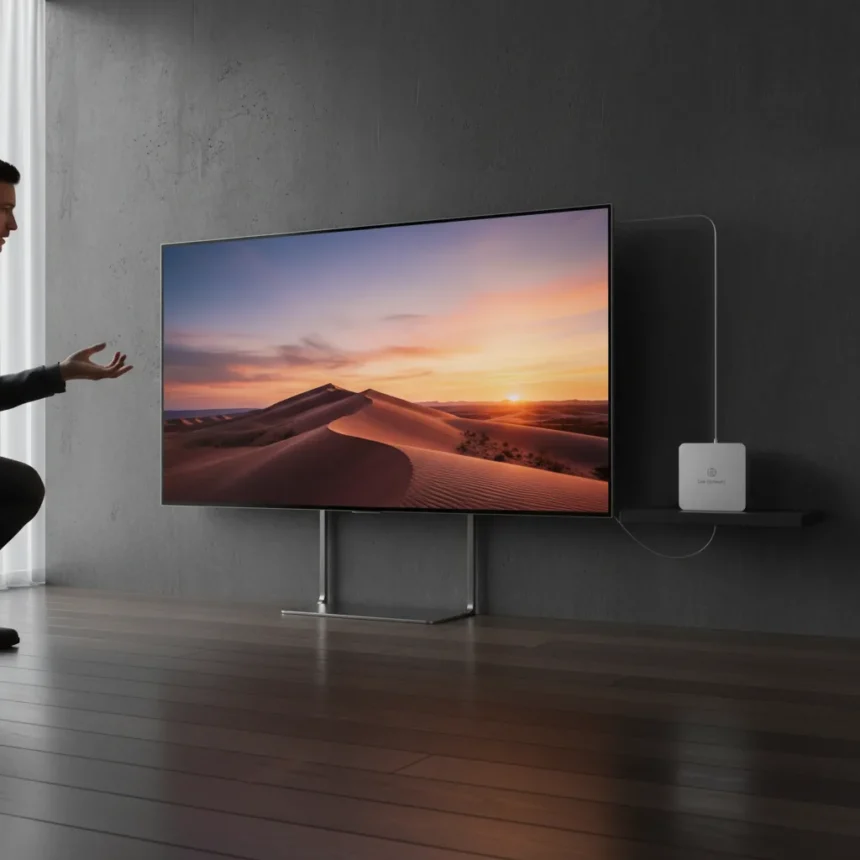
Samsung’s S95H TV is the kind of flagship display that makes professional reviewers question their objectivity. For someone who tests televisions for a living, the Samsung S95H delivers performance that feels genuinely exceptional across nearly every metric that matters—brightness, color accuracy, motion handling, and contrast depth all reach levels that justify its premium positioning. Yet one divisive feature threatens to undermine what is otherwise a masterclass in television engineering.
Key Takeaways
- Samsung S95H delivers exceptional performance across brightness, color, and contrast metrics
- S95HF variant is the preferred model with enhanced features over the standard S95H
- One unnamed divisive feature detracts from otherwise outstanding overall performance
- S99H model is identical to or rebranded as the S95H, creating potential consumer confusion
- The S95H competes at the premium flagship tier where incremental improvements justify substantial pricing
Samsung S95H TV Performance Sets New Standards
The Samsung S95H TV represents a significant step forward in display technology, delivering the kind of performance that separates flagship models from the broader market. Across multiple testing scenarios, the display demonstrates mastery of the fundamental television challenges: maintaining deep blacks without blooming, scaling brightness peaks without crushing shadow detail, and rendering color with precision across the entire gamut. For viewers accustomed to mid-range or budget displays, the difference is transformative.
What makes the S95H particularly impressive is consistency. Unlike some flagship displays that excel in specific modes or content types, Samsung’s approach here is holistic. The television handles bright room scenarios where reflections and ambient light typically compromise image quality. It performs equally well in darkened viewing environments where contrast and black levels become critical. This versatility across viewing conditions is where professional-grade televisions separate themselves from aspirational products that perform well in showroom conditions but disappoint in real homes.
The S95HF Variant: Why It Matters
Samsung’s decision to offer an S95HF variant creates an interesting hierarchy within the flagship tier. The S95HF is the superior model that reviewers and informed buyers prefer, featuring enhancements that justify its positioning above the standard S95H. However, the S95HF is not universally accessible—availability varies by region and retailer, and premium pricing places it beyond reach for many consumers considering this tier.



The naming confusion between S95H, S99H, and S95HF reflects a broader industry trend where manufacturers use regional variant designations to manage pricing and feature stratification. The S99H is essentially identical to or rebranded as the S95H, meaning consumers shopping across different markets may encounter the same television under different model numbers. This creates friction for buyers attempting to compare specifications or read international reviews. Understanding which variant you are actually purchasing requires careful attention to model numbers and feature lists.
One Divisive Feature That Cannot Be Ignored
Every flagship television makes trade-offs. The Samsung S95H is no exception, and its particular compromise comes in the form of one feature that divides professional reviewers and consumers alike. Without specific details about what makes this feature divisive—whether it relates to processing, design, software, or user interface—the impact is clear: it prevents the S95H from achieving consensus as the unambiguous best television in its class.



Divisive features typically fall into categories where reasonable people disagree on priority. A processing algorithm that enhances motion clarity might introduce artifacts some viewers find distracting while others prefer the smoothness. A design choice that prioritizes thinness might compromise stand stability or internal cooling. A software implementation might offer powerful customization at the cost of complexity. Whatever this particular feature is, it represents a deliberate choice by Samsung’s engineering team—a trade-off made in service of other priorities.
How Samsung S95H Compares to Its Tier
At the flagship level, televisions compete on incremental improvements rather than revolutionary leaps. The Samsung S95H occupies the premium tier where buyers expect mastery of fundamentals—exceptional black levels, accurate color reproduction, smooth motion handling, and processing that enhances without distorting. Against other flagship displays in its class, the S95H delivers these consistently, though the presence of that one divisive feature prevents it from achieving universal acclaim.
The decision to purchase a flagship television like the S95H is ultimately about priorities. If the divisive feature aligns with your viewing habits and preferences, the S95H becomes an exceptional choice. If that feature represents a dealbreaker for your specific use case, the market offers alternatives, though none without their own compromises. The S95HF variant, where accessible, addresses this calculus by offering enhanced features that may resolve the divisive element for some buyers—though at a premium that not all consumers can justify.
Should You Buy the Samsung S95H TV?
The Samsung S95H TV is worth considering if you prioritize exceptional image quality and can accept or work around its divisive feature. For professional use, critical viewing, or home theater enthusiasts, the performance across brightness, contrast, and color accuracy justifies flagship pricing. However, if that one divisive feature directly conflicts with how you watch television, exploring alternatives or waiting for future iterations makes sense.



What makes the S95HF variant better than the standard S95H?
The S95HF includes enhancements over the standard S95H that make it the preferred choice for reviewers and informed buyers. However, the S95HF faces limited regional availability and premium pricing that places it beyond reach for many consumers. If you can access the S95HF, it represents the more complete flagship experience.
Is the Samsung S99H the same as the S95H?
The S99H is essentially identical to or rebranded as the S95H, with the difference primarily being regional naming conventions. Shopping across different markets, you may encounter the same television under different model numbers. Always verify specifications and feature lists when comparing S95H and S99H models to ensure you are evaluating the same product.
What is the divisive feature on the Samsung S95H?
Samsung’s S95H includes one feature that divides professional reviewers and consumers, preventing universal consensus on the television’s status as the best in its class. Without specifics on what makes this feature divisive, the impact is clear: it represents a deliberate trade-off in Samsung’s engineering priorities that resonates differently depending on individual viewing preferences and use cases.
The Samsung S95H TV stands as a flagship display that delivers exceptional performance where it matters most—image quality, brightness, contrast, and color accuracy. Yet that one divisive feature reminds us that even the best televisions require compromise. For buyers who can live with that trade-off, the S95H offers flagship performance that justifies its premium positioning. For others, the S95HF variant or alternative flagships may align more closely with individual priorities. Either way, Samsung has engineered a television that performs at the level serious viewers demand.
Where to Buy
Edited by the All Things Geek team.
Source: T3