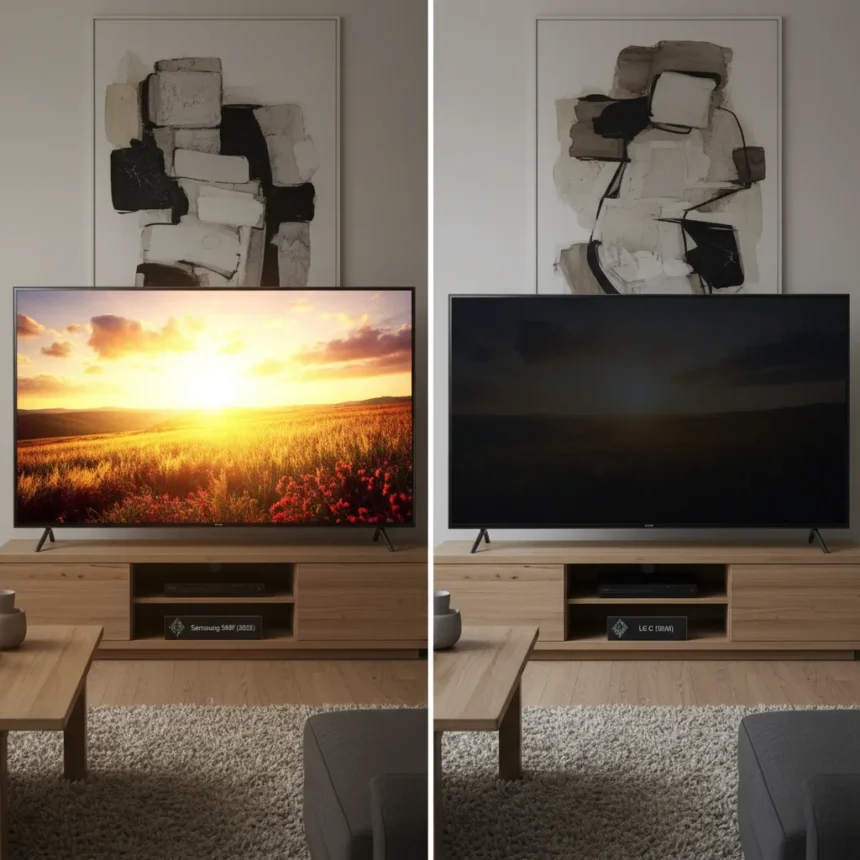
The Samsung S90F OLED TV is the mid-range OLED you should buy in early 2026, even though LG just released the newer C6 model. After testing both, the choice is clear: Samsung’s 2025 flagship mid-range OLED delivers better brightness, superior color volume, and costs less than LG’s 2026 successor.
Key Takeaways
- Samsung S90F OLED TV outperforms LG C6 in brightness and color volume thanks to quantum dot technology.
- S90F 65-inch costs $1,699, matching the LG C5 and undercutting the more expensive LG C6.
- LG C6 includes Dolby Vision support and webOS with free channels; S90F supports HDR10+ instead.
- Both TVs excel at gaming with 120Hz native refresh rates, perfect blacks, and wide viewing angles.
- Quantum dot enhancement in S90F 55″, 65″, and 77″ models delivers measurably better color performance.
Why the Samsung S90F OLED TV Wins on Value
The Samsung S90F OLED TV has everything going for it: a great price, incredible performance, and a stellar list of gaming features. At $1,699 for the 65-inch model, it sits at the sweet spot of the mid-range OLED market. The 42-inch starts at $1,097, the 48-inch at $1,297, and larger sizes scale accordingly. That pricing matters because the LG C6 costs more while delivering fewer tangible benefits in real-world viewing.
The S90F debuted at $2,499 before dropping $900 in price, making it one of the most aggressively priced OLEDs available. Compare that to competitors like Sony and Panasonic, which focus entirely on premium segments with no mid-range alternatives. The Samsung S90F OLED TV fills that gap without compromise.
Brightness and Color: Where Samsung Pulls Ahead
Here is where the Samsung S90F OLED TV separates itself from LG’s offerings. In SDR brightness testing, the S90F reaches 520 nits compared to the LG C5’s 344 nits—a 51 percent advantage. That brightness translates to better performance in bright rooms and more vibrant HDR content. Both TVs hit roughly 1,200 nits in HDR peak brightness, but the S90F’s quantum dot technology in its 55-inch, 65-inch, and 77-inch sizes delivers superior color volume and saturation.



The quantum dot enhancement gives the Samsung S90F OLED TV a measurable edge in the Rec.709 color gamut (99.99 percent) and BT.2020 gamut (approximately 89 percent) versus the LG C5’s 76 percent in the same space. Color accuracy remains excellent on both—the S90F achieves Delta-E 1.1 versus the C5’s 1.2, meaning both are imperceptible to human eyes. But when it comes to color volume and saturation, the quantum dots win decisively.
The LG C6’s Advantages Are Real But Narrow
The LG C6 OLED is undoubtedly a fantastic TV. It performs brilliantly, and its gameplay-enhancing features are truly remarkable. The C6 supports Dolby Vision HDR, which the Samsung S90F OLED TV does not. That matters if you stream content from services like Netflix or Disney+ that prioritize Dolby Vision. The LG also runs webOS with LG Channels, a collection of free ad-supported streaming services built directly into the TV.



The S90F counters with HDR10+ support and Samsung Gaming Hub, plus the same perfect blacks and wide viewing angles that define OLED technology. For most viewers, the S90F’s brighter, more colorful picture outweighs Dolby Vision’s absence. But if Dolby Vision is critical to your streaming diet, the LG C6 justifies its premium price.
Gaming Performance: Both Excel, But S90F Costs Less
Both the Samsung S90F OLED TV and LG C6 deliver exceptional gaming experiences. Each offers 120Hz native refresh rates, 4x HDMI 2.1 ports, and support for variable refresh rates. The S90F features Samsung Gaming Hub for cloud gaming access. The C6 matches these specs with LG’s gaming optimizations. In practice, they trade blows—neither has a clear gaming advantage over the other.
The real difference: you pay less for the S90F and get brighter, more saturated gaming visuals. That brightness advantage matters in competitive gaming, where visual clarity and color distinction can influence reaction times. The LG C6 is not worse at gaming; it is just more expensive for equivalent performance.
Should You Buy the Samsung S90F OLED TV Over the LG C6?
If your mind is made up on buying the LG C6 OLED, you will not be disappointed. This is LG’s best-yet mid-range OLED TV. But honestly, the Samsung S90F OLED TV is the smarter purchase for most buyers. It costs less, delivers superior brightness and color volume, and performs identically in contrast, blacks, and viewing angles. The LG C6’s Dolby Vision support and webOS ecosystem are genuinely nice to have, but they do not justify paying a premium for a dimmer, less colorful picture.



Is the Samsung S90F OLED TV better than the LG C5?
The Samsung S90F OLED TV edges the LG C5 in brightness, color volume, and price competitiveness. Both are excellent mid-range OLEDs, but the S90F’s quantum dot advantage in brightness and color saturation makes it the better value. The C5 costs roughly the same or more depending on sales, making the S90F the logical choice.
What sizes does the Samsung S90F OLED TV come in?
The Samsung S90F OLED TV is available in six sizes: 42 inches ($1,097), 48 inches ($1,297), 55 inches ($1,497), 65 inches ($1,699), 77 inches ($2,997), and 83 inches ($4,497). The 42-, 48-, and 83-inch models use WOLED panels, while the 55-, 65-, and 77-inch models feature quantum dot enhancement for superior brightness and color.
The Samsung S90F OLED TV is the mid-range OLED that delivers the most performance per dollar. Yes, the LG C6 is newer and has some exclusive features. But in the real world, brighter colors, superior brightness, and lower cost matter more than a Dolby Vision badge. Buy the S90F and save your money for a soundbar upgrade instead.
Where to Buy
$1,599.99 at Amazon | $947.99 at Amazon | 65-inch C6 for $2,699 on Amazon | 55-inch LG C6 can be had for $1,999 | 55-inch S90F is $1,197 at Amazon
Edited by the All Things Geek team.
Source: Tom's Guide