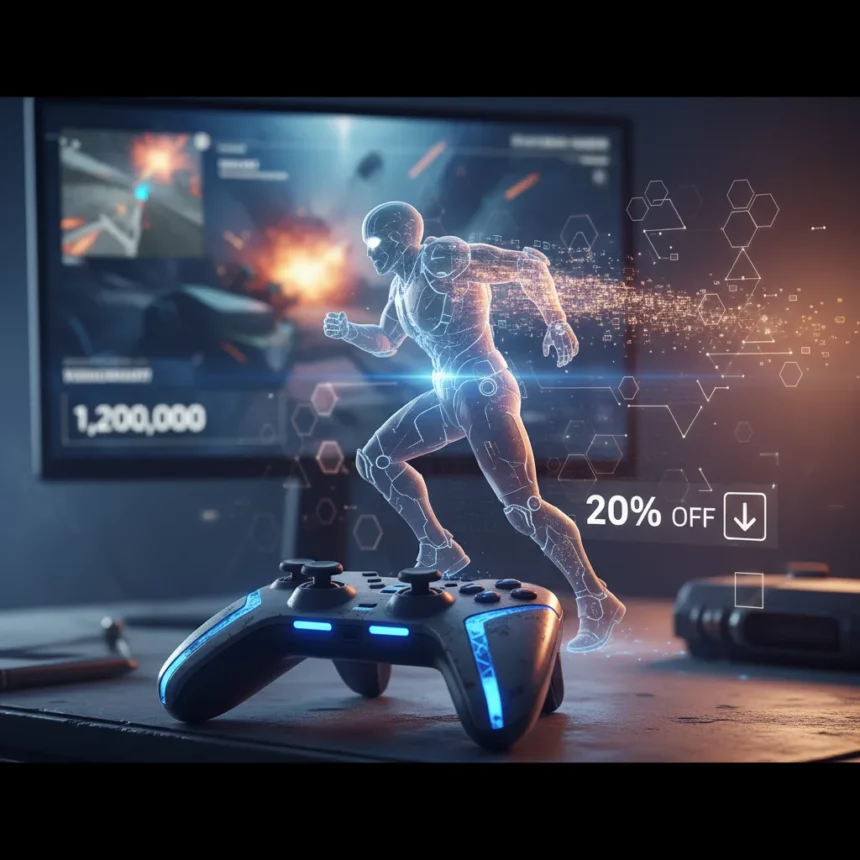
Marathon is a competitive extraction shooter developed by Bungie and published by Sony, launched in mid-February 2026 at $40 and now entering its first sale at a 20% discount. The game sold 1.2 million copies in March 2026, ranking fourth in US dollar sales that month, yet player retention has declined sharply since launch despite consistent updates. What the sales numbers don’t capture is how thoroughly absorbing Marathon becomes once you cross its formidable skill barrier—a threshold that separates committed players from the curious.
Key Takeaways
- Marathon sold 1.2 million copies in March 2026, with 70% on Steam, 19% on PS5, and 11% on Xbox
- Metacritic score of 81 reflects strong critical reception despite mixed player sentiment
- Average Steam playtime reaches 27.8 hours, significantly higher than console versions
- Game requires 5-10 hours to fully click due to steep learning curve and demanding difficulty
- First sale at 20% discount arrives roughly six weeks post-launch as player base stabilizes
Why Marathon’s Difficulty Is Actually Its Strength
Marathon competitive extraction shooter demands patience most modern FPS players no longer possess. The game takes five to ten hours before its core loop truly clicks, and that extended ramp-up has clearly frustrated console buyers—PS5 represents only 19% of total sales despite being Sony’s home platform. Former FPS professional Shroud acknowledged this tension directly: Marathon is a good game, but the problem right now is it’s too hard. His assessment cuts to the heart of the retention challenge. The steep difficulty isn’t a flaw to be patched away; it’s the entire foundation of what makes Marathon compelling once you commit to learning it.
The extraction shooter genre itself demands heavy time investment from players, and Marathon refuses to hold your hand through that process. Compare this to Ark Raiders, which had nearly double Marathon’s Steam launch footprint partly because players could grasp its core mechanics within 30 minutes. Marathon demands you fail repeatedly, study your failures, and return with better positioning and resource management. That friction point is precisely why average Steam playtime sits at 27.8 hours—players who stick with it do so intensely.
Marathon Competitive Extraction Shooter Faces Real Retention Battles
Selling 1.2 million copies in a single month is objectively impressive, yet the subsequent player decline raises legitimate questions about whether the market can sustain another extraction shooter. The game launched on Steam, PS5, and Xbox platforms simultaneously, yet the platform distribution reveals uncomfortable truths about its appeal. PC dominates with roughly 70% of sales, suggesting the core audience skews toward hardcore players willing to tolerate complexity. Console players, traditionally more casual, represent a combined 30% of the install base.

Bungie has pushed post-launch improvements aggressively, including a complete overhaul of the inventory system that players described as thoroughly miserable. These updates demonstrate commitment, yet they also highlight how unpolished the launch experience was for those without patience to endure early friction. The 20% discount sale arriving six weeks post-launch suggests the publisher recognizes a need to broaden the player base before momentum stalls entirely.
Who Should Actually Play Marathon?
Marathon competitive extraction shooter is genuinely not for everyone, and that’s refreshingly honest in an industry obsessed with mass appeal. If you thrive in high-stakes tactical shooters, value precision over reflexes, and enjoy learning complex systems, Marathon will consume your time in the best possible way. The 27.8-hour average Steam playtime isn’t inflated by idle sessions—it reflects players actively engaged with the game’s demanding extraction mechanics. Metacritic’s 81 aggregate score reflects this split: critics recognize the quality beneath the difficulty, while players remain divided on whether that quality justifies the barrier to entry.
The comparison to Highguard, Apex Legends’ spiritual successor, underscores Marathon’s positioning. Highguard feels fantastic mechanically but needs major updates to sustain its player base. Marathon, by contrast, feels deliberately unforgiving from the start. Bungie isn’t trying to make extraction shooting accessible—it’s perfecting extraction shooting for players willing to earn mastery through repetition and failure.
Will the First Sale Actually Move the Needle?
A 20% discount is modest in an industry accustomed to deeper cuts within months of launch. The real question is whether price reduction addresses the actual barrier: not cost, but commitment. A player who buys Marathon at $32 instead of $40 still faces five to ten hours of struggle before the game reveals why it’s worth their time. That’s a harder sell than any discount can overcome for players seeking immediate gratification.
The sales success in March 2026 proves the game found its audience—1.2 million players voted with their wallets. Whether the first sale expands that base or merely consolidates existing interest remains uncertain. What seems clear is that Marathon’s success will ultimately depend on whether Bungie can maintain the competitive integrity that makes the game compelling while gradually lowering the friction that keeps new players from reaching that critical moment when everything clicks.
Does Marathon have a strong player base on console?
PS5 and Xbox combined represent 30% of Marathon’s sales, with PS5 at 19% and Xbox at 11%. This suggests a smaller but dedicated console community compared to the dominant Steam player base, which accounts for roughly 70% of total sales.


How long does it take to get good at Marathon?
Most players need five to ten hours before Marathon’s core mechanics fully click, according to reviews. This steep learning curve is intentional by design and separates casual players from those willing to invest serious time into mastery.
What is Marathon’s current player count?
Recent Steam metrics show 345,000 daily active users with peaks around 380,000 on weekends, representing a 49% increase following a major update. However, this represents a decline from the launch surge, indicating ongoing retention challenges despite strong initial sales.
Marathon’s first sale is not a desperate price cut—it’s an invitation. The discount might bring in curious players, but only those willing to endure genuine difficulty will discover why the game has consumed so many hardcore FPS enthusiasts. In a genre flooded with extraction shooters, Marathon’s uncompromising design is its greatest asset and its biggest obstacle.
Edited by the All Things Geek team.
Source: TechRadar