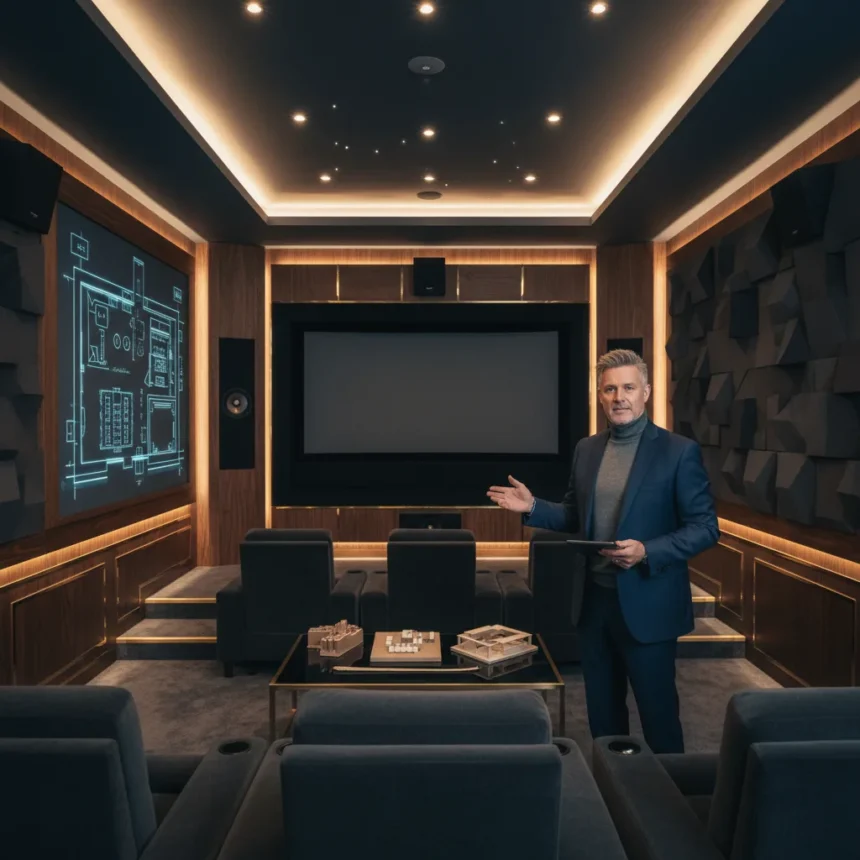
Home theater room design is the foundation of any successful custom installation, according to David Moseley, an award-winning Australian home cinema designer who has spent years perfecting the craft of turning ordinary rooms into immersive entertainment spaces.
Key Takeaways
- Room design fundamentals matter more than premium equipment in home theater setups.
- Acoustics, layout, and spatial integration are core priorities for custom installations.
- Simple upgrades can significantly improve existing home theater performance without full redesigns.
- Professional designers balance aesthetic integration with acoustic performance.
- Good home theater room design is accessible to DIY enthusiasts with basic principles.
Why Home Theater Room Design Trumps Equipment Alone
David Moseley’s core philosophy is straightforward: nothing can replace good room design. This principle cuts through the common misconception that premium speakers, high-end projectors, and latest displays automatically create a superior viewing and listening experience. Instead, Moseley prioritizes the foundational elements that determine how sound travels through a space and how viewers experience the image.
The distinction matters because many home theater enthusiasts invest heavily in equipment while neglecting the acoustic and spatial characteristics of their rooms. A perfectly tuned speaker system placed in a poorly designed space will underperform compared to modest equipment installed in a room with proper acoustic treatment and thoughtful layout. Room dimensions, material finishes, furniture placement, and acoustic absorption all influence whether sound remains clear and balanced or becomes muddy and bass-heavy.
Moseley’s approach reflects a broader shift in professional AV design where architects and installers recognize that the room itself is the most critical component. This perspective aligns with how premium cinema facilities are engineered—acoustic design comes first, then equipment is selected and positioned to work within those constraints.



Custom Installation Design Process and Philosophy
For custom home theater installations, Moseley emphasizes that design processes must account for how the space will actually be used. This means understanding the room’s existing architecture, the client’s viewing habits, and the balance between performance and aesthetics. Many homeowners want their theater rooms to blend smoothly with their homes rather than look like dedicated commercial spaces.
The design phase involves assessing how audio will behave in the room, where reflections and dead spots might occur, and how to integrate equipment without creating visual clutter. Ceiling height, wall materials, window placement, and even furniture choices affect acoustic performance. A designer must solve these challenges while respecting the homeowner’s design preferences and lifestyle needs.



This holistic approach means that custom installations often require compromises. A perfectly optimized theater room might have bare concrete walls and specific dimensions that are impractical for a family living space. Moseley’s work involves finding solutions that satisfy both acoustic requirements and livability, ensuring the room remains a pleasant place to spend time whether watching movies or not.
Accessible Home Theater Upgrades for DIY Enthusiasts
Not every home theater improvement requires a professional custom installation or complete room redesign. Moseley provides guidance on simple upgrades that homeowners can implement themselves to enhance their existing setups. These practical tweaks focus on the principles that matter most without demanding major construction or expensive equipment replacements.
Strategic furniture placement, adding soft furnishings to control reflections, and understanding how to position seating for optimal viewing angles are foundational improvements. Acoustic panels, bass traps, and diffusers can be added gradually without disrupting the room’s aesthetic or requiring professional installation. These incremental changes allow homeowners to improve their home theater room design over time while learning what works in their specific space.
The key insight is that good design principles are learnable and actionable. Homeowners do not need to hire a professional to understand that hard surfaces reflect sound, that room proportions affect bass response, or that seating position determines image quality. Applying these fundamentals with intention produces measurable improvements in how a room performs.



Balancing Aesthetics with Performance in Home Theaters
One challenge that distinguishes residential home theater design from commercial cinema is the requirement that the room remain visually appealing and integrated into the home. A dedicated theater room should not feel like a bunker or broadcast facility—it should feel like a natural extension of the home’s design language.
Moseley’s approach acknowledges this tension. Acoustic solutions can be beautiful when thoughtfully designed. Wood-slat acoustic panels, fabric-wrapped absorption, and integrated shelving can serve double duty as both functional acoustic treatment and interior design elements. This integration requires more planning than simply bolting industrial acoustic panels to walls, but the result is a space that homeowners genuinely enjoy spending time in, not just when watching movies.
This perspective explains why custom installations command premium pricing—designers must solve acoustic and aesthetic problems simultaneously, often creating bespoke solutions rather than applying standard templates. The cost reflects the complexity of balancing competing priorities in a room that serves multiple functions.
Does room size matter for home theater design?
Room size influences acoustic behavior significantly, but it does not determine quality. Smaller rooms require different acoustic treatment than larger spaces, and room proportions matter more than absolute dimensions. A well-designed small theater outperforms a poorly designed large one. The key is understanding your specific room’s characteristics and designing accordingly.
Can you improve an existing home theater without professional help?
Yes. Strategic furniture placement, adding soft furnishings, and understanding seating positions are improvements homeowners can make immediately. Acoustic panels and bass traps can be added gradually. The principles of good home theater room design are learnable, allowing DIY enthusiasts to enhance their setups incrementally without professional installation.
What is the most important factor in home theater setup?
According to Moseley’s philosophy, the room itself is the most important factor. Equipment quality matters, but it cannot overcome poor room acoustics, bad layout, or inadequate spatial design. Prioritizing room design fundamentals produces better results than investing solely in premium gear.
The takeaway from Moseley’s approach is refreshingly practical: home theater excellence starts with the room, not the equipment list. Whether planning a custom installation or upgrading an existing setup, understanding how your space behaves acoustically and visually determines your success far more than the price tag on your speakers or projector. This principle democratizes quality home theater—it becomes less about budget and more about thoughtful design applied to the space you have.
Edited by the All Things Geek team.
Source: TechRadar