






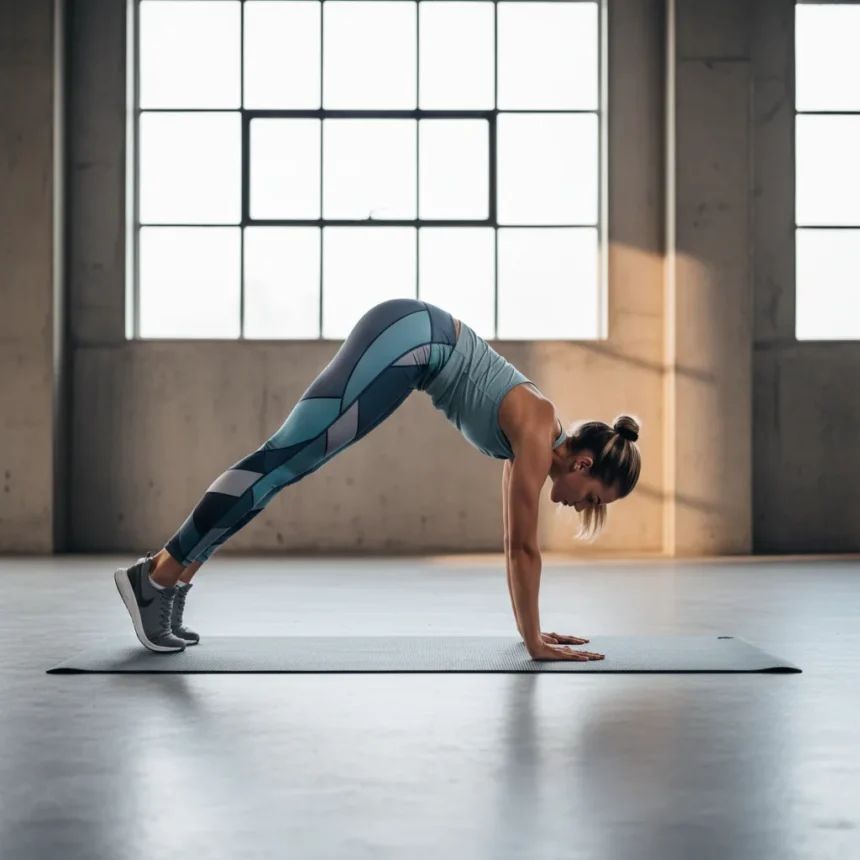
The caterpillar walk lower body mobility exercise is a fundamental movement that targets flexibility and range of motion throughout your legs, hips, and lower back. This bodyweight exercise requires no equipment and can be performed anywhere, making it accessible for beginners and advanced athletes alike.
Key Takeaways
- The caterpillar walk builds lower body mobility without requiring weights or equipment.
- Proper form emphasizes keeping legs relatively straight while walking hands forward.
- This exercise integrates into full-body workouts and mobility routines effectively.
- Beginners should start with shorter distances and focus on controlled movement.
- The caterpillar walk complements other core and flexibility exercises in structured programs.
What Is the Caterpillar Walk and Why It Matters
The caterpillar walk lower body mobility exercise involves starting in a standing position, bending forward to place your hands on the ground, and then walking your hands forward while keeping your legs as straight as possible. This movement pattern mimics a caterpillar’s crawling motion, hence the name. The exercise targets hip flexibility, hamstring length, and spinal mobility simultaneously, making it efficient for addressing multiple flexibility limitations in one movement.
Unlike isolated stretches that focus on a single muscle group, the caterpillar walk lower body mobility approach engages multiple areas through dynamic movement. Your posterior chain—the muscles and connective tissues running along the back of your body—experiences significant lengthening as you progress through the movement. This makes the exercise valuable for people who spend prolonged periods sitting, which tightens hip flexors and hamstrings.
How to Perform the Caterpillar Walk Correctly
Start by standing upright with your feet hip-width apart. Bend forward at the hips and place your hands flat on the ground in front of you, keeping your knees relatively straight but not locked. Your hands should be positioned directly beneath your shoulders or slightly forward. From this position, walk your hands forward in small, controlled steps while maintaining a straight leg position. Move your hands forward until your body approaches a plank position, with your shoulders positioned directly above your hands and your legs extended behind you.

Once you reach the plank position, reverse the movement by walking your feet forward toward your hands in small steps, allowing your hips to rise as you return to the standing bent-over position. Complete this as one repetition. Focus on smooth, controlled movements rather than speed. Keep your core engaged throughout the entire sequence to maintain spinal stability. Your head should remain neutral, looking toward the ground slightly ahead of your hands rather than straight down or up.
Beginners should start with 5 to 8 repetitions and focus on maintaining proper form before increasing volume. As you build flexibility and strength, you can progress to 10-15 repetitions or add pauses at the plank position to increase difficulty. If touching the ground with straight legs feels impossible initially, allow a slight knee bend—this modification is perfectly acceptable and shows that you are working at your current flexibility level.



Modifications and Progressions for Different Fitness Levels
If full range of motion feels uncomfortable, place your hands on an elevated surface like a bench, step, or wall instead of the ground. This reduces the range of motion required and allows your body to adapt gradually. Alternatively, you can perform a partial caterpillar walk by moving your hands forward only halfway toward a plank position, then returning to standing. This builds strength and mobility without demanding maximum flexibility immediately.
For those seeking progression, add a push-up at the plank position before walking your hands back. This variation, sometimes called the caterpillar walk and half burpee, combines mobility work with upper body strengthening. Another progression involves holding the plank position for 2-3 seconds before reversing the movement, which increases core engagement and stability demands.
Integrating Caterpillar Walk Into Your Routine
The caterpillar walk lower body mobility exercise works well as a warm-up movement before strength training sessions. Performing 8-10 repetitions prepares your body for more intense work by activating your posterior chain and increasing blood flow. It also functions effectively as a standalone mobility drill, either daily or several times per week depending on your flexibility goals.
This movement fits naturally into circuit-style workouts and full-body routines. Combining it with complementary exercises like glute bridges, leg swings, and hip openers creates a comprehensive lower body mobility program. The exercise requires minimal space and no equipment, making it ideal for home workouts or gym sessions.



Common Mistakes to Avoid
Many people rush through the caterpillar walk, moving their hands too quickly without maintaining control. Slow, deliberate movement allows your muscles to lengthen safely and effectively. Another common error is allowing your hips to sag during the plank position, which reduces core engagement and changes the exercise’s effectiveness. Keep your body in a straight line from head to heels at the bottom of the movement.
Avoid locking your knees completely, as this creates tension rather than mobility. A slight, natural bend is healthier and more sustainable. Some individuals also make the mistake of walking their hands too far forward, which can strain the lower back. Stop when your shoulders are directly above your hands and your body forms a straight line.
Is the caterpillar walk suitable for beginners?
Yes, the caterpillar walk is accessible for beginners when performed with modifications. Using an elevated surface for your hands, allowing slight knee bends, or performing partial range of motion versions makes this exercise achievable for anyone. Start with fewer repetitions and prioritize form over volume.
How often should I perform the caterpillar walk?
You can perform the caterpillar walk daily as part of a mobility routine or 3-4 times per week as part of structured workout programming. Listen to your body and adjust frequency based on how your joints and muscles respond. Rest days are important for recovery.
Can the caterpillar walk lower body mobility exercise replace traditional stretching?
The caterpillar walk lower body mobility work complements rather than replaces traditional static stretching. Dynamic movements like this one improve functional mobility and range of motion during motion, while static stretches address flexibility at rest. Combining both approaches provides comprehensive mobility development.
The caterpillar walk lower body mobility exercise remains a staple in fitness programming because it delivers genuine results without complexity or equipment. Master the basic form first, respect your current flexibility level, and progress gradually. Consistency matters more than intensity—practicing this movement regularly will build mobility and flexibility that translates directly to improved movement quality in daily life and athletic performance.
This article was written with AI assistance and editorially reviewed.
Source: Tom's Guide