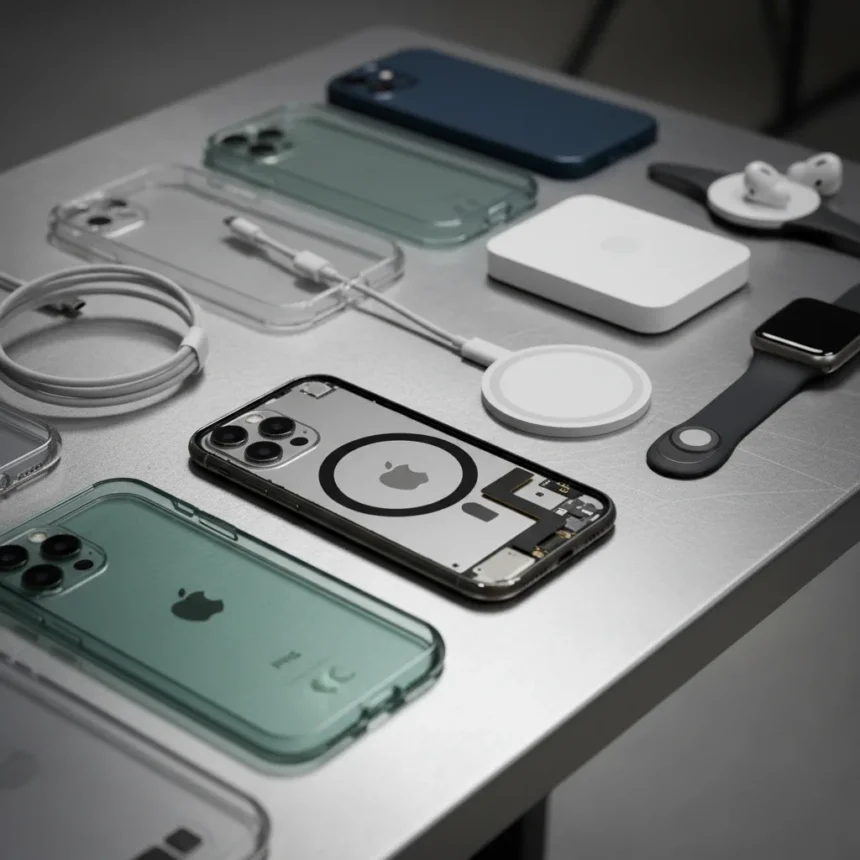
Apple MagSafe removal is not just speculation—it’s an internal debate at Apple about whether to keep the magnetic charging standard that transformed iPhone accessory design. The reasoning is blunt: MagSafe has become so popular that removing it could force users to buy cases and wireless charging solutions separately, turning a free feature into a revenue stream.
Key Takeaways
- Apple is internally debating whether to remove MagSafe from future iPhones
- The magnetic accessories industry has thrived under MagSafe, making removal profitable
- Removing MagSafe could help create thinner devices, possibly including foldable models
- Apple may reserve MagSafe for premium models or offer it as a paid add-on
- Users would face higher accessory costs if MagSafe disappears
Why Apple Might Actually Remove MagSafe
The logic behind dropping MagSafe is pure business strategy. Since MagSafe launched, third-party manufacturers have built an entire ecosystem of magnetic cases, stands, wallets, and chargers. That ecosystem is profitable—for everyone except Apple, which doesn’t collect revenue from most third-party MagSafe accessories. By removing the feature, Apple could force consumers to rely on its own charging solutions and case designs, or accept weaker wireless charging performance without proper accessories.
Apple has explored reserving MagSafe exclusively for more expensive models or offering it as a paid add-on feature. This tiered approach would let the company capture revenue from users who demand magnetic charging while pushing budget-conscious buyers toward traditional cases and slower charging methods. It’s a strategy that turns a standard feature into a luxury differentiator.
Device Thickness and Foldable iPhone Implications
Another driver behind the MagSafe removal rumor is Apple’s pursuit of thinner devices. The magnetic components in MagSafe add measurable thickness to iPhone frames. Removing them could help achieve slimmer profiles, particularly for a rumored foldable iPhone where every millimeter matters. A foldable device with reduced thickness would be more practical to carry and less likely to show creasing on the flexible display.


The trade-off is clear: thinner phones mean less room for magnets, larger batteries, or thermal management. Users would have to choose between a sleeker device and the convenience of MagSafe attachment. Apple has historically prioritized thinness over practicality—the iPhone 6 and iPhone 7 proved that—so this rationale aligns with the company’s design philosophy.
What Apple MagSafe Removal Means for Users
If Apple actually removes MagSafe, the consequences ripple across the entire iPhone ecosystem. Users who rely on magnetic car mounts, desk stands, or cable organizers would need to replace them. Wireless charging would become slower without MagSafe alignment, or users would need to buy Apple’s proprietary solutions at premium prices. The accessory market would fragment—some products would work with older iPhones, others only with new models.



This is not a technical necessity. MagSafe works. It’s reliable, fast, and universally adopted. Removing it purely to boost accessory revenue would be a cynical move that prioritizes profit over user convenience. Yet Apple has made similar choices before, eliminating headphone jacks and forcing users to buy Lightning or USB-C adapters. History suggests the company is willing to sacrifice convenience for margin expansion.
Will This Actually Happen?
Rumors are rumors, and internal debates at Apple rarely become public unless someone leaks them. The company might decide that the PR backlash outweighs the accessory revenue gains. MagSafe has genuine user love—it’s one of the few iPhone features people actually praise. Removing it could trigger the kind of negative press Apple usually avoids.
Still, the fact that this is being debated internally tells you everything about Apple’s priorities. The company is not asking whether MagSafe is useful or popular. It’s asking whether removing it is profitable. If the math works, MagSafe could disappear, regardless of what users prefer.
How does Apple MagSafe removal affect existing accessories?
Existing MagSafe accessories would become incompatible with any iPhone that drops the feature. Older iPhones would still support them, but new models without magnets would require entirely different mounting systems. Users would face either buying new accessories or keeping older phones longer.



Could Apple offer MagSafe as an optional paid feature?
Yes. Apple has explored selling MagSafe as a premium add-on, similar to how it prices higher storage tiers. This would let the company monetize the feature while maintaining it for users willing to pay extra. It’s the most likely middle ground between removal and retention.
What alternatives exist if MagSafe disappears?
Users could rely on traditional cases, adhesive mounting systems, or wireless charging without magnetic alignment. Third-party manufacturers would likely develop non-magnetic solutions. None would match MagSafe’s simplicity, but alternatives would exist. The real loss would be the ecosystem cohesion that made MagSafe so elegant in the first place.
Apple MagSafe removal remains a rumor, but it reflects a real tension at Apple between user experience and revenue extraction. Whether the company actually removes it depends on which priority wins. Based on Apple’s track record, betting against the feature’s survival might be the smarter play.
Edited by the All Things Geek team.
Source: Tom's Guide