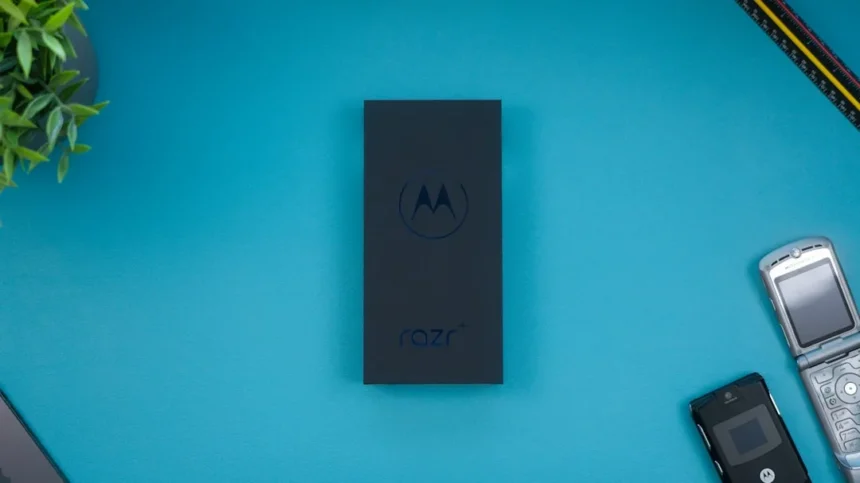
The Motorola Razr Ultra 2026 is a $1,499 foldable phone from Motorola, announced in 2026 and powered by the Snapdragon 8 Elite Mobile Platform. It represents everything wrong with the modern smartphone industry: a $200 price hike over last year’s model paired with upgrades so trivial they barely register as improvements. When the previous generation remains available at $799.99 with identical performance, the 2026 Ultra becomes a masterclass in why consumers should stop buying new phones every year.
Key Takeaways
- Motorola Razr Ultra 2026 costs $1,499.99, a $200 jump from the 2025 model’s original price
- The 2026 model gains only 6% battery capacity and new finishes; specs and design remain unchanged
- The 2025 Razr Ultra still sells at $799.99 with 1TB storage and nearly identical performance
- Snapdragon 8 Elite enables 10% faster app performance and 25% less power consumption than previous generation
- The $799 Motorola Razr (2026) offers a better value proposition for buyers seeking a foldable
The Motorola Razr Ultra 2026 price hike makes no sense
Charging $1,499.99 for the Motorola Razr Ultra 2026 when Motorola still sells the 2025 model at $799.99 with 1TB storage and essentially identical specs is either a pricing error or an insult to customer intelligence. The 2026 model’s only meaningful change is a 6% battery capacity increase—negligible in real-world usage. Everything else—the design, the inner display, the outer display functionality, the camera—remains untouched. This is not an upgrade. This is a rebrand with a new finish.
The problem extends beyond Motorola. Samsung charges similarly shameful prices for the Galaxy Z Flip 8 and Z Fold 8 with comparable minimal changes, and Apple’s rumored iPhone Ultra faces the same scrutiny. The foldable industry has collectively decided that annual releases justify annual price hikes, regardless of whether the hardware actually improves. Consumers are expected to pay more for less—or at minimum, for nothing.
Why the 2025 model remains the smarter buy
If you need a foldable phone right now, the Motorola Razr Ultra 2025 at $799.99 with 1TB storage is objectively the better choice. You save $700 compared to the 2026 model while gaining the exact same performance, design, and features. The only thing you forfeit is the newer material finishes and the bragging rights of owning this year’s model—neither of which justifies a $700 premium.


This price differential exposes the real issue: the smartphone industry has abandoned the concept of genuine innovation cycles. Instead, manufacturers release iterative updates annually and use marketing, new colors, and incremental spec bumps to justify full-price launches. The Motorola Razr Ultra 2026 proves that waiting two to three years between upgrades is not just financially sensible—it’s the only rational response to an industry that refuses to innovate meaningfully.
What actually changed in the Motorola Razr Ultra 2026
The Snapdragon 8 Elite Mobile Platform does deliver real performance gains: apps run 10% faster and consume 25% less power than the previous generation. The 16GB LPDDR5X RAM at 9600Mbps supports these improvements, and the 7.0-inch inner Super HD pOLED display with 165Hz refresh rate handles demanding tasks smoothly. The outer display now fully supports Motorola AI features like Look & Talk gesture unlock, weather widgets, and customizable notification panels.



The camera received a modest upgrade: 4x more light sensitivity and 25% larger pixels for improved low-light photography. These are real improvements, but they existed in competitor phones months or years earlier. User feedback on the 2026 model highlights strong performance, excellent connectivity, solid speakers, and appealing aesthetics, though brightness levels on the outer display drew minor criticism. None of this justifies a $200 price increase over a model that still performs nearly identically.
The Motorola Razr (2026) offers the real value play
For buyers who refuse to overpay, the standard Motorola Razr (2026) at $799 positions itself as the sensible alternative. It delivers foldable form factor, modern performance, and Motorola’s design language without the flagship tax. While it lacks the Ultra’s premium finishes and marginal spec boosts, it proves Motorola can price foldables competitively when it chooses to. The gap between $799 and $1,499.99 is not justified by a 6% battery increase and cosmetic changes.
This pricing strategy reveals the industry’s contempt for customer value. Samsung, Apple, and Motorola all employ the same playbook: release a solid phone, price it aggressively, then release a nearly identical version next year at a higher price point while discounting the previous generation to create artificial urgency. The consumer loses either way—pay full price for incremental upgrades or wait for deep discounts on last year’s model that should never have launched at premium pricing.
Why we don’t need new phones every year
The Motorola Razr Ultra 2026 is the perfect argument for longer upgrade cycles. A phone purchased in 2024 or 2025 will still perform admirably in 2026, 2027, and beyond. Battery degradation and software updates matter more than annual hardware refreshes. Holding onto your current device for three to four years saves thousands of dollars while reducing electronic waste and the environmental cost of constant manufacturing.



The smartphone industry thrives on artificial scarcity and manufactured obsolescence. Manufacturers release new models annually not because consumers need them, but because the business model requires constant revenue. The Motorola Razr Ultra 2026 demonstrates this perfectly: it costs more, changes almost nothing, and remains on sale alongside a superior-value predecessor. Until consumers stop rewarding this behavior with purchases, expect the cycle to worsen.
Is the Motorola Razr Ultra 2026 worth buying?
Only if you own a phone older than three years and specifically need a foldable form factor. Even then, the $799 Motorola Razr (2026) delivers nearly identical functionality at a fraction of the price. The Motorola Razr Ultra 2026 is a flagship foldable with solid performance and design, but it is not worth the $700 premium over the 2025 model still available at the same price point. This is a hard pass.
What’s new in the Motorola Razr Ultra 2026 compared to 2025?
The 2026 model adds a 6% battery capacity increase, new material finishes, and the Snapdragon 8 Elite processor (which delivers 10% faster apps and 25% less power consumption). The design, displays, and core functionality remain unchanged from 2025. For most users, these improvements are imperceptible in daily use.
Should I upgrade from the Motorola Razr Ultra 2025?
Absolutely not. The 2025 model at $799.99 with 1TB storage offers the same experience as the 2026 model at $1,499.99. The processor upgrade is real but marginal, and the battery gain of 6% translates to minutes of additional usage in real-world scenarios. Save your money or buy the cheaper 2025 model if you need a foldable phone today.
The Motorola Razr Ultra 2026 is a textbook example of why the annual smartphone upgrade cycle is broken. Manufacturers release iterative products at inflated prices, exploit consumer psychology, and rely on marketing to create demand for products that are not meaningfully better than their predecessors. Until the industry shifts toward longer development cycles and genuine innovation, consumers should reject the annual upgrade trap and hold onto their current devices for as long as possible. The Motorola Razr Ultra 2026 proves that waiting is not just smarter—it is the only rational choice.
Edited by the All Things Geek team.
Source: Android Central