





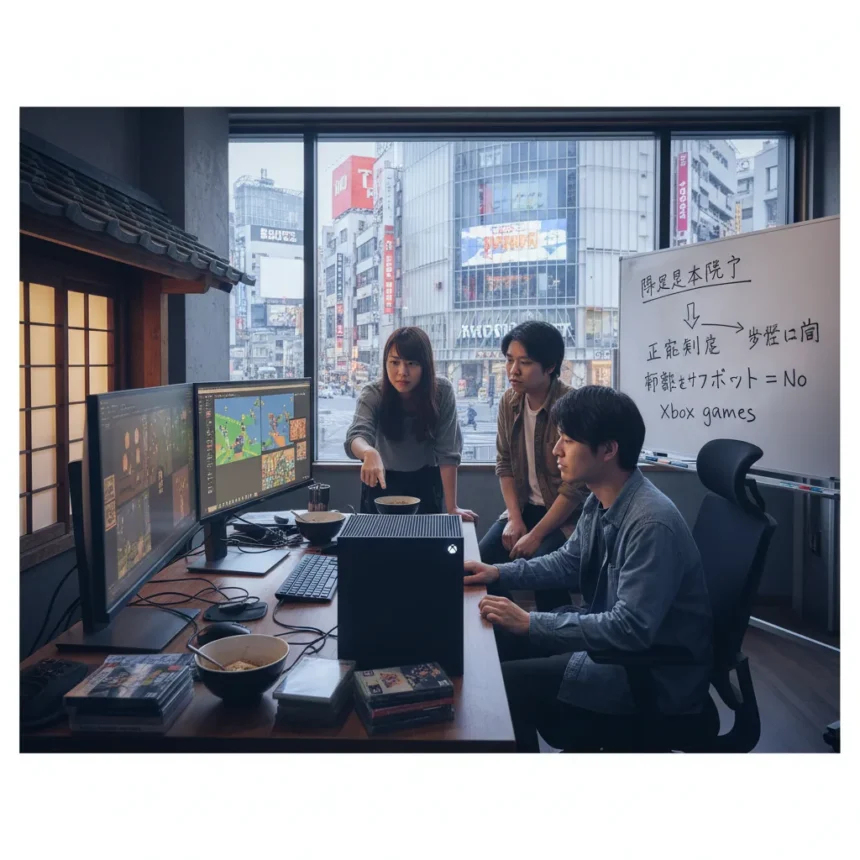
Xbox Japan retail presence remains a critical barrier for indie developers, according to a direct statement from Edelweiss, the Japanese studio behind Sakuna: Of Rice and Ruin. The developer’s blunt assessment—”It’s not even stocked in major retail stores, you know”—cuts to the heart of why the game skipped Xbox entirely. For a small team with limited manpower, supporting a platform that customers cannot physically find in their local shops simply does not make business sense.
Key Takeaways
- Edelweiss cited Xbox Japan retail presence and small team size as reasons for skipping Xbox platforms.
- Sakuna: Of Rice and Ruin launched on Nintendo Switch, PlayStation 4, and PC (Steam) in 2020, but never Xbox.
- The game costs $29.99 on Steam standard edition, $39.99 for Digital Deluxe.
- Xbox Cloud Gaming, Game Pass, and native Xbox Series X|S versions do not include Sakuna.
- Rune Factory: Guardians of Azuma Sakuna DLC launched on Xbox in February 2026, but the original game remains absent.
The Xbox Japan retail presence problem explained
When a major platform has minimal shelf presence in a developer’s home market, the cost-benefit calculation shifts dramatically. Edelweiss faced a choice: invest engineering resources into an Xbox port for a platform with negligible retail distribution in Japan, or allocate those same resources to platforms where customers could actually buy and discover the game. For a small indie studio, this is not a theoretical debate—it is a survival question. Sakuna: Of Rice and Ruin launched November 10, 2020, on Nintendo Switch, PlayStation 4, and PC (Steam), reaching North American audiences first before expanding to Japan. Each platform port requires localization, testing, and ongoing support. Without retail visibility, that effort becomes a sunk cost.
The contrast between Xbox’s global ambitions and its actual retail footprint in key markets reveals a structural problem Microsoft has not solved. PlayStation and Nintendo have decades of retail relationships in Japan. Their games sit on shelves in Akihabara, Shinjuku, and every electronics retailer across the country. Walk into a major Japanese game store and you will see PlayStation and Switch titles everywhere. Xbox? The shelf space is either absent or buried in a corner. For indie developers already stretched thin, this absence is disqualifying.
Why small teams cannot afford to support Xbox Japan
Edelweiss operates with the constraints that define most indie studios: limited staff, finite budget, and competing priorities. Porting a game to Xbox requires not just technical work but ongoing maintenance, patch support, and customer service. If the platform generates minimal sales in your home market, those resources are wasted. The developer’s candid statement reflects a calculation that many small Japanese studios likely make silently. Why spend engineering time on a platform that Japanese players cannot easily access?


This dynamic creates a vicious cycle for Xbox in Japan. Fewer indie games launch on the platform, which means fewer reasons for Japanese players to buy an Xbox console or subscribe to Game Pass. Fewer players mean less incentive for developers to port their games. Microsoft has attempted to break this cycle through Game Pass and cloud gaming initiatives, but Xbox Cloud Gaming remains unavailable for Sakuna despite the game’s availability on PlayStation Cloud Gaming and other cloud services. The company’s retail strategy—or lack thereof—continues to undermine these digital distribution efforts.
Sakuna’s platform strategy and what it reveals
Sakuna: Of Rice and Ruin is not an obscure title. The farming-action hybrid found an audience on Switch and PlayStation, with the game priced at $29.99 on Steam for the standard edition and $39.99 for the Digital Deluxe version. The game’s design appeals to players across multiple platforms, yet Xbox remains excluded. Even the recent Rune Factory: Guardians of Azuma Sakuna DLC, which launched on Xbox Series X|S in February 2026, does not include the original Sakuna game on the platform. This fragmentation—where a crossover character appears on Xbox but the character’s original game does not—underscores how thoroughly Xbox Japan retail presence shapes publisher and developer decisions.



Edelweiss’s decision to skip Xbox was not made in isolation. It reflects a broader pattern among Japanese indie developers who prioritize platforms where they can actually reach customers. Nintendo Switch dominates Japan’s portable gaming market. PlayStation maintains strong retail and digital presence. Steam offers global reach for PC players. Xbox offers none of these advantages in Japan’s specific market context. For a studio with limited manpower, the math is simple.
What this means for Xbox’s indie strategy
Microsoft’s push to acquire indie developers and secure exclusive content has not translated into broad Japanese market penetration. The company has invested heavily in Game Pass and cloud gaming, yet these initiatives cannot overcome the fundamental barrier of retail invisibility. Japanese consumers still prefer to buy games they can hold, see on shelves, and inspect in person. Digital-first strategies work in markets where internet infrastructure and digital payment adoption are already mature. Japan has both, but cultural preference for physical retail remains strong, particularly outside major urban centers.
Edelweiss’s statement is a wake-up call that no amount of Game Pass expansion or cloud gaming infrastructure can fix a retail distribution problem. Microsoft needs physical presence in Japanese game stores to compete for developer attention and player interest. Without it, studios like Edelweiss will continue to skip Xbox, and the platform’s library gap in Japan will only widen. The irony is that Sakuna: Of Rice and Ruin would fit perfectly on Xbox Game Pass—a farming-action game with niche appeal that thrives on subscription discovery. Instead, Japanese players who want to play it have no Xbox option at all.
Is Sakuna: Of Rice and Ruin available on Xbox Game Pass?
No. Sakuna: Of Rice and Ruin is not available on Xbox Game Pass for console or PC, nor is it available on Xbox Cloud Gaming. The game remains exclusive to Nintendo Switch, PlayStation 4, PlayStation 5 (via cloud), and PC (Steam).


Why did Edelweiss skip Xbox for Sakuna?
Edelweiss cited two primary reasons: limited manpower at the small studio and Xbox’s lack of retail stocking in major Japanese stores. Without retail presence, porting to Xbox became an unjustifiable use of the team’s limited resources.
Can you play Sakuna on Xbox Cloud Gaming?
No. Sakuna: Of Rice and Ruin is not available through Xbox Cloud Gaming. The game is available on PlayStation Cloud Gaming (for PlayStation Plus Premium subscribers) and other third-party cloud services like Shadow PC and airgpu, but not through Microsoft’s cloud platform.
The broader lesson here extends beyond Sakuna. Xbox Japan retail presence is not just a problem for Microsoft—it is a structural disadvantage that shapes which games get made, which platforms get supported, and ultimately which console players choose in one of the world’s largest gaming markets. Until Microsoft addresses the fundamental retail distribution challenge, statements like Edelweiss’s will keep coming, and Xbox’s library gap in Japan will keep growing.
Edited by the All Things Geek team.
Source: Windows Central




