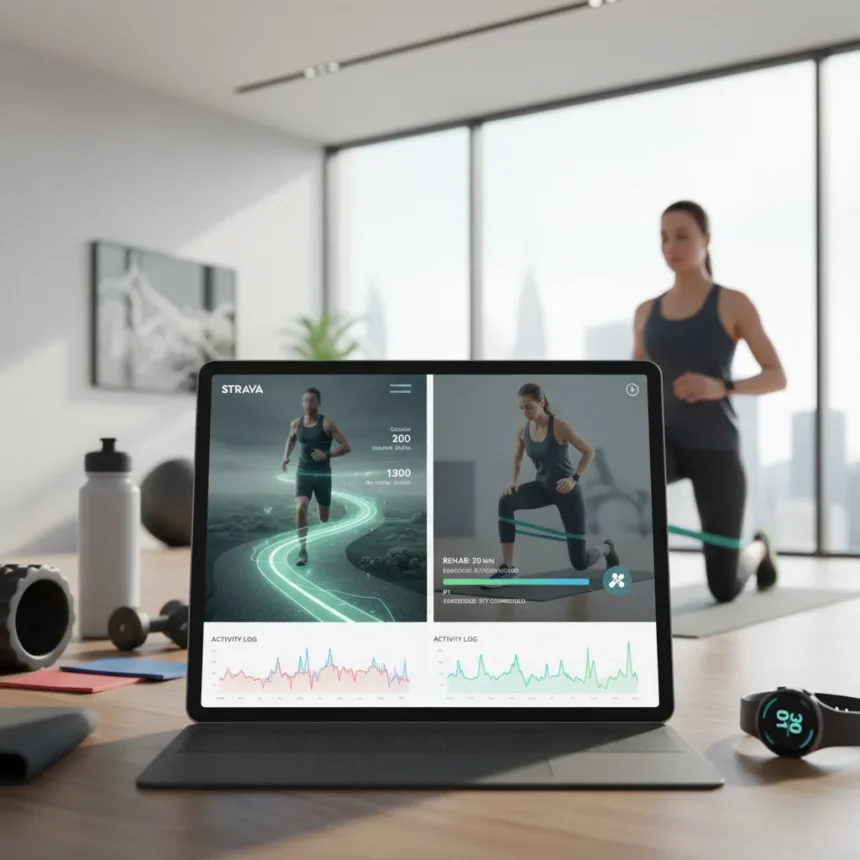
Strava Physical Therapy Mode is a new feature allowing users to log rehabilitation activities directly within the Strava app, integrating injury recovery tracking with standard fitness activities like runs and rides. The feature is available to all Strava users at no additional cost, marking the first time the platform has officially merged rehab data into core fitness logging.
Key Takeaways
- Strava Physical Therapy Mode lets athletes log rehab activities alongside standard workouts in one unified feed.
- The feature is free for all Strava users with no additional subscription required.
- Rehab logging includes duration, perceived effort, and progress notes for comprehensive recovery tracking.
- The update normalizes downtime and injury recovery as legitimate parts of athletic data.
- Integration reduces the stigma around taking time off for rehabilitation.
What Strava Physical Therapy Mode Actually Does
The core function is straightforward: when you’re sidelined by injury, you can now log your rehabilitation sessions the same way you’d log a 10-kilometer run or a cycling commute. Duration, perceived effort level, and detailed notes about your progress all feed into your Strava timeline and activity history. This transforms what was previously invisible downtime into documented athletic data, creating a complete picture of your fitness journey—including the parts where you’re not pushing hard.
By placing rehab activities alongside standard workouts, Strava is making a subtle but significant statement: recovery is not a pause in your athletic life. It’s part of it. For athletes returning from injury, this matters psychologically. Instead of watching your activity feed go dark while you’re in physical therapy, you’re actively logging progress, maintaining momentum in the app, and building a record of your comeback.
Why This Update Matters More Than It Appears
Fitness apps have historically treated injury as an absence—a gap in your data, a month or two with no entries. Strava’s move acknowledges that rehabilitation is active work requiring discipline, consistency, and tracking. The feature legitimizes what athletes already know: recovery is as much a part of performance as training is.


This also signals Strava’s broader ambition to become a comprehensive health and fitness platform rather than just a workout logging tool. By expanding beyond traditional exercise metrics into injury management, Strava is positioning itself as a platform that understands the full athletic lifecycle, not just the highlight-reel moments. For users managing chronic injuries, returning from surgery, or working through overuse issues, having a single app to track both training and rehab reduces friction and keeps everything in one place.
How Strava Physical Therapy Mode Compares to Standard Logging
Previously, athletes recovering from injury faced a choice: stop logging entirely, or try to shoehorn rehab into existing activity categories that didn’t fit. A physical therapy session isn’t a run or a ride. It’s targeted, often low-intensity work focused on specific movements and ranges of motion. Strava Physical Therapy Mode eliminates that awkward mismatch by giving rehab its own category, with fields designed specifically for recovery-focused work rather than performance metrics.



Standard Strava activities emphasize pace, distance, and intensity—metrics that make sense for competitive training but feel wrong when you’re doing ankle mobility drills or shoulder stability exercises. The new mode flips the priority: duration and perceived effort matter, but so do qualitative notes about how your injury is responding and what movements you’re working on. This is a different kind of fitness tracking, and Strava’s willingness to accommodate it shows the platform is listening to what its users actually need.
The Bigger Picture: Normalizing Injury in Athletic Culture
There’s a cultural element here worth examining. In fitness and athletic communities, injury can carry shame. You’re not training. You’re not improving. You’re falling behind. Strava Physical Therapy Mode doesn’t erase that pressure, but it reframes the narrative. By giving rehab the same visual weight as workouts in your activity feed, the app normalizes recovery as a legitimate part of athletic progress.
For a platform with millions of active users, this normalization has ripple effects. When your training partners see you logging physical therapy sessions, they see that recovery is part of the process. When you’re tracking your own rehab in the same place you track your PRs, you’re reinforcing the idea that both matter. It’s a small feature with outsized cultural implications for how athletes think about injury and downtime.
Is Strava Physical Therapy Mode worth using?
If you’re managing an injury and already use Strava, the feature costs nothing and takes minimal effort to adopt. Logging your rehab sessions keeps your activity history complete and prevents the psychological drag of an empty feed during recovery. The ability to add notes about your progress is genuinely useful for tracking how your injury responds to different exercises over time.



Does Physical Therapy Mode replace actual physical therapy tracking apps?
No. Strava’s feature is designed to integrate rehab into your broader fitness picture, not to replace specialized physical therapy apps or protocols. If your therapist has prescribed specific exercises with detailed form cues or progression schedules, a dedicated rehab app may still be more appropriate. Strava Physical Therapy Mode is best used as a companion tool to log your rehab sessions in the same place you track everything else.
Can you see other users’ physical therapy activities?
The research brief does not specify privacy settings or visibility controls for Physical Therapy Mode activities, so the exact sharing behavior remains unclear. You should check your app settings to confirm what appears on your public profile and what stays private, as this may vary based on your existing Strava privacy preferences.
Strava’s Physical Therapy Mode is a quiet but meaningful shift in how fitness apps approach the complete athletic experience. By treating injury recovery as data worth logging, the platform acknowledges what every injured athlete already knows: getting back to full strength is work, it deserves tracking, and it’s part of your fitness story. For anyone managing an injury, that recognition alone makes the feature worth exploring.
Edited by the All Things Geek team.
Source: T3