



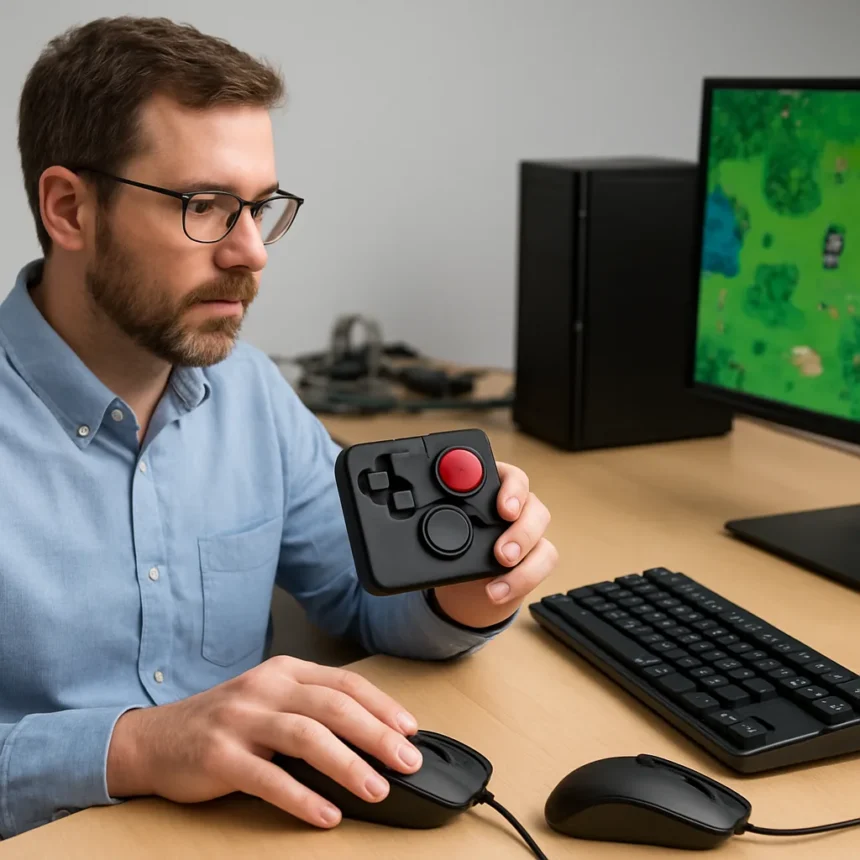
ThinkPad TrackPoint accessibility is getting a creative reimagining from an engineer who saw potential in Lenovo’s iconic pointing stick. Rather than accept the TrackPoint as a standard laptop input device, this innovator is transforming it into a specialized accessibility controller for PC gaming and other applications.
Key Takeaways
- An engineer is converting a ThinkPad TrackPoint into a custom accessibility gaming controller.
- The project demonstrates unconventional approaches to accessible input device design.
- TrackPoint’s precision and tactile feedback make it suitable for accessibility applications beyond laptops.
- The controller could expand gaming accessibility options for players with different input preferences.
- Community interest in the project suggests growing demand for customizable accessibility hardware.
Why TrackPoint Hardware Matters for Accessibility
The ThinkPad TrackPoint has remained largely unchanged since its introduction, a testament to its fundamental design strength. Unlike trackpads, which require precise finger movements across a surface, the TrackPoint’s pointing stick delivers control through subtle pressure and directional input. For accessibility applications, this distinction matters significantly. A pointing stick demands less hand mobility than a trackpad and reduces repetitive stress from large hand movements across a flat surface. The TrackPoint’s compact form factor also means it occupies minimal desk space, making it practical for users with limited mobility or workspace constraints.
The engineer’s decision to repurpose TrackPoint hardware rather than design from scratch reflects smart engineering. The component already exists, is proven reliable, and carries decades of refinement. By extracting this input mechanism and adapting it for gaming, the project sidesteps the need to develop entirely new hardware while leveraging technology already trusted by millions of laptop users worldwide.
How the Custom Controller Reimagines Gaming Input
Traditional gaming controllers assume a specific grip style and hand position. Not all players can accommodate these assumptions. Some users experience limited hand dexterity, arthritis, or other conditions that make standard controller layouts uncomfortable or impossible. A TrackPoint-based controller bypasses these constraints by offering a fundamentally different input method. Rather than requiring button presses distributed across a controller face, the TrackPoint approach concentrates input into a single pointing mechanism with customizable pressure sensitivity and directional response.

The project’s potential extends beyond gaming. Accessibility controllers designed around TrackPoint hardware could serve users in productivity applications, creative software, and accessibility tools. The precision required for laptop work translates directly to precision gaming, and the muscle memory users develop on ThinkPads could transfer smoothly to a gaming context. This cross-application utility makes the project more broadly valuable than a single-purpose gaming device.
Community Response and Future Potential
The engineer’s work has generated genuine enthusiasm from the tech community, with observers recognizing both the technical achievement and the accessibility implications. Interest in custom input devices has grown as mainstream gaming largely ignores players with non-standard accessibility needs. Commercial gaming peripheral manufacturers rarely develop controllers specifically for users with limited hand mobility or dexterity challenges, leaving a gap that community projects like this one begin to fill.
The success of a TrackPoint-based accessibility controller could inspire similar hardware modifications. If the final result proves reliable and practical, it demonstrates that existing laptop components can be repurposed for accessibility gaming without requiring specialized manufacturing or significant cost. Other engineers might adapt similar components—trackpads, keyboard switches, or pointing devices from other manufacturers—into accessibility tools. This ripple effect could accelerate the broader shift toward more inclusive gaming hardware.
What Sets This Project Apart From Standard Controllers
Most gaming accessibility discussions focus on software solutions: remapping controls, adjusting sensitivity, or adding on-screen keyboards. Hardware solutions remain rare because they require both engineering expertise and manufacturing capability. This engineer’s project bridges that gap by working with existing hardware. The TrackPoint isn’t designed for gaming, yet its core characteristics—precision, tactile feedback, and pressure sensitivity—align with what accessibility-focused gamers need. This mismatch between original design intent and new application is precisely what makes the project compelling.
Compared to mainstream gaming controllers, which prioritize button density and ergonomic grip shapes, a TrackPoint controller prioritizes precision input and minimal hand movement. This represents a fundamental philosophical difference in controller design. Where standard controllers assume users want rapid button combinations, a TrackPoint approach assumes users benefit from precise, deliberate input. For many accessibility scenarios, that assumption is more accurate.
Technical Considerations and Challenges Ahead
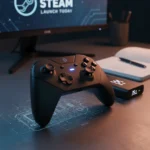
Converting a laptop component into a standalone gaming controller requires solving several technical problems. The TrackPoint must interface with gaming systems via standard protocols like USB or wireless connectivity. Pressure sensitivity needs calibration to map correctly to in-game actions. Button mapping must remain flexible so different games can use the controller’s inputs effectively. These challenges are solvable—the engineer has already demonstrated progress—but they require careful engineering to ensure reliability and responsiveness.


The project also highlights how existing hardware ecosystems contain untapped potential. ThinkPads ship millions of units annually, each containing a TrackPoint that users typically never think about. Extracting and repurposing this component for accessibility applications represents a form of circular innovation: taking proven technology and finding new contexts where its characteristics provide genuine value.
Could This Inspire Mainstream Accessibility Gaming?
If the final controller succeeds, it could push mainstream gaming peripheral manufacturers to reconsider accessibility design. Currently, most gaming hardware assumes a standard hand size, grip strength, and dexterity range. A successful TrackPoint controller proves that alternative input methods can deliver gaming performance without requiring compromise. Manufacturers might then develop their own accessibility-focused controllers, recognizing a market segment that existing products ignore.
The project also demonstrates that accessibility innovation sometimes comes from individual engineers rather than large corporations. Companies often lack the motivation to serve niche markets, but a single person with the right skills and passion can create solutions that benefit hundreds or thousands of users. This bottom-up approach to accessibility hardware development may become increasingly important as gaming communities demand more inclusive options.
Is a TrackPoint controller suitable for all game genres?
A TrackPoint-based controller works best for games that prioritize precision over rapid button inputs—strategy games, puzzle games, and point-and-click adventures benefit most from its strengths. Fast-paced shooters or fighting games that demand simultaneous multi-button combinations might feel less natural on a TrackPoint interface. However, customizable button mapping and programmable sensitivity could adapt the controller to various genres, making it more versatile than a standard pointing stick alone.
Could this project lead to commercial accessibility controllers?
If the engineer’s prototype proves reliable and the gaming community embraces it, commercial manufacturers might license the design or develop similar products. The market for accessibility gaming hardware remains underserved, and proven designs attract business interest. However, commercial viability depends on manufacturing scale, cost reduction, and regulatory compliance—challenges that individual engineering projects don’t typically face. The prototype’s success would be an important first step, but commercialization would require different expertise.
What makes TrackPoint better than a standard mouse for accessibility gaming?
TrackPoint requires less hand movement than a mouse, reducing fatigue for users with limited mobility. Its pressure-sensitive input allows fine control without large physical gestures. The pointing stick also occupies minimal space, making it practical for users with workspace constraints. However, TrackPoint isn’t universally better—different users have different accessibility needs. Some prefer mice, others prefer trackpads. A TrackPoint controller simply adds another option to the accessibility toolkit, expanding choices rather than replacing existing solutions.
The engineer’s TrackPoint accessibility controller project matters because it challenges assumptions about how gaming hardware must be designed. By extracting a component from everyday laptop computers and reimagining its purpose, the project demonstrates that accessibility innovation doesn’t require latest technology—it requires creative thinking about how existing tools can serve users with different needs. If the final result succeeds, it could inspire a broader movement toward repurposing laptop components for accessibility applications, ultimately making gaming more inclusive for everyone.
This article was written with AI assistance and editorially reviewed.
Source: Windows Central