







Steam Controller scalping has become the defining story of Valve’s controller comeback, with resellers demanding $300 and higher on eBay for a device that costs $99 at launch. The phenomenon reveals a supply crisis so severe that pre-orders evaporated almost immediately, leaving legitimate buyers with no choice but to either wait or pay scalper premiums. This is not a new problem in gaming hardware, but it exposes Valve’s fundamental miscalculation about demand forecasting.
Key Takeaways
- Steam Controller scalpers list devices for $300+ on eBay, triple the official $99 price
- Pre-orders sold out almost immediately, signaling severe supply constraints
- Secondary market resellers are profiting from Valve’s inability to meet demand
- Supply shortages reward bots and resellers over genuine gamers and enthusiasts
- Valve’s launch strategy failed to prevent classic scalping dynamics
Why Steam Controller Scalping Exploded So Quickly
Steam Controller scalping happened because supply could not match demand from day one. When pre-orders opened, they sold out in hours, not days. This creates the perfect environment for resellers: scarcity plus unmet demand equals margin opportunity. Scalpers do not care about the controller’s features or ecosystem integration—they care only that thousands of frustrated buyers exist with no legitimate way to obtain one.
The mechanics are straightforward. A reseller buys five or ten units at $99 each, then lists them on eBay with asking prices of $300, $400, or higher. Some bids will fail. Some will succeed. Even a 50 percent success rate on those inflated prices generates substantial profit with minimal effort. The presence of Steam Controller scalping on eBay proves that this dynamic is already playing out at scale, not as isolated listings but as a coordinated resale operation.
Steam Controller Scalping Versus Legitimate Demand
The gap between scalper prices and official pricing reveals how badly Valve misjudged the market. A $99 controller that resells for $300 is not a luxury item commanding a premium—it is a victim of undersupply. Legitimate buyers want the device at its intended price. Scalpers exist only because Valve created a scarcity window that made resale profitable.

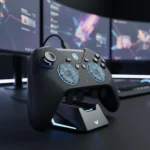
Compare this to products with healthy supply: a well-stocked peripheral rarely attracts scalper attention because the profit margin collapses. If anyone can buy the Steam Controller at retail, reselling it for $300 becomes impossible. Scalping thrives in the gap between what a company ships and what the market actually wants. Valve’s pre-order sellout proved demand exceeded supply by a factor of at least 3-5x, based on the prices scalpers are asking.
What Valve’s Supply Failure Means for Hardware Launches
Steam Controller scalping is not unique to this device, but it is a warning sign about Valve’s ability to execute hardware at scale. The company has experience manufacturing and distributing Steam Decks, yet the controller launch still resulted in immediate pre-order exhaustion. Either Valve severely underestimated demand, or it intentionally constrained supply to create launch hype. Neither scenario reflects well on the company’s planning.


For consumers, the lesson is grim. Valve’s next hardware launch will likely face the same dynamics: limited initial stock, scalpers waiting at checkout, and months of secondary market inflation before supply stabilizes. The only solution is for Valve to dramatically increase production capacity or implement purchase limits and anti-bot verification at checkout. Waiting for stock to normalize is not a viable strategy when resellers are already asking triple the retail price.
Can Valve Stop Steam Controller Scalping?
Stopping Steam Controller scalping entirely is impossible without addressing the root cause: insufficient supply. Valve could implement per-account purchase limits, require Steam authentication tied to account age, or use bot-detection systems at checkout. These measures slow scalpers but do not eliminate them. A determined reseller with multiple accounts, credit cards, and proxy addresses can still acquire units.
eBay and other marketplaces could restrict listings for items under a certain age or implement price caps, but enforcement is inconsistent across platforms. Ultimately, the only permanent fix is for Valve to manufacture enough Steam Controllers to satisfy demand within the first few weeks of launch. Until that happens, scalpers will continue to profit from the gap between supply and desire.
Is Steam Controller scalping happening on other platforms besides eBay?
The research brief confirms Steam Controller scalping activity on eBay, but does not specify whether similar resale activity occurs on other platforms like Facebook Marketplace, Reddit’s hardware trading communities, or international resale sites. Scalping typically spreads across all major secondhand marketplaces once initial scarcity is established, so activity beyond eBay is likely but not explicitly documented in available sources.



Why does Valve keep undershooting demand for hardware launches?
Valve’s supply forecasting has struggled with multiple hardware releases, including Steam Deck availability challenges in 2022. The company may prioritize manufacturing caution over aggressive production ramps, or it may lack supply chain expertise compared to established console makers like Sony and Microsoft. Without a statement from Valve explaining the Steam Controller pre-order sellout, the exact reason remains unclear, though the pattern suggests structural forecasting issues rather than isolated bad luck.
How long will Steam Controller scalp prices stay elevated?
Scalp prices typically decline as supply increases. Once Valve ramps production and stock becomes available at retail for weeks or months without selling out, resellers will be forced to lower asking prices to move inventory. This process usually takes 2-4 months for gaming hardware, though demand strength determines the timeline. If Steam Controller demand remains extremely high, elevated secondary market prices could persist longer.
Steam Controller scalping is a self-inflicted wound. Valve created the conditions for resellers to profit by launching with insufficient stock, then failed to restock quickly enough to satisfy demand. Buyers who wanted the device at $99 are now choosing between waiting months for supply to normalize or paying $300 to a scalper today. That is not a choice—it is a penalty for Valve’s supply miscalculation.
This article was written with AI assistance and editorially reviewed.
Source: Tom's Hardware