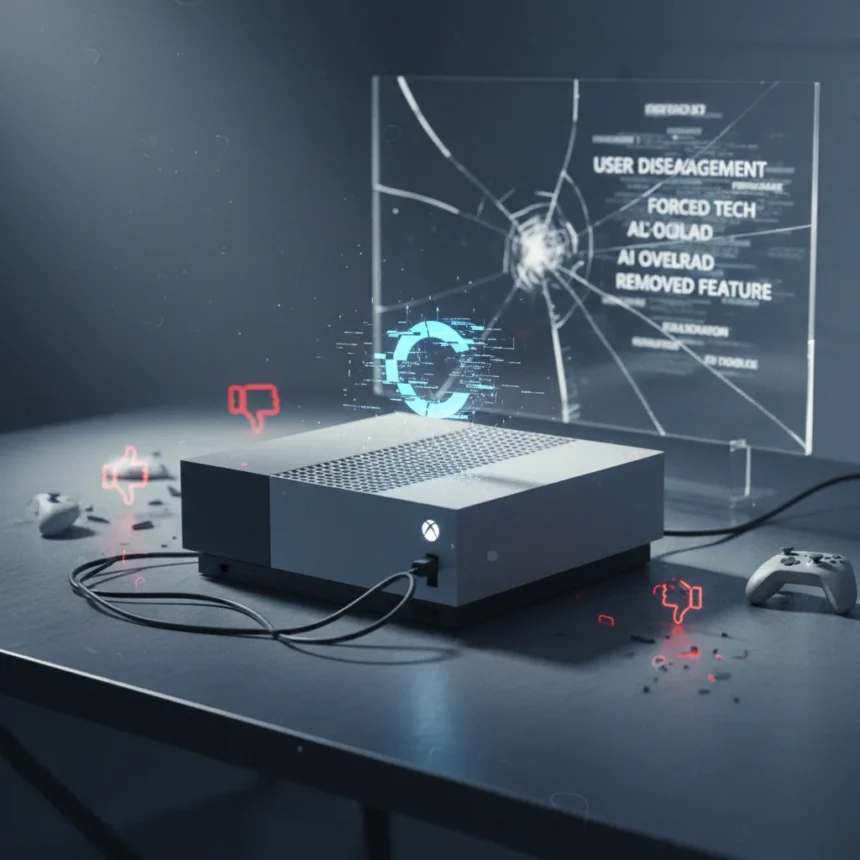
The Xbox Copilot discontinuation represents a rare moment of clarity from Microsoft: not every platform needs artificial intelligence, and forcing it onto users who don’t want it is a waste of engineering resources. After integrating Copilot into Xbox, Microsoft has now quietly removed the feature, acknowledging what gaming communities understood from the beginning.
Key Takeaways
- Microsoft has discontinued Copilot integration on Xbox after users showed minimal adoption.
- The feature was designed to assist with gaming queries but found no meaningful audience.
- Xbox Copilot’s failure highlights the risks of AI-first product strategy without user demand.
- Gaming platforms remain primarily engagement-driven; AI assistance was peripheral to core gameplay.
- The decision signals Microsoft may be reconsidering where Copilot actually adds value.
Why Xbox Never Needed Copilot
Xbox Copilot was positioned as a gaming assistant, intended to help players navigate menus, find games, and answer questions about their library. On paper, this made sense. In practice, it solved a problem nobody had. Gamers already navigate Xbox interfaces intuitively, and when they need help, they search YouTube or Reddit—not an AI chatbot embedded in their console. The feature existed because Microsoft had Copilot and needed places to put it, not because Xbox users demanded AI assistance.
The core issue was misalignment between product strategy and user behavior. Console gaming is about immersion, engagement, and entertainment. A conversational AI in the dashboard doesn’t enhance any of those dimensions. It’s friction masquerading as innovation. Players want faster load times, better game recommendations, and seamless social features—not a chatbot that requires typing queries into a controller.
The Broader Pattern of Forced AI Integration
Xbox Copilot’s discontinuation fits a larger pattern: Microsoft has been aggressively injecting Copilot into Windows, Office, and consumer products regardless of whether users actually want it. Some integrations work because they solve real problems—Copilot in Word can genuinely assist with drafting. Others, like Copilot on Xbox, become abandoned features that clutter the interface and drain resources.



The lesson here extends beyond gaming. When companies prioritize AI integration as a strategic mandate rather than responding to user demand, they risk wasting development effort on features that get ignored. Discontinuing Xbox Copilot is Microsoft admitting that not every surface deserves an AI layer. That’s a valuable admission in an industry obsessed with shoving machine learning into everything.
What This Means for Gaming AI
The Xbox Copilot failure doesn’t mean AI has no role in gaming. It means AI must solve a specific, real problem for players. Predictive features that recommend games based on play history, AI-driven matchmaking that improves multiplayer balance, or AI-generated content that extends game lifespans—these are meaningful applications. A conversational assistant in the dashboard isn’t.



Going forward, gaming companies should treat AI as a tool for specific problems, not as a checkbox feature to add to every product. Xbox’s pivot away from Copilot suggests Microsoft understands this distinction now. The company still invests heavily in AI across its product portfolio, but it’s becoming more selective about where that investment actually benefits users.
Did Microsoft test Xbox Copilot with actual players before launch?
The research available does not specify whether Microsoft conducted user testing before deploying Xbox Copilot. What is clear is that adoption was minimal, suggesting either the feature was not tested adequately or testing results were ignored in favor of a broader AI-first mandate.
Could Xbox Copilot return in a different form?
It’s possible, but unlikely without significant redesign. For Copilot to succeed on Xbox, it would need to solve a problem gamers actually face—not just be a general-purpose chatbot. A voice assistant that understands game-specific queries or a system that learns player preferences over time might have more traction than the original implementation.
How does this compare to AI integration in PlayStation or Nintendo?
PlayStation and Nintendo have taken more measured approaches to AI, focusing on specific features rather than broad platform integration. Their restraint has avoided the backlash Microsoft faced with Xbox Copilot, suggesting that gaming audiences prefer AI that enhances gameplay rather than complicates the interface.


Microsoft’s discontinuation of Xbox Copilot is a reminder that AI enthusiasm must meet user reality. The company spent resources building a feature nobody wanted, then spent more resources removing it. The real win here isn’t the removal itself—it’s that Microsoft finally listened to what gamers were telling them all along: focus on games, not gimmicks.
Edited by the All Things Geek team.
Source: TechRadar