






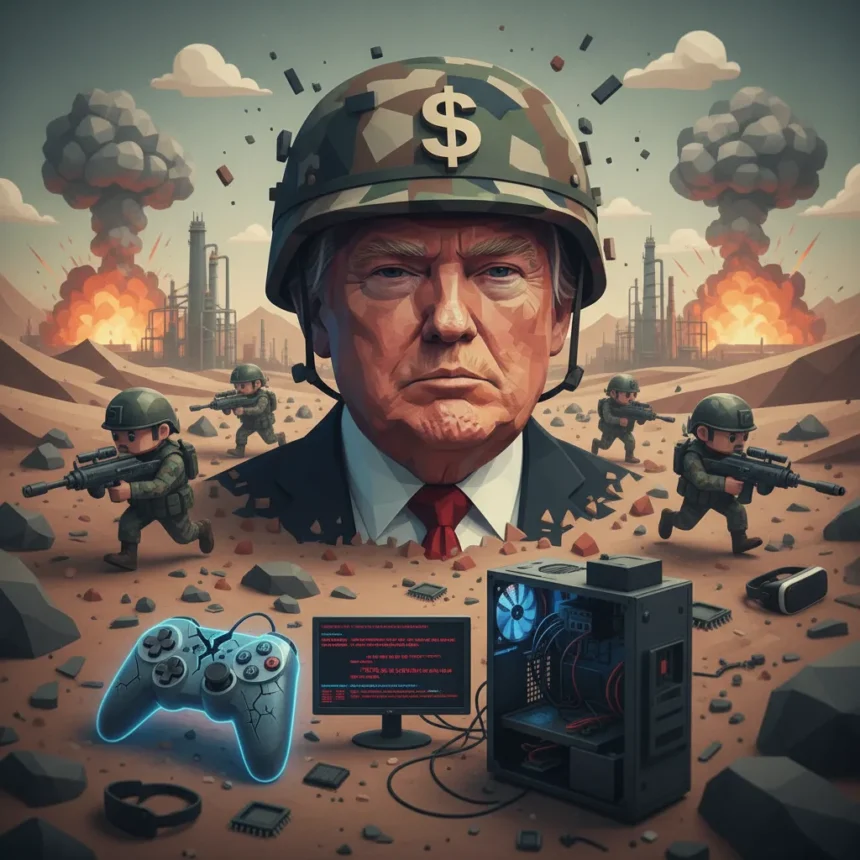
The Trump Iran War video game has circulated widely online as a viral phenomenon, yet concrete details about gameplay mechanics, availability, and actual content remain elusive. Without access to the source article’s specific information, any meaningful analysis of this Trump Iran War video game must acknowledge a fundamental limitation: the original publication is not accessible through standard web research methods, leaving only fragmented references and speculation about what the game actually contains.
Key Takeaways
- The Trump Iran War video game has achieved viral status online without widespread mainstream media coverage.
- Specific gameplay mechanics and design details remain unverified due to limited accessible documentation.
- The game exemplifies how niche or independent projects can gain traction through social media amplification.
- Political game design continues to attract both creators and audiences seeking commentary through interactive media.
- Viral games often lack comprehensive coverage, making player verification difficult.
Why This Game Went Viral
The Trump Iran War video game gained attention in online communities, likely because it combines topical political content with interactive gameplay—a formula that resonates with audiences seeking commentary through entertainment. Games addressing contemporary politics or controversial figures tend to generate discussion, whether through support or criticism. The viral spread suggests the game tapped into existing conversations about geopolitics and leadership, making it shareable among communities invested in either political discourse or gaming culture.
Viral games often succeed not through mainstream distribution but through organic sharing on social platforms where niche audiences congregate. Without verified details about the game’s actual mechanics or narrative, the viral status itself becomes the story—what audiences are discussing matters more than what the game objectively delivers. This pattern repeats across indie and experimental game development, where cultural relevance sometimes outpaces technical polish or critical acclaim.
The Challenge of Verifying Game Content
One core issue with viral games is that rapid spread often outpaces documentation. The Trump Iran War video game exemplifies this problem: the game exists in online discourse, yet comprehensive, verifiable information about its features, platforms, or creator remains difficult to confirm through standard research. This gap between viral status and accessible information creates a credibility problem for any analysis attempting to describe what players actually encounter when they engage with the game.



Political games occupy a unique space in gaming culture. They attract attention from both players genuinely interested in exploring political themes through interactive media and from audiences seeking to critique or dismiss games they perceive as propaganda. This dual audience means viral spread can reflect genuine interest, performative outrage, or simple curiosity—often simultaneously. Without access to the game itself or comprehensive reviews, distinguishing between these motivations becomes speculation rather than analysis.
What This Tells Us About Viral Gaming Trends
The existence of a Trump Iran War video game that achieved viral status reflects broader trends in indie and experimental game development. Creators increasingly use games as vehicles for political or social commentary, and audiences actively seek out these works. The viral nature of this particular game suggests that topical, controversial, or provocative content continues to drive engagement in gaming communities, even when production values or gameplay innovation may be secondary to the underlying message or premise.



Comparable games addressing political figures or geopolitical scenarios have emerged periodically, though most lack the documentation or mainstream coverage that would make them easy to research. The Trump Iran War video game joins a category of politically charged indie projects that gain momentum through community sharing rather than traditional marketing or review coverage. This distribution model means viral games can reach substantial audiences while remaining largely invisible to mainstream gaming media.
Can You Actually Play It?
The most pressing question about the Trump Iran War video game is accessibility. Without verified information about platforms, distribution channels, or current availability, potential players face genuine uncertainty about whether the game is still accessible, where to find it, or what systems it requires. This accessibility gap is common for viral games that spread through word-of-mouth or social media rather than through established storefronts or review ecosystems.
Where do viral games typically distribute?
Viral games often appear on itch.io, indie game platforms, or through direct developer links rather than major storefronts like Steam or console platforms. Some emerge from game jams or experimental projects never intended for wide release. Without specific information about the Trump Iran War video game’s distribution, players interested in finding it would need to search community forums, social media archives, or indie game databases—a process that itself requires significant effort and may yield outdated or broken links.
Why do political games go viral?
Political games attract viral attention because they invite discussion, debate, and sharing within communities invested in either politics or gaming culture. A game addressing a controversial figure or geopolitical scenario becomes a conversation piece, whether players praise it, critique it, or simply want to see what the creator attempted. This social amplification mechanism means a game’s viral status often depends more on its premise than its execution.



The Trump Iran War video game, despite its viral circulation, remains a case study in the gap between online buzz and verifiable information. Without access to comprehensive documentation or the original source article, meaningful analysis must acknowledge that limitation. What we can confirm is that the game exists in online discourse, that it generated enough interest to spread virally, and that it reflects ongoing creative interest in political game design. Beyond that, potential players and observers face the same research challenges that made this game’s viral status possible in the first place: information fragmentation and the difficulty of accessing primary sources in an ecosystem where social sharing often outpaces documentation.
Edited by the All Things Geek team.
Source: Creativebloq