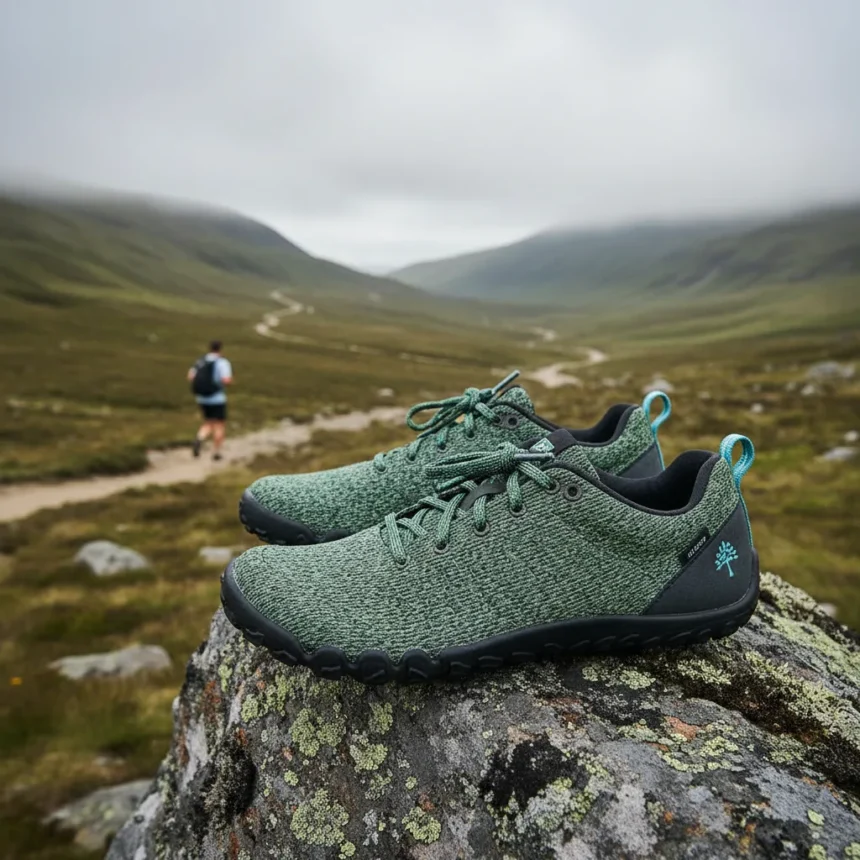
The Freet Howgills minimalist trail shoes are a fully recycled bootie designed for trail running and off-road use that finally convinced a skeptic that barefoot running isn’t marketing hype. Most minimalist shoes feel like an experiment in suffering. The Howgills feel like an invitation.
Key Takeaways
- Fully recycled construction appeals to runners who care about environmental impact alongside performance.
- Barefoot-style design works for trail running, not just road or gym use.
- Minimalist shoes require a different approach to running form and foot strength than traditional cushioned trainers.
- The Howgills converted a skeptical reviewer into a barefoot running believer.
- Off-road terrain suits minimalist footwear better than pavement for many runners.
Why Freet Howgills minimalist trail shoes stand out
The Freet Howgills are built on a simple premise: trail running does not require thick foam, ankle support, or the industrial architecture of mainstream trail shoes. They are a bootie, not a traditional shoe, which means they sit closer to the foot and provide minimal interference between your sole and the ground. That directness is the entire point. Most runners coming from cushioned trainers expect this to feel raw and punishing. Instead, the Howgills feel protective without being padded.
The recycled materials claim is not window dressing. Using fully recycled construction for a trail shoe means the designers had to solve real engineering problems without reaching for virgin plastics or new rubber compounds. That constraint forces innovation. The result is a shoe that performs because it was built with limits, not despite them.
Barefoot-style trail shoes occupy a narrow space in the running market. They sit between ultra-minimal shoes designed for gym or indoor use and traditional trail runners built for technical terrain and long descents. The Howgills lean into off-road performance without abandoning the barefoot philosophy. That balance is rare enough to matter.

How minimalist trail shoes change your running
Switching to the Freet Howgills minimalist trail shoes means relearning how to run. Your feet have spent years in cushioned shoes that absorb impact and correct pronation. Minimalist footwear does neither. Instead, your foot lands differently, your arch engages differently, and your calf muscles work harder. For the first week, this feels wrong. By week three, it feels natural. By week six, cushioned shoes feel like running in slippers.
The barefoot transition requires patience. Most running injuries attributed to minimalist shoes actually come from runners who switched too fast, too far. A sensible approach means mixing the Howgills with your regular trainers for the first month, gradually building foot strength and neuromuscular adaptation. Trail running accelerates this process because uneven ground forces constant micro-adjustments. Your feet strengthen faster on trails than on road.



The Howgills’ bootie design means they sit snug around the midfoot and ankle without traditional lacing or support structures. This matters on technical terrain where your foot needs to feel every root and rock. It also means they perform best on actual trails rather than smooth pavement. Road running in minimalist shoes is possible but pointless. Trails are where they shine.
Freet Howgills minimalist trail shoes versus mainstream alternatives
Most trail shoes prioritize protection, cushioning, and ankle support. They have thick midsoles, aggressive lugs, and reinforced uppers. They are built for runners who want the ground filtered through technology. The Freet Howgills take the opposite approach. They assume your foot is smarter than the shoe and trust you to handle terrain without mediation.
This is not objectively better. A runner tackling technical alpine terrain with steep descents will likely prefer a traditional trail shoe with more support and grip. A runner doing moderate trail work in forests or hills will find the Howgills sufficient and far more connected to the ground. The choice depends on your terrain, your foot strength, and your philosophy about what a shoe should do.
Minimalist shoes also appeal to runners prioritizing sustainability. Most trail shoes are petroleum-based products with complex supply chains. The Howgills’ fully recycled construction means less extraction, less manufacturing waste, and less environmental cost. That matters to some runners more than marginal gains in cushioning or traction.



Who should buy the Freet Howgills?
The Freet Howgills minimalist trail shoes suit runners who are already comfortable with minimalist footwear or willing to transition carefully. They work best for moderate trail running on established paths rather than technical scrambling. They appeal to runners who value environmental impact and want footwear that lets them feel the ground. They suit people who run shorter distances where impact absorption is less critical and ground feedback is more valuable.
They do not suit runners coming straight from cushioned shoes without a transition period. They do not suit runners with a history of foot or ankle issues without professional guidance. They do not suit runners doing long-distance trail marathons where traditional protection becomes essential. Know yourself before buying.
What makes the Howgills different from other minimalist options?
Most minimalist shoes are designed for road or gym use. The Freet Howgills are built specifically for trail running and off-road escapades. That focus means the sole is designed for grip on dirt, roots, and rocks rather than asphalt. The bootie construction protects your foot on uneven terrain better than a traditional minimal shoe. The recycled material story is not an afterthought but integral to the design.
Should you transition to minimalist trail shoes if you run in cushioned trainers?
A transition is possible but requires patience. Start with one or two runs per week in the Freet Howgills minimalist trail shoes while maintaining your usual routine in cushioned shoes. Gradually increase frequency over four to six weeks. Your feet will adapt, your calf muscles will strengthen, and your proprioception will improve. Rushing this process causes injury. Taking time works.
Are minimalist shoes suitable for long-distance trail running?
Minimalist shoes work for moderate distances where ground feedback matters more than impact protection. For ultramarathons or full-day mountain expeditions, most runners eventually return to traditional trail shoes with more cushioning and support. The Freet Howgills excel at distances where you want to feel the terrain but do not need industrial-grade impact absorption.
The Freet Howgills minimalist trail shoes prove that barefoot running is not a cult belief but a legitimate choice for runners willing to change how they approach footwear. They convert skeptics because they work, not because they preach. If you have been curious about minimalist trail shoes but intimidated by the transition, the Howgills offer a genuine entry point. Start slow, trust the process, and let your feet relearn what they already know.
Edited by the All Things Geek team.
Source: T3