







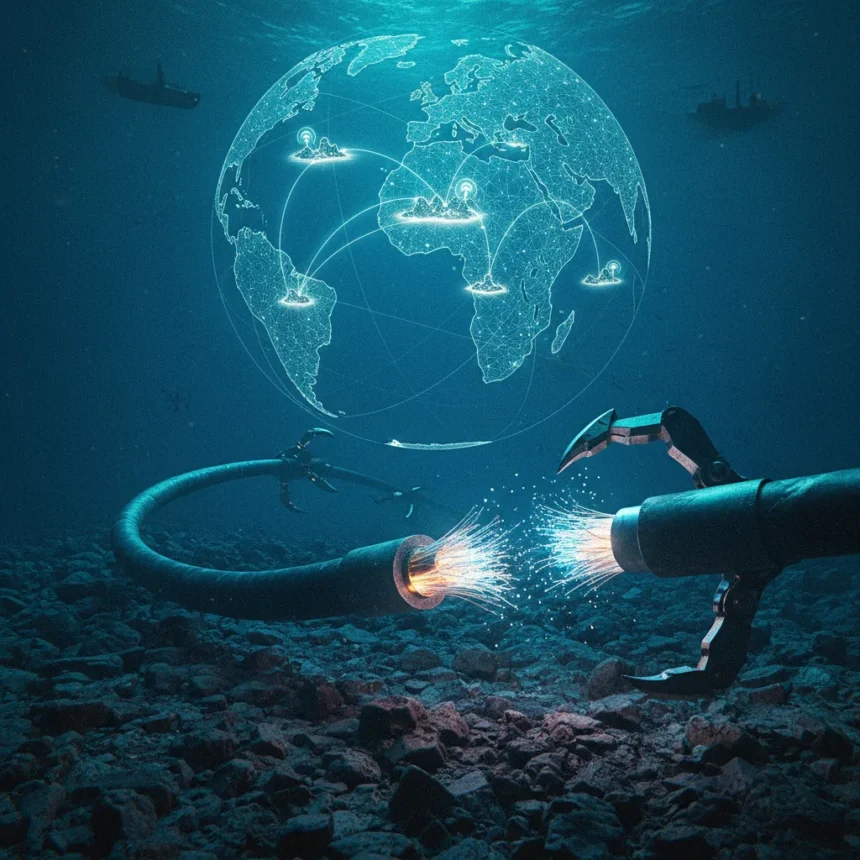
Undersea cable attacks and accidental damage are emerging as a critical vulnerability for island nations worldwide. Comparitech’s analysis of all 48 island nations and their dependence on 126 undersea cables reveals a troubling pattern: many island states rely on a handful of thin, exposed connections—some no thicker than a garden hose—for their entire internet access.
Key Takeaways
- Island nations depend on 126 undersea cables for internet connectivity, with limited redundancy.
- The International Cable Protection Committee reports 150 to 200 cable faults annually, mostly from ship anchors.
- 70% to 80% of undersea cable faults result from accidental human activity, not deliberate sabotage.
- Haiti, Dominica, Bahrain, and Brunei face the highest vulnerability to cable outages.
- Even minor cable damage can isolate island populations from critical online services and communications.
Why Undersea Cable Attacks Matter Now
Undersea cables carry over 99% of intercontinental data traffic, making them the backbone of global connectivity. For island nations, this dependence is absolute—there is no terrestrial backup. A single cable cut or failure can plunge an entire nation offline. The timing of this vulnerability analysis matters because geopolitical tensions are rising, fishing activity remains unpredictable, and the cables themselves receive minimal protection despite their critical importance.
The International Cable Protection Committee (ICPC) documents the scale of the problem: between 150 and 200 faults occur on undersea cables each year. The good news is that most are accidental. According to the ICPC, 70% to 80% of these faults stem from ship anchors dragging across the seafloor, fishing equipment snagging cables, or other unintentional human activity. The remainder come from technical failures or natural disasters. But for island nations with only one or two cable connections, even accidental damage becomes a crisis.
Which Island Nations Face the Highest Risk From Undersea Cable Attacks
Comparitech’s risk assessment considered three factors: the number of undersea cables serving each nation, local fishing activity that could accidentally snag cables, and proximity to conflict zones where sabotage might occur. The results paint a stark picture of vulnerability. Haiti emerges as the most at-risk nation in population terms, with 11.6 million people potentially affected by a cable outage. Dominica, Bahrain, and Brunei round out the highest-risk group.


Why are these nations so exposed? Haiti has limited cable redundancy and high fishing activity in nearby waters. Dominica faces similar constraints, with few alternative connections. Bahrain’s strategic location in the Persian Gulf puts it near shipping lanes where anchor damage is common. Brunei’s geographic isolation means fewer cable options. In contrast, New Zealand—also an island nation—ranks as the least risky, likely because it benefits from multiple cable routes and lower fishing activity in key areas.
The vulnerability is not evenly distributed. Some island nations have invested in cable diversity, ensuring that if one cable fails, others remain active. Others have not. This creates a two-tier system where geographic luck and infrastructure investment determine resilience.



Accidental Damage vs. Deliberate Sabotage: The Real Threat
While the framing of undersea cable attacks conjures images of deliberate sabotage, the data tells a different story. Most cable faults are accidents waiting to happen. A fishing vessel dropping anchor in the wrong spot, a cargo ship’s dragging anchor, or even natural seismic activity can sever critical connections. These incidents are hard to predict and harder to prevent, especially in waters where fishing is economically vital to local communities.
That said, the geopolitical dimension is real. Nations with advanced naval capabilities could theoretically target undersea cables, and the lack of international enforcement mechanisms makes cables an attractive target during conflicts. For island nations, this dual threat—accidental and intentional—creates an asymmetric vulnerability that no single nation can solve alone.
What Happens When an Island Loses Internet Access
The consequences of an undersea cable failure extend far beyond inconvenience. Island nations lose access to banking systems, hospitals cannot access patient records or order medications, schools go offline, and governments lose the ability to communicate. For developing island nations, an internet blackout can stall economic activity for weeks or months while repairs are completed. Repair ships must be dispatched, cables must be located on the seafloor, and the break must be spliced—a process that can take 30 days or longer depending on weather and accessibility.
Haiti’s vulnerability is compounded by its economic dependence on tourism and remittances, both of which require reliable internet. Dominica faces similar pressures. A prolonged cable outage would devastate these economies far more severely than it would affect larger, more developed nations with greater cable redundancy.



Can Island Nations Protect Undersea Cables From Attack?
Protection is difficult and expensive. Armored cables cost significantly more than standard ones, and even armored cables can be damaged by large ships or deliberate sabotage. International agreements exist—the International Cable Protection Committee promotes best practices—but enforcement is weak. Fishing nations resist restrictions on where they can operate, and military vessels are not easily monitored.
The most practical solution is redundancy: ensuring that each island nation has at least two or three independent cable routes so that a single failure does not cause total outage. This requires investment from cable operators, governments, and international bodies. For the poorest island nations, this investment is often beyond their financial reach.
FAQ
What causes most undersea cable damage?
According to the International Cable Protection Committee, 70% to 80% of undersea cable faults result from accidental human activity, primarily ship anchors and fishing equipment. The remaining faults stem from technical failures or natural disasters. Deliberate sabotage, while a concern, is not the primary cause of cable outages.
How long does it take to repair a damaged undersea cable?
Repair times vary depending on the location, weather conditions, and accessibility of the break, but the process typically takes 30 days or longer. Repair ships must locate the cable on the seafloor, retrieve it, splice the break, and test the connection before service is restored.
Why are island nations more vulnerable than mainland countries?
Island nations have no terrestrial backup for internet connectivity. They depend entirely on undersea cables for international data traffic. Mainland countries can route traffic through multiple paths on land. If one cable fails, an island nation loses all connectivity unless it has multiple independent cable routes—a luxury most island nations cannot afford.
The undersea cable vulnerability facing island nations is not a hypothetical future risk—it is an active, present-day concern. Comparitech’s analysis demonstrates that geography and infrastructure investment determine resilience far more than any deliberate threat. For Haiti, Dominica, Bahrain, and Brunei, the path forward requires international support to build cable redundancy and enforce protection standards. Without action, these nations remain one anchor drop away from complete internet isolation.
Edited by the All Things Geek team.
Source: TechRadar




