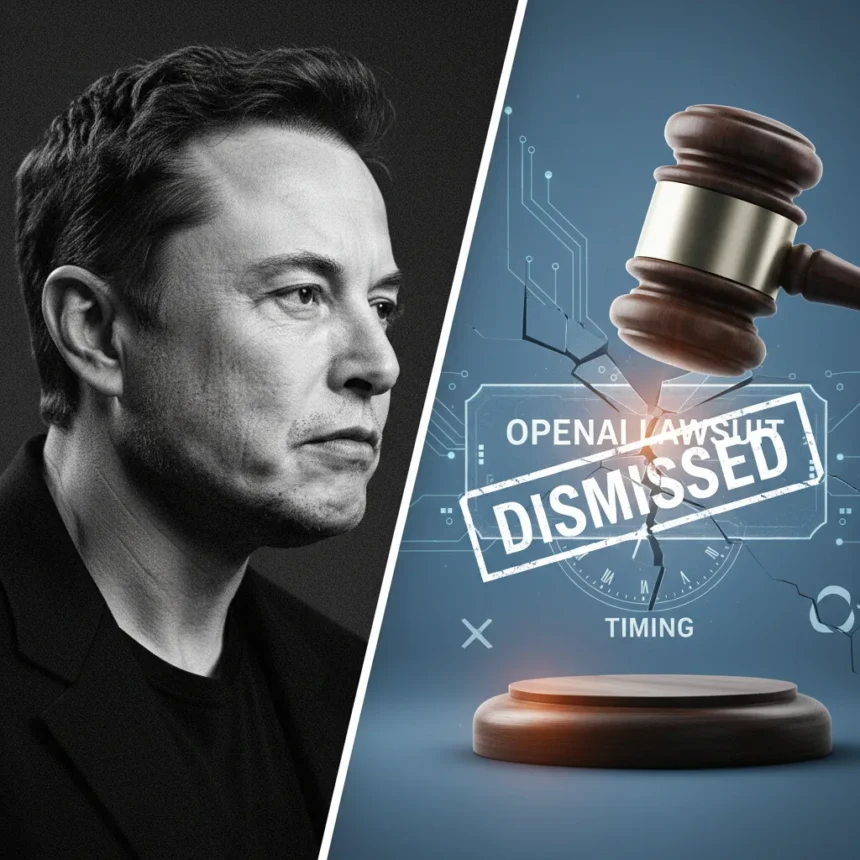
Elon Musk’s high-profile legal war against OpenAI has ended in a federal court dismissal that represents a significant procedural defeat for the billionaire entrepreneur. The ruling, which shut down Musk’s lawsuit on timing rather than substance, marks the latest dramatic turn in a years-long rivalry between Musk and the AI company he co-founded before stepping away.
Key Takeaways
- A federal court dismissed Elon Musk’s lawsuit against OpenAI on procedural and timing grounds.
- The dismissal was framed as an “utter defeat” for Musk in the high-profile legal battle.
- The court’s decision blocked the case without ruling on the substantive merits of Musk’s complaints.
- The ruling reflects ongoing tension between Musk and OpenAI over the company’s direction and governance.
- The dismissal does not validate or reject the underlying claims in Musk’s original complaint.
What the Court Dismissal Means for Musk
The federal court’s decision to dismiss Musk’s lawsuit centered on procedural timing rather than the factual claims at the heart of the dispute. This distinction is crucial: the court did not rule that Musk’s complaints were without merit, nor did it validate OpenAI’s position on the underlying issues. Instead, the judge found that the case was blocked by timing constraints or jurisdictional considerations that made it unsuitable for litigation at this stage. For Musk, this represents a courtroom loss that carries symbolic weight in the broader conflict with OpenAI, even if the substantive questions remain unresolved.
The framing of the ruling as an “utter defeat” underscores how decisively the court sided against Musk on the procedural question. In legal terms, a dismissal on timing grounds is often harder to appeal than a dismissal on substantive merits, because it addresses the court’s authority to hear the case at all rather than the truth or falsity of the claims themselves. Musk’s legal team now faces a narrower path forward if they wish to pursue the dispute further.
The Musk-OpenAI Feud in Context
The lawsuit represents the culmination of a deepening rift between Musk and OpenAI that has unfolded over years. Musk co-founded OpenAI in 2015 as a non-profit artificial intelligence research organization, but departed from the company’s leadership years ago. As OpenAI transformed into a for-profit entity backed by Microsoft and other investors, Musk increasingly criticized the company’s direction, arguing that it had strayed from its original mission of developing safe, open AI for humanity’s benefit. The legal action was Musk’s most aggressive move to date in the conflict, escalating what had previously been a public relations battle into a courtroom dispute.



The dismissal now leaves the Musk-OpenAI conflict in a strange limbo. The underlying grievances that prompted the lawsuit remain unresolved. Musk has not abandoned his criticism of OpenAI’s governance or its relationship with Microsoft, but the federal court has closed one avenue for pursuing those complaints through litigation. Whether this marks the end of legal escalation or merely a pause in the conflict remains to be seen.
Why Timing Defeats Are Harder to Overcome
When a court dismisses a case on procedural or timing grounds rather than on the merits, the plaintiff faces a steeper challenge in seeking reversal or refiling. A dismissal based on timing suggests that the court lacked authority to hear the case when it was filed, or that the plaintiff waited too long to bring the action. These rulings often turn on technical legal rules that are difficult to circumvent through appeals. In contrast, a dismissal on substantive grounds allows a plaintiff to refine their arguments and refile if they believe they can make a stronger case. Musk’s loss on timing grounds thus represents a more fundamental setback in his ability to pursue this particular legal strategy against OpenAI.



The procedural nature of the dismissal also means that the court never had to wade into the factual disputes at the center of the case—questions about OpenAI’s governance, its commitment to open-source development, or its relationship with Microsoft. From OpenAI’s perspective, the dismissal is a clean victory that avoids the need to defend itself on the substantive claims. For Musk, it is a reminder that even a well-resourced litigant can be stopped before getting his day in court on the merits.
What Happens Next in the Musk-OpenAI Conflict?
The federal court dismissal does not resolve the underlying tensions between Musk and OpenAI. Musk may explore other legal avenues, appeal the dismissal, or continue his public criticism of the company without litigation. OpenAI, meanwhile, can move forward without the distraction of defending a high-profile lawsuit, though the reputational damage from being at the center of such a public dispute may linger. The broader question of whether OpenAI has adequately served its original mission of developing safe AI remains a matter of intense debate in the tech and AI communities, regardless of how the courts rule.
For observers of the AI industry, the dismissal serves as a reminder that even the most prominent figures in tech cannot always bend the legal system to their will. Musk’s loss in this case underscores the importance of procedural rules and timing in litigation, and suggests that future disputes in the AI space may turn as much on legal technicalities as on the merits of the underlying claims. The Musk-OpenAI feud is far from over, but the courtroom phase appears to have ended in clear defeat for Musk.
Could Musk have won if the case had proceeded on the merits?
The federal court’s dismissal on timing grounds means we will never know whether Musk’s substantive claims would have prevailed if the case had reached trial. The court did not rule on the truth of his allegations or the validity of his legal theories, only on whether the case could be heard at all. Whether Musk’s underlying complaints about OpenAI’s governance and mission drift would have convinced a judge or jury remains an open question.


What does this ruling mean for future AI litigation?
The dismissal suggests that courts may be cautious about entertaining disputes over AI company governance and mission alignment, particularly when those disputes turn on procedural timing issues. Future litigants challenging AI companies may need to file more carefully and ensure they meet all technical requirements for bringing a case, or risk facing similar dismissals before their substantive arguments are ever heard.
Is this the end of the Musk-OpenAI legal conflict?
The federal court dismissal closes one legal chapter, but it does not necessarily end the broader conflict between Musk and OpenAI. Musk may pursue appeals, refile under different legal theories, or continue his public criticism of the company. The dismissal is a tactical loss for Musk, but the underlying dispute over OpenAI’s direction and governance remains unresolved and continues to simmer in the tech industry.
The Elon Musk-OpenAI lawsuit dismissal marks a turning point in one of tech’s most visible feuds. Musk’s courtroom defeat on procedural grounds, while not a ruling on the merits, sends a clear signal that litigation may not be the path forward for challenging AI company governance. The feud will likely continue through public channels and industry debates, but the legal escalation that defined this chapter has ended decisively against the billionaire entrepreneur.
Edited by the All Things Geek team.
Source: TechRadar