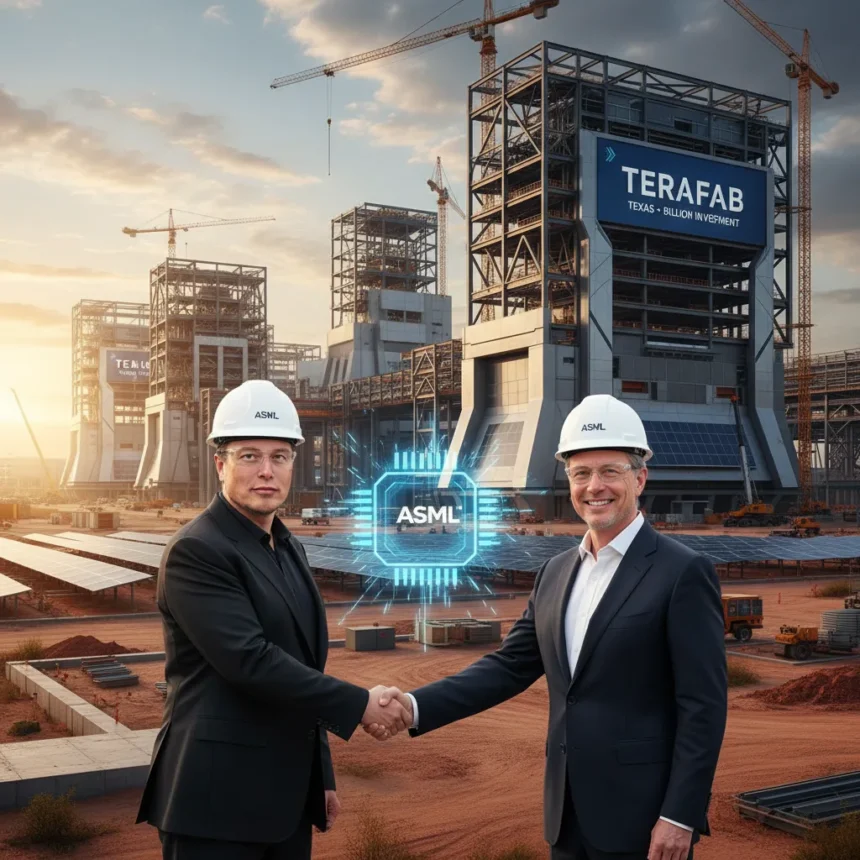
The TeraFab Texas semiconductor facility is a proposed $119 billion chipmaking megaproject backed by Elon Musk that has now moved from rumor to confirmed discussion at the highest levels of the semiconductor equipment industry. ASML CEO Christophe Fouquet recently confirmed direct talks with Musk about the ambitious project, describing him as “very serious” about bringing advanced chip manufacturing to Texas. This marks the first public acknowledgment from a major semiconductor equipment supplier that conversations about the facility are actively underway.
Key Takeaways
- ASML CEO Christophe Fouquet confirmed direct conversations with Elon Musk about TeraFab.
- Musk is described as “very serious” about the $119 billion Texas semiconductor facility project.
- TeraFab represents a potential major shift in U.S. semiconductor manufacturing capacity.
- ASML’s involvement signals that the project has attracted attention from critical supply-chain players.
- The facility would be located in Texas, positioning it within the U.S. semiconductor ecosystem.
Why ASML’s Confirmation Matters for the TeraFab Texas Semiconductor Facility
ASML is not a peripheral player in semiconductor manufacturing. The company supplies the extreme ultraviolet lithography equipment that enables the production of the world’s most advanced chips. When the CEO of such a critical supplier publicly confirms direct talks with Musk about the TeraFab Texas semiconductor facility, it signals that the project has moved beyond social media speculation into serious boardroom discussions. Fouquet’s willingness to speak publicly about these conversations suggests ASML sees commercial opportunity in the venture.
The significance lies in what this conversation implies about feasibility. Building a world-class semiconductor fab requires partnerships across equipment suppliers, materials vendors, and logistics networks. ASML’s engagement indicates that at least one cornerstone of that supply chain is paying attention. A CEO would not publicly confirm talks about a project he viewed as fantasy. The fact that Fouquet described Musk as “very serious” carries weight—it is not casual commentary but a deliberate statement to the market.
The Scale and Ambition of the TeraFab Texas Semiconductor Facility
A $119 billion facility would rank among the largest semiconductor manufacturing investments ever announced. For context, this figure dwarfs most conventional fab construction budgets and signals an intent to build not just a single production line but a comprehensive manufacturing complex. The Texas location positions the project within the U.S. semiconductor corridor, aligning with broader American efforts to reduce dependence on overseas chip production.

The TeraFab Texas semiconductor facility remains in the discussion phase, with no confirmed timeline, capacity targets, or finalized equipment specifications publicly available. What is confirmed is that Musk and ASML’s leadership have met directly and that serious dialogue is happening. Whether those talks translate into a spade-in-ground construction project remains an open question, but the involvement of ASML suggests the conversation is substantive rather than theoretical.
What This Means for the Semiconductor Industry
If the TeraFab Texas semiconductor facility advances beyond planning, it could reshape the competitive landscape for chip manufacturing. A new entrant with $119 billion in backing and Musk’s operational track record would introduce unpredictability into an industry dominated by established players like Taiwan Semiconductor Manufacturing Company and Samsung. The project would also strengthen the U.S. government’s push for domestic advanced chip production, a strategic priority that has received bipartisan support and federal funding through initiatives like the CHIPS Act.



The ASML confirmation also hints at how seriously the semiconductor equipment supply chain views the project. Equipment suppliers typically engage with fab operators years before construction begins, conducting feasibility studies and planning production timelines. Fouquet’s public comments suggest that preliminary conversations have already moved beyond initial curiosity into substantive planning discussions. This is a critical distinction—Musk may have credibility with ASML in ways that purely speculative projects do not.
Is the TeraFab Texas semiconductor facility actually happening?
ASML’s CEO confirmation that Musk is “very serious” about the project suggests genuine intent, but seriousness and execution are different things. The TeraFab Texas semiconductor facility remains unbuilt, unfunded in publicly disclosed terms, and without a confirmed timeline. Fouquet’s comments reflect that conversations are real, not that construction has begun or financing is finalized.
Why would ASML talk publicly about TeraFab?
ASML’s CEO likely spoke publicly to signal to investors and industry partners that the company is engaged with significant future opportunities in semiconductor equipment supply. Confirming talks with a high-profile figure like Musk also elevates ASML’s profile as a partner of choice for next-generation manufacturing projects. Public acknowledgment can strengthen ASML’s negotiating position if the TeraFab Texas semiconductor facility does move forward.
What would the TeraFab Texas semiconductor facility produce?
The research brief does not specify what chip nodes, product types, or manufacturing focus the TeraFab Texas semiconductor facility would target. Only the scale ($119 billion), location (Texas), and Musk’s involvement are confirmed. Details about production capacity, process nodes, or customer agreements remain unannounced.



The ASML CEO’s confirmation that Musk is serious about the TeraFab Texas semiconductor facility transforms the project from speculation into a documented industry discussion. Whether it becomes a reality depends on financing, regulatory approval, and execution—but the involvement of a supplier as critical as ASML suggests the conversation is no longer hypothetical. For the semiconductor industry and U.S. manufacturing ambitions, the next question is not whether Musk is serious, but whether the project can clear the massive hurdles between announcement and operation.
Edited by the All Things Geek team.
Source: Tom's Hardware